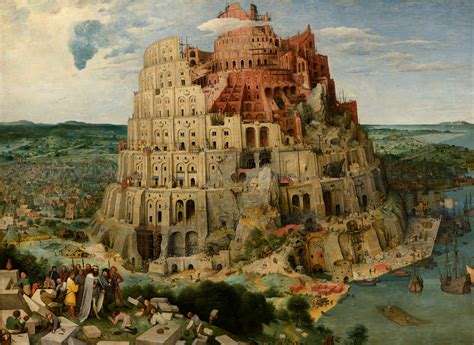
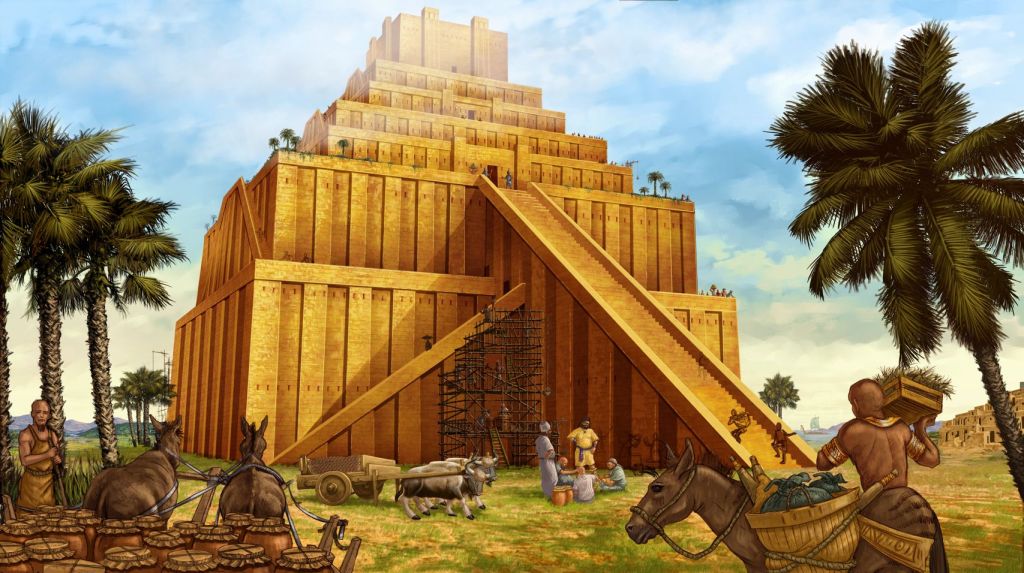
When people think of the tower of Babel they normally think of the picture at the top of this page. But this painting was made by Pieter Bruegel the Elder, who was born in 1525, in the southern Netherlands, meaning he would have had no idea of what it would have looked like, seeing as it was in the Iraq area and it was a very long time ago, other than when the Bible describes it it in Genesis 11, which seems pretty vague to me, meaning this painting is pretty unreliable on what it would have actually looked like. In ancient Sumar (current day Iraq) they had a type of religious temple that was called a ziggurat, which is in the bottom picture, and the ziggurat itself was a platform rising from the base, and these ziggurats were made to be gateways to the heavens that the gods could use to come down to the people and the priests could use to go up to the heavens to speak with the gods using the staircases on the ziggurats. In Sumar the ziggurats were known as having their tops or heads in the heavens, and in Genesis 11 it says “a tower with its top in the heavens,” which lines up suspiciously well. So the obvious hole in this theory is that it says a “tower” and not a “ziggurat”, but, in Hebrew they have no word for ziggurat specifically, but they have a very generic word that refers to any large and tall structure, so even though it translates to tower it does not necessarily mean a tower in our sense of the word. So it could be that some people from babel could have told the Hebrews about the ziggurats and they would’ve written it down as a large structure that reached the heavens, so when it was translated it was translated to the tower of babel instead of the ziggurat of babel.

 School Essays