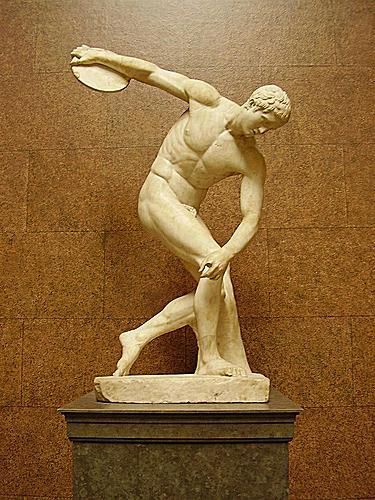
In ancient Greece there were several small city states, which means there were several independence governments and peoples in ancient Greece. Because of the different governments, and the fact that each of the cities want to rule the other cities, there were lots of wars between them, the most famous of these wars being the one between Sparta and Athens. But two things could bring all of the Greeks together, one being the threat of war by an outside force, like Persia or Troy, and the Olympics. The Olympics were started in 776 BC and were made as a tribute to the gods, and because all the Greeks shared the same religion and none of them wanted to make their gods angry, they would stop the wars long enough for the Olympics. Of course, it was not uncommon for a spartan wrestler to be particularly vicious when facing an Athenian opponent, but the only deaths during the Olympics were “accidental” and couldn’t be blamed on anyone. In tribute to their gods the Greeks would preform feats of strength in addition to the normal burning of food to the gods. Initially there was only one challenge in the Olympics, and it was a footrace between the fastest of the Greeks. But later on they started recording how far they could throw spears and discuses, which are large stone frisbees used in war. The spear and discus throwing could have been made a challenge because one of the city states wanted to see how skilled the opposition was during a war between them. After the spear throwing was added as a challenge chariot and horse racing became popular. Wrestling and boxing also became popular when the Spartans were angry and wanted to fight people during the Olympics. I like to think each of the challenges were dedicated to specific gods, like the footraces were to Hermes, god of messengers and speed, the discus throwing to Apollo, who is related to discuses in stories, the horse races to Poseidon, god of the sea and horses, and wrestling to Ares, god of war. The Olympics were ended in 394 AD by a Roman emperor named Theodosius, who was an early christen. Because he was christen he didn’t want his Greek subjects to worship their gods in the Olympics, so he ended it. The next year Olympia, which was where the Olympics where held, was destroyed by a giant earthquake, and Theodosius died of Edema, which is also known as fluid retention, and basically means he drowned in his own blood and saliva. The really creepy thing about these two things is that Poseidon is the god of water, horses, and earthquakes, so the fact that there was a giant earthquake in Olympia in the same year as the emperor who outlawed it died of internal drowning looks a lot like Poseidon got angry at Theodosius. In 1896 a Greek brought back the Olympics, and it is still going strong today with over 200 nations participating in it.

 School Essays