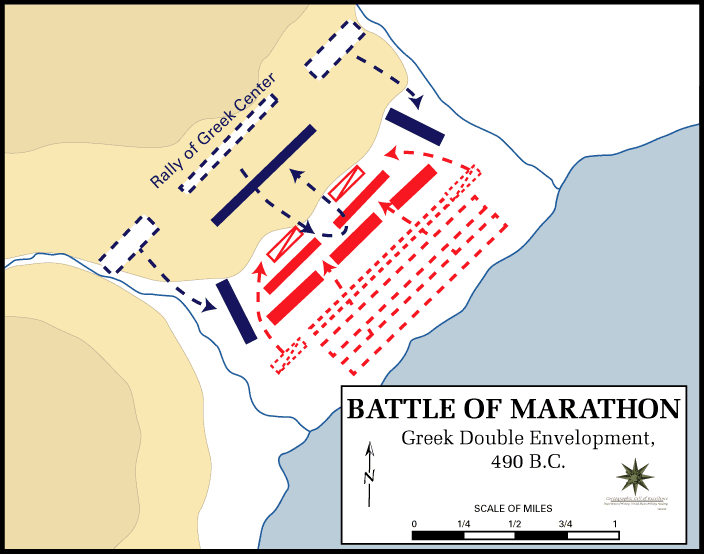
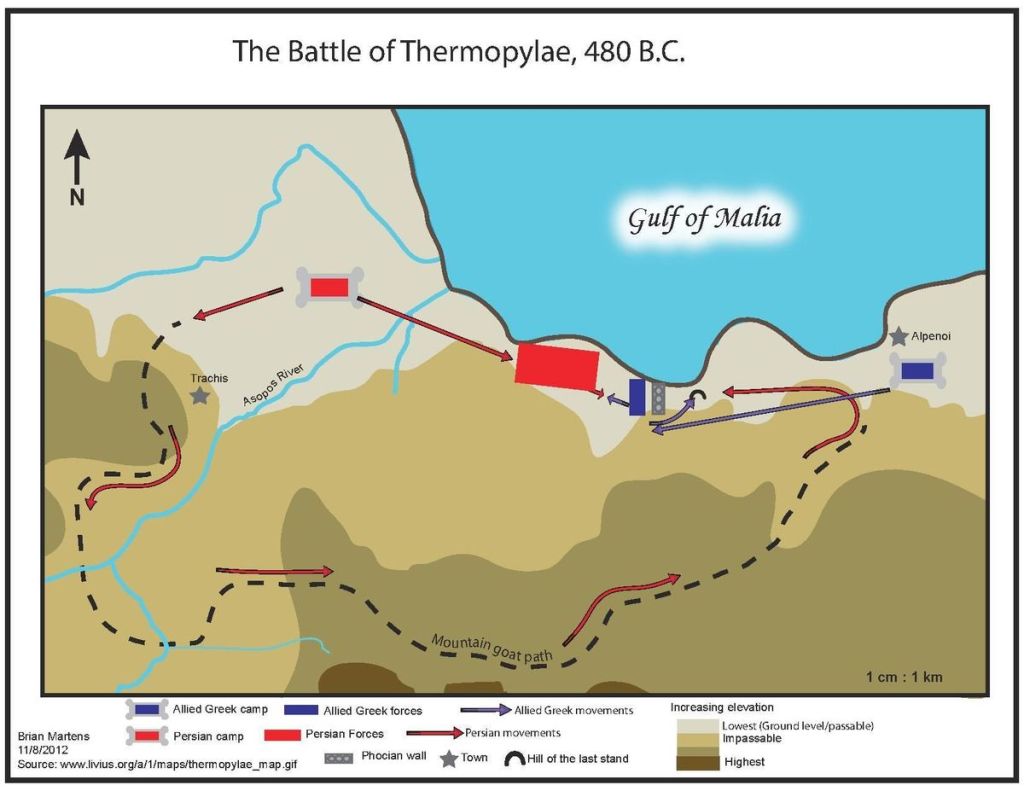
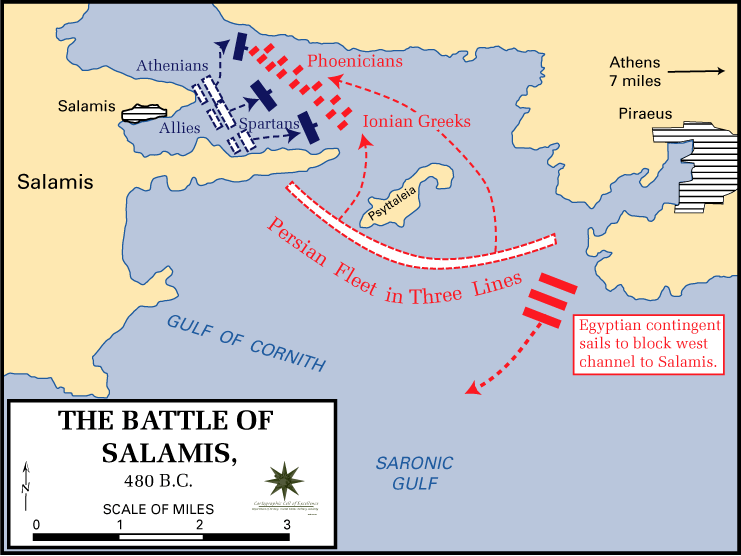
After Cyrus the Great established Persia as a major empire his son Cambyses the 2nd conquered Egypt just before his death. His cousin Darius the Great didn’t conquer as much as the last few kings but he did strengthen the empire hold over the places under his rule. He was a much crueler ruler than Cyrus or Cambyses, so the Greeks under his rule in Ionia (the easternmost part of Greece, westernmost part of Persia) rebelled against him. The Ionians called for help from their western brothers, Athens and Eretria, who helped considerably in the rebellion. Despite this help, though, the Persians still got Ionia under their rule. Darius was absolutely furious with the two cities that had helped the rebellion and decided to conquer all of Greece as a punishment. King Darius sent his a small portion of his army to collect Greece, which he thought would be easy pickings. The Persians’ ships landed in Marathon, planning on making their way down to Athens. When they got, though, the Athenians had made a human wall with their men, making it impossible for the Persians to get out of the bay without gong through the Greeks. The Persians found they were at a stalemate because the Athenians were uphill and the Persian cavalry were therefore useless at breaking the Greek line. After five days of stalemate the Persians started loading onto their ships, which was when the Greeks attacked. Being in complete disarray and with no cohesive group they were slaughtered. The top picture represents this. The Persians lost about 6,400 soldiers and the Greeks lost around 190 soldiers. A messenger went from marathon and ran all 24 miles to Athens just to give them the good news. Moments afterwards he died of exhaustion. Once Darius heard of this defeat he prepared a very large army to fight them, but an Egyptian rebellion caught his attention and he went to quiet the Egyptians down, but died on his way back. His son Xerxes became king, and he decided to finish what his father had started. Xerxes led a very large army that was around 60,000 soldiers large over two large bridges made out of boats lined up into a walkway. Just before getting into Thermopylae a storm destroyed his bridge, destroying a good sized part of his army with it. On his second try, he succeeded in getting to Thermopylae, only to find himself in a battle with a small force of Spartans. The Spartans defended the only pass through the mountains and only pass into Greece for two days before a traitor Greek told Xerxes about a way to get around the Spartan line and crush them. The middle picture shows this. This battle is also the battle the movie “300” was based on. After this defeat at Thermopylae the Greeks went to make a last stand at the Isthmus of Corinth. The Persian marched down and destroyed Athens, which was undefended. They got in their ships and sailed out to Salamis to destroy the Greek resistance once and for all. When they got there they entered into a sea battle with the Athenian fleet. The big and bulky Persian ships were decimated by the Greeks. The third picture depicts this. This battle was the last straw for the Persians and they decided to head home and let the Greeks live in peace. The Athenians, however, didn’t want to live in peace. They formed an alliance with several other cities (notably not Sparta) and they sailed to Persia and started several rebellions. Eventually Persia and Greece signed an alliance that said Greek warships couldn’t sail into Persia and Persian warships couldn’t sail into Greece.

 School Essays