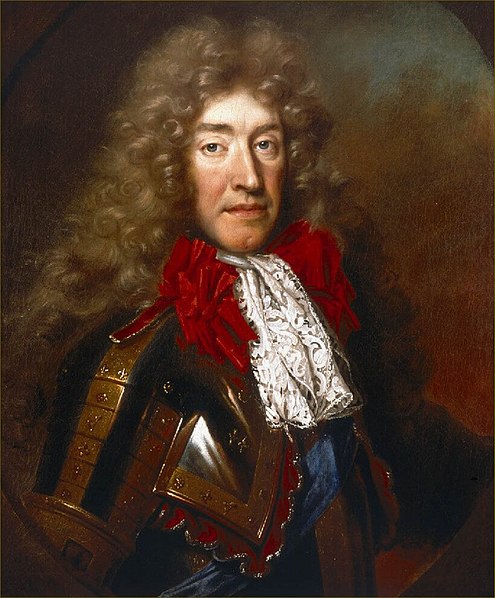
The Glorious Revolution took place in England and Scotland between 1688 and 1689, and it’s goal was to depose James II, shown in the above image. James II was the great grandson of James I, who helped the colonies get started, and like James I, James II was rather Catholic and rather fond of absolute monarchies. Unfortunately for him England and Scotland, over whom he ruled, were extremely Protestant, and though Ireland was Catholic they didn’t have any power compared to the other two. England and Scotland also really loved their Parliaments, which took power from the king and acted as the voice of the peoples of England and Scotland, which were separate at this time, though they agreed on this subject.
The Parliaments held enormous power at this point, so much that any more power would make the King little more than a rubber stamp, or a figure head. Their views and the king’s clashed considerably, of course, but the Parliaments and churches of England and Scotland were willing to endure him since his only heirs were his Protestant daughters, Mary II, and Anne, both of whom were married to Protestants in mainland Europe. Mary II was married to the Protestant William III of Orange, great-grandson of William of Orange, the dutch freedom fighter. However, James had a son, James III, and since he would be raised by James directly and not married off like Mary, he would be extremely Catholic and would most likely follow closely behind his father. This was considered completely unacceptable by the people and churches. Due to this they decided to ask William III to get rid of James for them, since James controlled the English army, not the Parliament.
However, this wasn’t really necessary, since even the army didn’t really like James. There were only really two light skirmishes, excluding anti-catholic riots in some towns. James then fled to Catholic France, who were happy to house him and give him funding, but didn’t really give him troops. He did go to Ireland in 1689 and attempted to rally enough support to retake Britain, but William III squashed him again, and he lived in France for the rest of his life. William III insisted that he be made King alongside of Queen Mary II, which wasn’t common back then for a foreign husband of the Queen, but since he had his army there, Parliament said why not? William’s reign gave Parliament a great deal of power, since he cared much more about his native home of Holland, and lived there for much of his life. With this power Parliament made a law saying there could be no Catholic rulers of England or Scotland, and made the next Queen, Anne, the younger sister of Mary but big sister to James III, little more than a figure head, under whom the Parliaments of England and Scotland united as Great Britain. The next heir was George I, and the one after that George II, both of whom lived and stayed in the Holy Roman Empire. At this point no one doubted the power of the Parliament, and the “ruler” didn’t really rule at all.
There was a small group called the Jacobites who thought that James III should’ve be made King instead of Anne, George I, or George II, but they never accomplished anything other than being a nuisance to them.

 School Essays