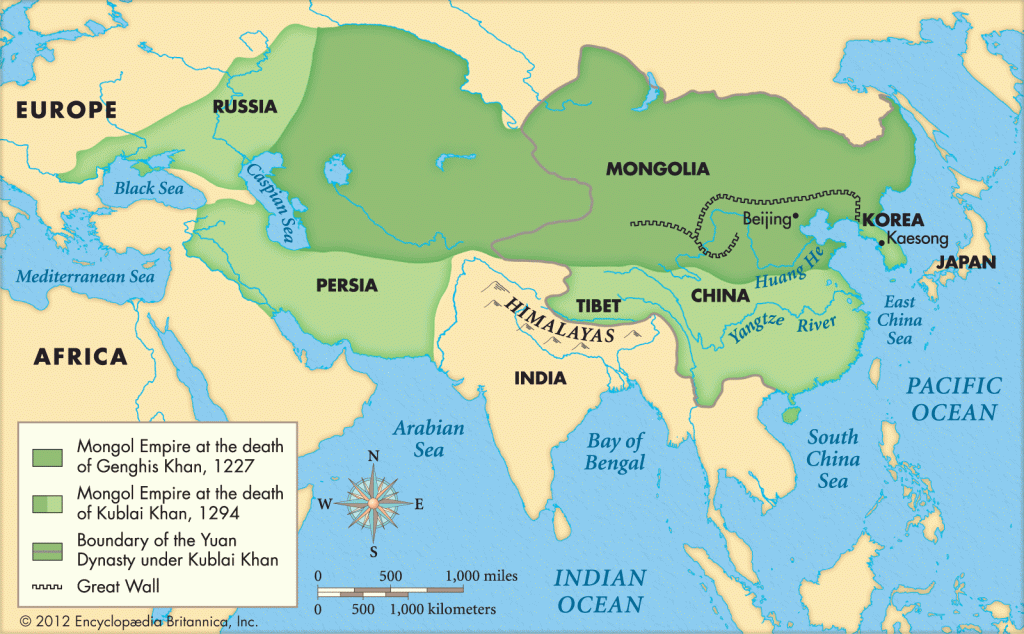
In Asia there had already been several impressive empires by 500 AD, primarily in China, with the most notable being the Xia, Shang, Zhou, Qin, and Han dynasties, the Han being the primary inventor of the soccer, or football. From 618 AD to 907 AD the Tang Empire united and conquered much of the same territory that China occupies today. The Song Dynasty ruled next from 907-1206, and lost much land to its outer territories, though it was nothing compared to its future losses. It was at this time that Genghis Khan showed up from Mongolia and conquered pretty much Asia, and that which he didn’t get to during his life from 1162-1227 his descendants conquered, the only thing that they missed being India, due to an inability to ride their horses well in India’s climate. It was during Genghis’ grandson Kublai Khan’s reign that direct contact was made with Europe through Marco Polo and his family in the late 1200s. Eventually the Mongol Empire dissolved from infighting, with the primary death taking place in the early 1400s and the final death still not happening to this day, with the country of Mongolia still existing and not moving on culturally the way Italy did after the fall of the Roman Empire. By 1450 China had recovered sufficiently to bring back their own empires with the Ming Empire. It gave way to the Qing Dynasty in 1644, however, and was a good deal more successful than the Ming Empire and lasted until 1912.
Japan separated itself very thoroughly from the rest of Asia, following what’s known as a Shogunate, or military leader. By ignoring the mainland Japan had an extremely stable history, all the way to the 1800s.
India had a rather unstable history, with large empires rising and falling to many small nations. First the Gupta Empire ruled northern India from 4th to 6th centuries, then fell to the piranha-nations. The Rajput Kingdoms ruled from the 9th century to the 12th though they were more of a shared culture than an empire. Finally, the Mughal Empire ruled northern India from the 16th century to the 19th century. If you’re wondering about southern India, it very rarely united into a single face. Part of all this instability was, and is probably caused by the warring religions of Buddhism and Hinduism, two popular religions, as well as Islam, which didn’t get as much popularity as it did in the middle east.

 School Essays