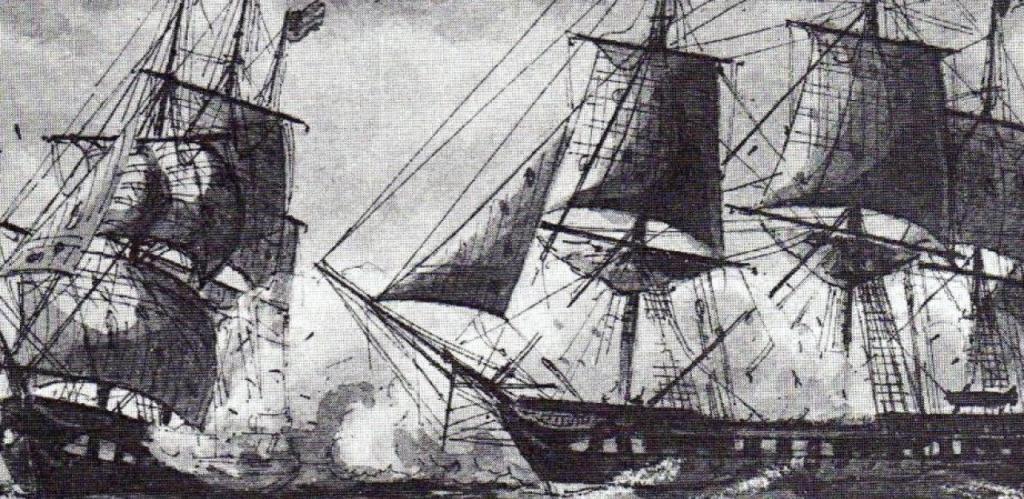
The Quasi-War was an unofficial war between the newly formed United States of America and their former ally, France. France had been an ally of the USA from its start, first helping them fight Britain unofficially during the American Revolutionary War, then officially coming out as their allies. But it was the monarchy of France that did this, and drove themselves and the peasantry into debt as they did so. The peasantry were already beginning to dislike their rulers, but this last war they funded to no obvious benefit to themselves (other than generally harming England), drove the peasants over the edge. In 1789 the peasantry rose up and began the French Revolution, and decapitated almost all the nobility in France using the famed guillotine. While this was the same idea the Americans had been fighting for in their country, they had become friends with the nobility during their war, and only a few Americans, like Thomas Paine, were consistent during both wars, fighting for liberty. Tensions mounted even higher in 1795 when the Americans made the Jay Treaty, which ended most of their dealings with France and struck up agreements with Britain, leading to 10 years of good trade with Britain and, eventually, a small war with France.
That happened during the tail end of George Washington’s presidency, and John Adams, the next president, had to deal with the consequences of these tensions. France started raiding American merchant ships after learning of their treaty with Britain, which Adams responded to by sending over three diplomats to France to smooth things over without agreeing to anything severe, like giving them money, or fighting England again. The three diplomats were John Marshall, Elbridge Gerry, and Charles Pinckney, Pinckney being the leader since he had already made the Pinckney Treaty with Spain, gaining America quite a bit of the Mississippi river. On the French side they met with Charles Talleyrand, a high ranking, and highly corrupt, French official, and his three intermediaries. Those intermediaries told them Talleyrand required a bribe from each of the dignitaries just to work with him, but being, y’know, not horribly corrupt, they refused. After a year of stalemating and compromising unofficially, since Talleyrand wouldn’t officially meet them, Talleyrand asked Pinckney and Marshall to go back to America, as Gerry was more open to unofficial communication and dealing.
When they got back home they told Adams what had happened in a report, replacing the intermediaries names with X, Y, and Z. This gave the whole debacle its name, the XYZ Affair. Elbridge was called back to America, and the Quasi War broke out in 1798. It’s called the Quasi War because neither side actually declared war, they just attacked eachothers merchant and naval ships. This caused massive economic damage, as America and France lost a lot of merchants, and the remaining merchants were to scared to go out without a navy ship as a guardian. Eventually, in 1800, America managed to get France to sign a treaty to stop the unofficial war, but the feeling between the countries took a long time to heal.

 School Essays