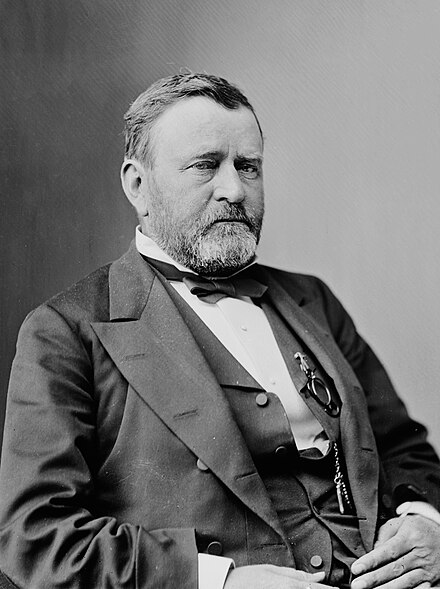
Ulysses S. Grant was the most famous and prominent general in the Union Army, being the leader of the western army during the first half of the war, and one of the few Union generals who were consistently well off during the initial half of the war, and became the head of all the Union army in 1863, and lasted the whole second half as the chief general. While he spent most of his time fighting with Lee in the Virginia area, he still effectively directed the west, organizing the Atlanta Campaign and other raids. He later became the President of the United States thanks to his popularity derived from the war, on the Confederate side as well as the Union thanks to his honor and willingness to move past his differences with the south. He also served with many other generals, Confederate and Union, during the Mexican-American war.
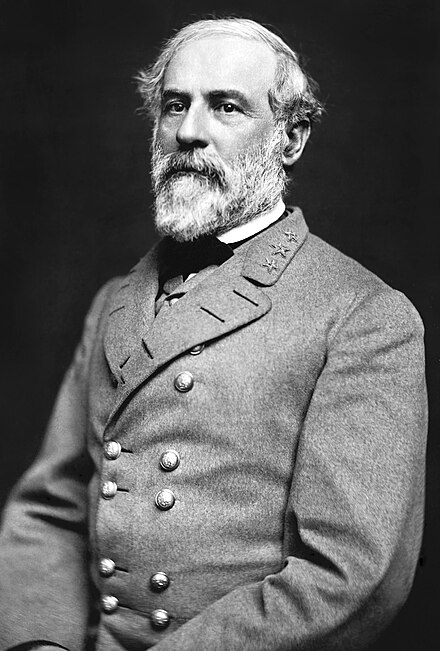
Robert E. Lee was the lead general for the Confederate Army throughout the war, and was a bit odd because even though he wanted the Union to stay together, when Virginia, his home state, seceded, he joined it in the Confederacy, eventually becoming the head general. He was a major risk taker, and it almost always worked out for him. It’s fairly agreed upon that he was the best general in the Civil war, but due to a lack of supplies, money, and men, he just couldn’t have won the war. He was extremely Christian, and his devotion to his faith made him, like Thomas Jackson, extremely popular among both sides of the war. Like many other generals, he served with all of them during the Mexican-American War.
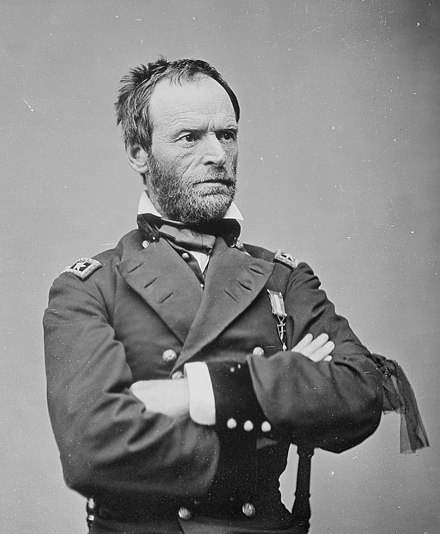
William Tecumseh Sherman was not well liked by both sides of the war, in fact, he was barely liked on the Union side, where he served with distinction, due to his tactics, considered savage by some, and ungentlemanly by others. He served under Grant in the West during the first part of the war, but was promoted to Grant’s old position when he himself got promoted. He’s most well known for his Atlanta Campaign, which went deep into Confederate territory, and humiliated them. He would tear up railroad tracks and bend them around trees so that they couldn’t be used, He “accidentally” burned down more than one town, poisoned wells, and would steal from farmers and towns to feed his army, which wasn’t new in war, but was frowned on in the New World. While he was in the Mexican-American War, he was stationed in California after it was taken, and didn’t see action.
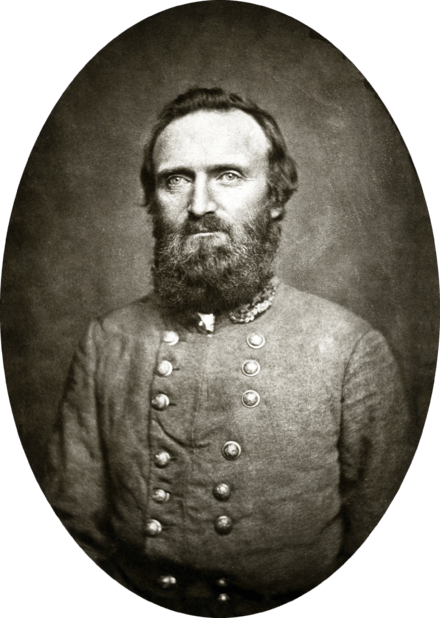
Thomas “Stonewall” Jackson was probably the most well-respected general in the war, and is probably more well known than Robert Lee, who he served under. He earned his nickname during the Battle of Bull Run, when he kept his troops from running from the Union soldiers, and led them in a counter-attack that won them the battle. He was well known for his integrity and honor, and extreme Christian morals, leading him to be loved by both sides of the war. He died from illness after being shot in the arm in 1863 at the battle of Chancellorsville. He also fought in the Mexican American War.
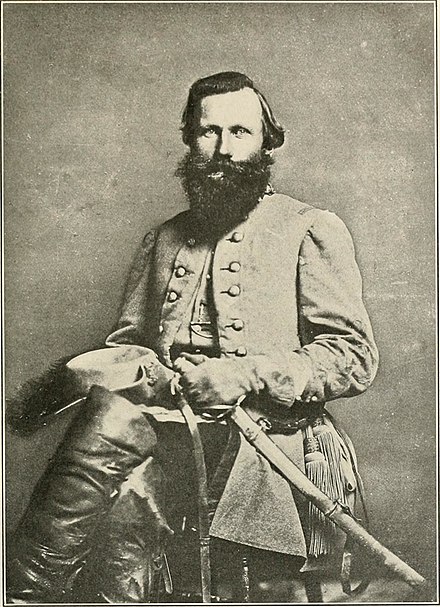
J.E.B. Stuart was a Confederate general, though he was different because he was a cavalry officer, and wasn’t really a prim and proper gentleman like Lee, or Jackson, or Grant, but he also wasn’t a brute like Sherman, instead being rather flamboyant and joking, often wearing colorful capes and ostrich feathers in his hats. He would also make many jokes with his men, and did a lot to keep the Confederacy’s spirits high. He first distinguished himself when he took command of Jackson’s forces at Chancellorsville after Stonewall got injured. He then became one of Robert’s most useful generals, due to his excellent reconnaissance abilities. Unfortunately for him, he’s most famous for his failure at the battle of Gettysburg, when he got separated from Lee’s forces and failed to warn him of the positions of Union troops at Gettysburg, where Lee was nearly captured. He died in 1864, killed by Philip Henry Sheridan’s troops, Sheridan being a Union cavalry commander, and practically a Union version of Stuart, though much less fun to be around.
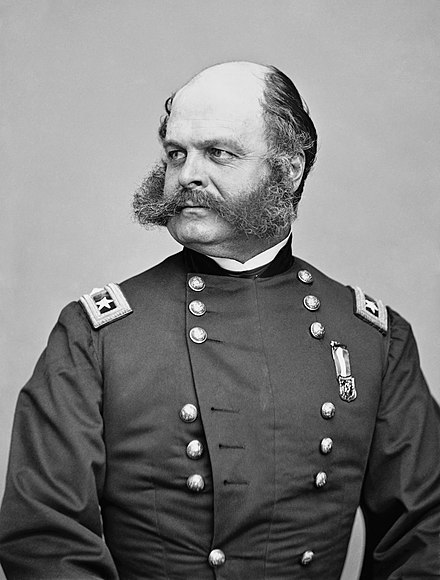
While J.E.B’s military counterpart might’ve been Sheridan, his personality counterpart was probably Ambrose Everett Burnside, a Union general most well known for his facial hair. He is well known for this mustache-sideburns look, and it was because of him that sideburns became popular, as is evidenced by the fact that “sideburns” is a derivative of his name: “Burnside.” He wasn’t as flamboyant as Stuart, but was fun to be around. He made his own gun, which carries the name “The Burnside Carbine” and he was named the first President of the National Rifle Association, also known as the NRA. The reason I didn’t immediately speak of his military history, is because it’s not all that good, with him having mixed results in battle. He also was in the Mexican-American War, but he joined after hostilities had ended, and didn’t see battle.
There were many other Generals on both sides of the war, though none of them had quite the distinction that these had, though perhaps James Longstreet and Philip Sheridan should’ve had their own entries, but all of them deserve at least a mention, so here we go. Sheridan (Union) was a vicious cavalry commander who employed the same brutal tactics as Sherman. James Longstreet (Confederate) was a brilliant commander who served as Lee’s second in command after Jackson died, and was a personal friend of Grant, so his reputation took a hit in the south. Nathan Bedford Forrest (Confederate) was a Cavalry officer who was rather under-used during the war, and went on to help found the Klu Klux Klan. Winfield Scott Hancock (Union) (not the leading general with the same name in the Mexican-American war) also known as “Hancock the Superb” he had the most impressive and dominant personality of any American general, and was the most impressive in personal combat. P.G.T. Beauregard (Confederate) was an artillery commander, and led the Confederates in the first battle of the war, the battle of Fort Sumter, as well as others. Patrick Cleburne (Confederate) was born in Ireland and emigrated to the United States, and joined the Confederacy when the Civil War broke out, and though Grant and Sherman dominated the west, Cleburne was surprisingly successful at blocking their many advances. Joshua Chamberlain (Union) was a professor before the war, and was quite polite and gentlemanly, and though he didn’t do much, he was in charge at Gettysburg, and was at the surrender of the Confederate army. Ambrose Powell Hill (Confederate) took over Thomas Stonewall’s responsibilities after he died, though he wasn’t as impressive as Jackson. There were four Georges among the generals of the Civil War, George Edward Pickett (Confederate) and George Meade, George McClellan, and George Henry Thomas (all Union). George Pickett is infamous for “Pickett’s Charge” in which he failed dismally to attack Union soldiers, and lost his whole force. McClellan was temporarily the head general of the Union army, but Lincoln didn’t like him, fired him, and used him only as a training officer. Meade was also head general for a while, but like McClellan, acted too slowly and carefully for Lincoln’s taste, and so gave way to Grant. George H. Thomas prevented the battle of Chickamauga from being a complete failure, and did quite well elsewhere, but due to not liking Grant, he’s rather unknown. Lastly, Joseph Hooker (Union) was the only general without facial hair in the war, and though he served well in the Seminole Wars, Mexican-American Wars, and the Civil War, he’s only remembered for his major loss to Lee at Chancellorsville.

 School Essays