A Knight of the White Cross Review: Part 2

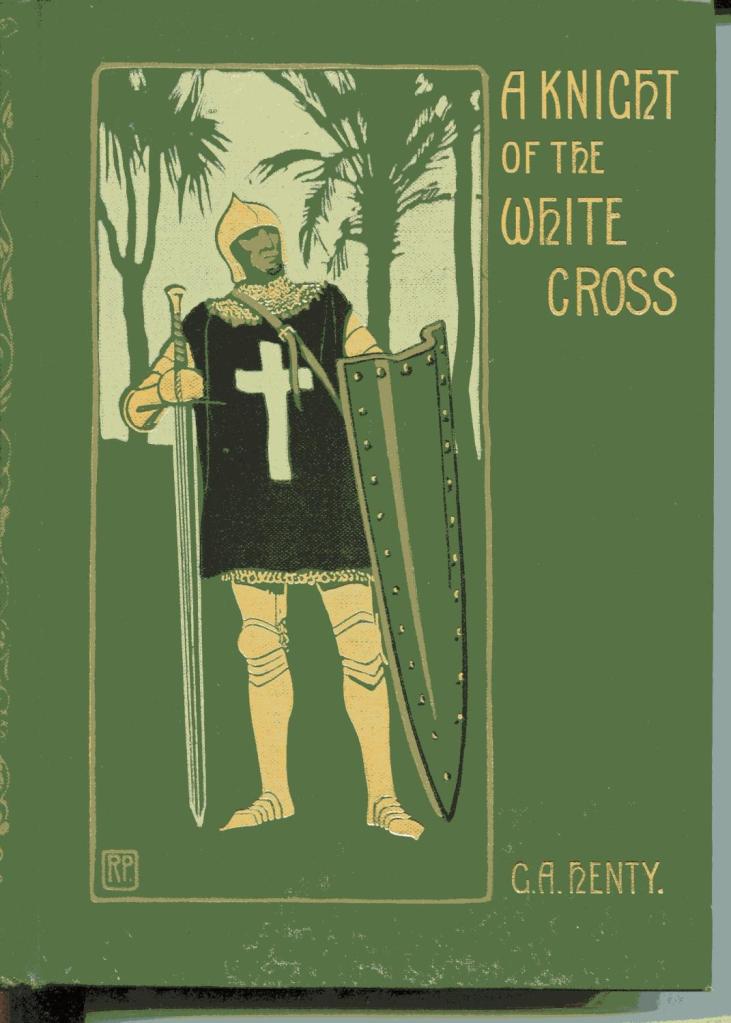
This is the second part of my review of the book A Knight of the White Cross, and if you want the first part you can find it on my page. In that first part I reviewed the Setting and the Character Development, so this time I will look at the Plot and the Theme. The plot of the story follows a young boy as he becomes a knight of white cross. It starts in England, with his father and mother fighting in the War of Roses, an English civil war. after his father dies his mother gives Gervaise (the main character) to the church of England before dying herself. He is brought to the Island of Rhodes in the Mediterranean, and is trained to fight Muslims. He goes on a cruise with other knights and distinguishes himself by helping the knights escape Muslim pirates without much bloodshed. He later sees a Greek man talking with the slaves and decides to go undercover as a slave to find out if there was going to be a revolt. there was plans for a revolt, and thanks to Gervaise the knights were able to stop it. For this he is put in charge of a galley ship, which was a high honer. On the maiden voyage of the ship Gervaise captures 3 ships of pirates, who tell him that there is to be a pirate fleet near Tripoli, so Gervaise sails there and uses fire ships (ships and boats filled with flammables and combustibles) to destroy 11 ships and capture 13 of them. For this great deed he is given many gifts, such as land in Italy and England. After this, however, he is captured by other pirates and sold as a slave. He is quickly realized as valuable and made overseer of other slaves. He uses the advantages given with this position to escape, and sails back to Rhodes. Rhodes is then attacked in force by the Muslims and there is a hard won siege, in which Gervaise uses his fire ship trick to burn some of the Muslim camp. after this Gervaise is granted more lands and is leaves the Order to marry an Italian lady. This plot line is incredibly similar to all the G. A. Henty books I’ve read, with his being a slave, learning wisdom from an old guy who doesn’t entirely like the current way of doing things (in this case Sir Caretto) and eventually marrying some rando princess he barely knows. The Theme of the story is, as I’ve said in previous posts, similar to the moral of the story, in that it’s what you come away from the story thinking about. I feel that at least one of the Themes of the story, for there can be many, is about self sacrifice, for Gervaise is many times shown as sacrificing his own pleasure for the good of the Order or just defending his own honer. Some of these times are when he learns Arabic to communicate with the natives he completely left his friends in their play so as to totally learn the language, and another instance is when he goes undercover as a slave he gets as whipped and beaten as the rest of them, or else he would draw suspicion. there are other instances, but those are the main two, and at the end of each he earns impressive rewards. This is all that I think on the book, but overall I give 3/5 stars.
Medieval Castles

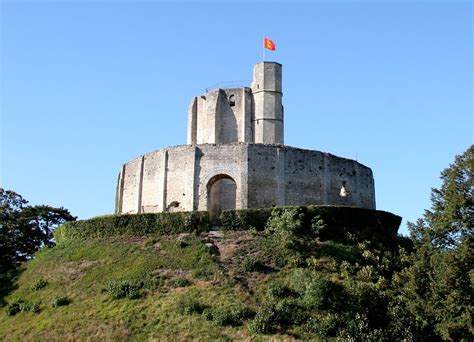
Medieval castles as we know them today are called “Motte and Bailey Style” castles, with both “Motte” and “Bailey” referring to the landscape. The motte was a hill with a flat top, most of the time artificial, upon which a miniature castle, oftentimes called a keep, would be built. This keep would be used as a last refuge for the besieged, a contingency plan for any attackers getting past the curtain wall and defenders. The curtain wall was the outer wall of the castle, and normally the moat would circle the perimeter of the curtain wall, thusly thwarting any ladders. While many children draw pictures of crocodiles and such in the moat, this was never done because anyone who fell in water with armor on would instantly drown, because of the weight of the armor. And, something most people don’t think of is that the servants and such would empty the privy buckets into the moat, along with any animal manure. This was part of the reason nobles liked to live the center of the castle. The bailey quite simply is the area between the curtain wall and the motte. While the motte and curtain wall were the most important things during war, the bailey was probably the most useful thing all around because it housed the main halls, the throne room, the kitchens, and anything else that needed storing in a castle. If there is a castle town around the castle it would probably be included in the bailey, though if it’s a real city and not a town surrounding the castle there would be an outer wall which surrounded the city, then the curtain wall within the city, the bailey, then the motte and keep. This style of castle started roughly soon after Charlemagne’s time, when all the countries of Europe were squabbling and fracturing. With so much war, no wonder such a simple, yet effective, design gained prominence. While the English knew of castle they didn’t really support them, and saw them as a sign of a weak ruler who couldn’t control his people. This changed when the Normans invaded England. The English didn’t like foreign kings as a rule, and William the Conqueror had killed one of their favorite kings to become ruler, so it was no wonder that rebellions sprang up. Being from the mainland the Normans felt no reason not to make castles, and these foreign castles proved useful in defeating the populace. For a long time the English felt castles where a symbol of oppression, but nowadays they’re a symbol of wealth and status. Fun fact: The Tower of London was the first castle built by William the Conqueror.

A Knight of the White Cross Review: Part 1

A Knight of the White Cross is a book by G. A. Henty about an English orphan who joins the church to fight the Muslims that continuously encroach into Europe. I’m only halfway into the book, so I plan on writing a part 2, so this review won’t be a complete one. The setting is quite odd, and not what I expected when the book started, because it started with the main character’s parents in England, who were fighting in an English civil war. The war didn’t go their way and the father died, leaving his family. This made me think that the book would take place in England with the lad continuing his fathers fight, but instead his mother gives him to the church and train him to be a knight before shipping him off to the Mediterranean to fight Muslims. Thusly, the entirety of the book has taken place in the Eastern Mediterranean. In regards to Character Development, none of the characters seem to develop to me, and simply do that which they always do. The main character, however, is somewhat unique compared to other knights. Though they are all devoted to the church and aren’t sinful (according to their religion; I consider going to another’s land and killing them because they have a different religion “sinful”) The main character is the only one who truly believes in poverty and giving to those in need, he is kind to his slaves, unlike other knights, and he is willing to give his life up totally to the Order of the Church. I plan on reviewing the plot and theme next week.

Otto the Great

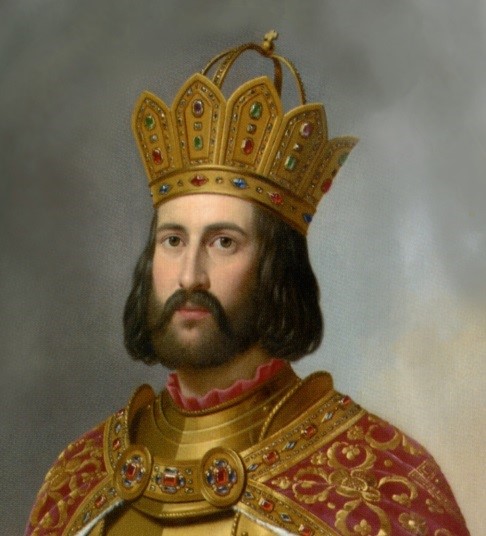
Europe was an extremely volatile region in regards to the nobility and kingdoms, with many, many small kingdoms constantly erupting out of pre-existing ones. It was like this for a considerable time after the fall of the Roman empire, but Charlemagne, who I’ve talked about in a previous post, united much of Europe together, such as France, Italy, Germany, and part of Spain. He also started the tradition of the “Holy Roman Emperor and Empire” but this, like the empire itself, fell apart quicker than it came together under him. It fragmented like before only to be partly salvaged by Charles the Fat in 881-888. This also fell apart and would only be united again under Otto the First, later to be known as “the Great.” Like his empire the title of Holy Roman Emperor became a gift from whatever Pope happened to be ruling to whoever the most helpful King was, not an actual title passed father to son, though this to would be fixed by Otto. Otto started his life as the prince of Saxony, a German province. When his father died he became King of Saxony, and this is when he started the constant uphill improvement of his status. All historians agree that Otto was a very good strategic planner and he showed this for the first time when he went and conquered all the other Germanic peoples. He was suffered a slow down upon leaving the main Germanic provinces, however, and it was during this time that the Magyars invaded. Or, at least, tried to invade. The Magyars, also known as Hungarians, moved west until they encountered Germany- and Otto. The Magyars were pagan, and Otto was Christian, so when Otto threw the Magyars out on their butts a great portion of Europe came to regard him as a savior of Christianity, though the war had nothing to do with this. This made it almost impossible for the Pope to deny him the title of “Holy Roman Emperor” and even if he could’ve he probably wouldn’t have, since Otto was now far an away the strongest king in Europe. However, he never gave up the title until his death, and he had made sure his son got the title, and so it went until 1806. on his way to the pope, though, since he was in Italy Otto just conquered his way down south into Italy, where he received both the title Holy Roman Emperor, and the Queen of Italy’s hand in marriage, since that was one of the most peaceful ways to deal with him. Though his Empire never reached the scale of Charlemagne’s, it did live all the way to 1806, with the only major fractures being Italy.

Writing Styles: White Fang

Writing styles are pretty simple. A writing style is the way in which an author writes, which is extremely vague but that really is what it is. The writing style of an author includes how much detail and energy they put into describing things and writing. Every authors writing style is unique, although there are normally common errors and can be sorted. Sometimes the author might be extremely matter of fact and not include the main characters thoughts of the subject even though they’re supposed to be narrating the story, and this makes the story feel colder and less readable (for me at least). Jack London, the author of White Fang, is well known for his writing from the dog’s point of view, and in White Fang he does this, yet he remains extremely matter of fact and explains what the dog is feeling and how the dogs mental process, which is different from humans, is working out problems in the story. He manages to do this very well, despite the fact that this is normally an unendearing trait because, I think, the dogs mind is already so logistical that the matter of fact narrator doesn’t clash with the canine narrator. White Fang is one of my favorite books.

Canute the Great

Canute the Great, also known as Cnut the Great, was the son of a Danish king Sweyn Forkbeard, meaning he was the prince of Denmark. However, he was the second son of Sweyn, and so did not expect to get the throne until after his brother Harald II died, which could happen after Canutes death, meaning he might never get the throne. After his father died and his brother became king Canute became impatient for a throne and a kingdom of his own, so he decided to conquer a different kingdom so as to become king. The kingdom he had in mind was none other than England. He recruited a large number of Viking warriors, in addition to a large portion of the army that his brother Harald gave him, since it was a good idea to have your brother on a neighboring throne. Canute managed to conquer Northern England, and successfully laid siege to London, where the king was. They worked out a treaty where Canute would rule North England and Edmund would rule South England until he died, then Canute could rule all of England. Rather suspiciously, Edmund died only three weeks later, making Canute the king of all England. Two years after this Canutes brother Harald died, and the throne went to Canute, surprisingly quickly. Because of this Canute had more power in northern Europe then anyone else. He used this to conquer large parts of Norway, and he exerted extreme influence over Ireland, Scotland, and Sweden, though he never became king of those places. In Denmark he was a well loved king, particularly among the Vikings because of his battle skills, which he had showed off when he conquered England. The Norwegians could respect him for the same reasons that the Danes loved him, but never loved him because he was a foreigner who had conquered them, and so revolted many times. The English didn’t like him at first and hated the idea of being ruled by a Viking barbarian, but over time as he slowed down the number of Viking raids (because he didn’t want his people raiding his other people) they grew to like him, and he would often pay for new churches to be built and for the old ones (that his own men had destroyed) to be rebuilt. This was a good recipe for a well liked king, since the people of England put a lot of stock in what the church said, and since he was practically bribing the church, it said he was a good guy, so he became known as Canute the Great instead of Canute the Terrible. Sadly, (for the Danes) this North Sea Empire cracked and split back into the three individual kingdoms after Canute died in 1032, with England going to Harold I, Norway to Magnus the Good, and Denmark to his son Harthacnut.

The Theme of Treasure Island

When someone talks about the “Theme” of a book or story there’s a chance that they’re talking about what type of story it is, so someone might say “The theme of Treasure Island is pirates.” but that’s not correct. If someone says that, then they’re actually talking about the setting of the story. The real theme of a story is similar to the moral of the story, and most of the time the moral is a theme. The theme is something that the story imparts on you, like a lesson, which makes the moral so similar. It can be very subjective, meaning different people might think there are different themes. The most common theme attributed to Treasure Island is the that you should be careful of those who you count as friends, because when the characters reach the island there’s a mutiny led by John Silver, who the main character counted as a close friend. there are other themes that some people see, but this is the one I think the author had in mind when writing the book.

Charlemagne

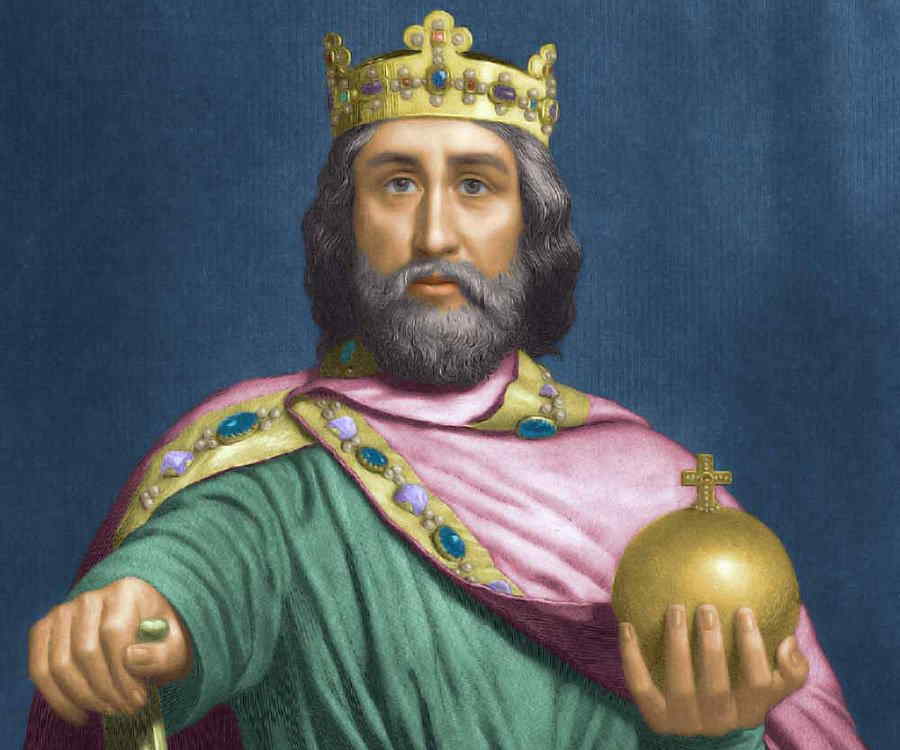
Charlemagne was a French king born in 747 AD, and is also the one of most famous French kings there is, and with good reason. He was the son of Pepin the Short and grandson of Charles Martel, who are both famous French leaders, but Charlemagne outshines both. Charlemagne’s name is actually a more simple “Charles” but after his exploits in almost the whole of Europe he became known in French, obviously, as “Charles the Great” which, when translated to English, is Charlemagne. He was born into the role of Prince of France, along with his brother Carloman. They both became co-emperors after Pepin the short died, but Carloman died young of what seem to be natural circumstances. Charlemagne, now the sole ruler of France, quickly quelled several uprisings that started after the successive deaths of Pepin and Carloman, most particularly those in Aquitaine, who had been captured by Pepin and now wondered if they could escape and be free. Boy were they wrong. After this he turned to Italy, because the Pope, Adrian the first, was being persecuted by the Germanic Lombard’s, who had taken over Italy and Rome. In two years Charlemagne conquered all of north and mid Italy, but didn’t have the resources to go to the southern tip. He then went south-west to deal with the Muslims that were encroaching on his territory through Spain. He went and conquered a good bit of Spain and drove out the Muslims. He then went north and captured a good of Germany and even the Saxons of Britain. All this means that not only was Charlemagne the most powerful man in Europe, but that his Empire was the largest since the Roman Empire. And in 800 an new Pope came into power and, wanting to get in good with him, crowned Charlemagne as the Holy Roman Emperor, so he is now known as the renewer of the Roman empire. In addition to his military might he also is well known for his emphasis on education for all people in his empire, which wasn’t very common for a ruler, especially one who conquered so much. Unfortunately for him and his descendants the empire splintered into fragments because of the princes. You see, when Charlemagne died Louis the Pious, a good friend of his, became the emperor, but his two sons demanded, and got, their own kingdoms. Then when Louis died his four sons all divided the empire and fought each other for land. This kept happening and the grand empire kept splintering until Charles the Fat reunited the land for the duration of his life, but when he died in 888 the kingdom fell again.

Saxon Culture: Based on the Book Wulf the Saxon

In the book “Wulf the Saxon” the author, G. A. Henty, describes the culture of the Saxons before they are conquered by the Norman peoples, which is the main plot of the book. But the book constantly shows how the English Saxons are very familial and friendly with their nights of feasting and such. unfortunately the Normans who invade are not as happy go lucky are more reserved then the Saxons, and more conniving. Unfortunately, (from my view) the main character, Wulf, thinks that the Normans have it right and embraces their culture more than other Saxons, and is this helps him keep his status after the invasion. I’m on the side of his friends and the majority of England in that a more relaxed approach to life is appropriate. The book didn’t really give a lot of information on the people, so I don’t know how accurate this is on the subject of the real Saxon culture, but it’s what I picked up from the book.

History of Islam

Islam was started by a man named Muhammad. Muhammad was a wealthy merchant who lived a pretty average life for an Arab. But that all changed while he was 40, because it was at this time that an angel commanded him to write down the word of God as Gods newest prophet after Jesus. He did this, and went to his town of Mecca to preach the new word of god. Well, the Meccan people didn’t like this new message so they threw Muhammad out. Muhammad then travelled to a neighbouring city of Medina and started preaching there. Unlike Mecca the Medinans liked this newest phase of Christianity and quickly appointed Muhammad as the leader of the city. The leaders of Mecca decided they had to stamp out Islam and so attacked Medina, but they were defeated so thoroughly that the Medinans captured Mecca, and it became a Muslim city. The religion itself, Islam, consists of 5 basic pillars, or important religious actions. The first of these is the Shahada, which is basically an oath that you believe that god is the only deity, and that Muhammad is his last prophet. The second pillar is Salat, or prayers, which is were Muslims pray to god five times a day, in the direction of Mecca. Zakat is the third pillar and is where you are supposed to give money or service to those in need. The Fast of Ramadan is a month long fast where no Muslim is allowed to eat during the day. The final pillar is called the Hajj, which is where all Muslims must go and visit the Ka’bah, a holy shrine in Mecca. After adding Mecca to the early Islamic empire the Muslims went north and captured considerable land from the Byzantine Empire and the Persian Empire. This and the conquest of the rest of the middle east was what the first dynasty of the Islamic empire did, with the second capturing north Africa and Spain. After this dynasty the empire slowly shrank and never reached that size again. The third dynasty is called the Abbasid dynasty and started as a more intellectual dynasty and converted the empire, turning the Muslim percentage of the population from 40% to somewhere in the 90s. This dynasty lasted 500 years but disintegrated due to lazy rulers. The next dynasty is known as the Ottoman Empire and lasted 600 years until it fell apart due to World War 1. This empire is still around today, but is normally referred to as a country, so the Islamic empire never really ended but sort of transformed to todays world.