The History of Soccer

Soccer is one of the most popular sports in the world and has been around for quite a while. Much longer than other games, and it will probably last a bit longer. I play soccer, and I think it is the best sport there is, which is why I researched it’s history and wrote it/typed it down.

Like most things, soccer was made in China. The earliest recorded instance of a sport that resembled soccer is from China during the Han Dynasty, which went from 206 B.C. to 220 A.D. (roughly 400 years). This Chinese soccer-like game was called cuju, and was originally made by the military commanders as a training exercise, so that the soldiers could practice working together and running around while being aggressive to the other team. This was near the beginning of the Han Dynasty and by the end of the dynasty the game of cuju had become very popular as a sport and not just as a training exercise, thus becoming a popular past-time for the Chinese royalty and even the emperors. Throughout the dynasty’s before the Ming Dynasty (1,100 years later) cuju kept increasing in quality and popularity (or as much as it can after being played by the emperors), but began to decline and eventually end in the Ming Dynasty. [1]

Pasuckuakohowog was played by the Native Americans in the 1600s, and is extremely close to what we call today “cross country soccer”. This is because the goals were a half-mile wide and a mile apart. There was no “out of bounds” in this game, so you were able to take the ball beyond the goal and score from that side. It was often played on beaches since that was the only common area big enough and flat enough for easy play. [2]

The rules for modern soccer were originally made at the Cambridge university in 1848. Many schools and clubs had come together to form these rules to their liking, but many still did not like the result, so left to play on their own, leading to American football and other offshoots. The modern soccer is played with a maximum of eleven players and a minimum of seven. The positions are normally divided into Forwards who take the ball to the other teams goal, defenders who keep the ball away from their goal if it gets close, and midfielders who run all over the field and play as both defenders and forwards. The other position is the goalkeeper, or goalie, and they stay near the goal so that they can grab or stop any shot the offensive team make at the goal. Goalkeepers are the only players allowed to grab the ball with their hands, but only in an area around the goal. Other than this no player is allowed to touch the ball with their hands. The punishment for touching the ball with your hands is a penalty kick for the team that didn’t do the fouling. A penalty kick is where the fouled team gets a free kick from where they got fouled to any place they want, but the team that fouled has to give them space to kick the ball. Once the fouled team touches the ball the other team is allowed to close in and resume normal play. Other than touching the ball with the hands you can get a foul by injuring a player. [3]

The history of soccer is pretty interesting, and I hope you enjoyed this paper on the subject.

1 “Sports”Encyclopedia Britannica.

2 Roberts, Mike. “Little Brothers of War Ball games in Pre-Colombian North America”. The same old game: the true story of the ancient origins of football

 3  “Cambridge University”Bell’s Life in London. 21 November 1863. p. 9.
Minoan Greece

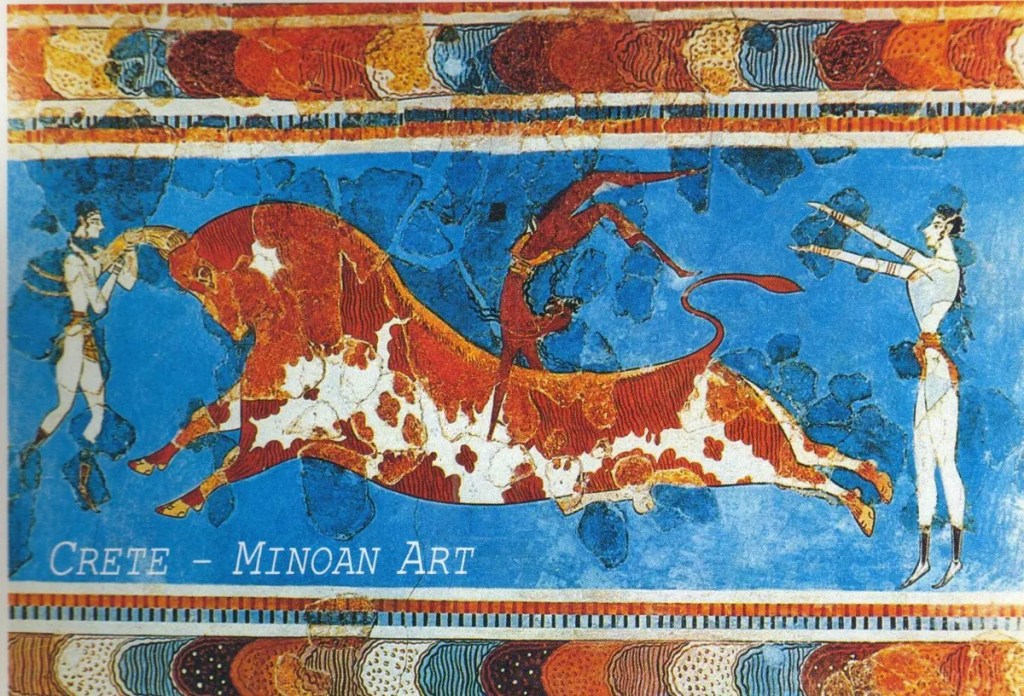
The Minoan civilization was a very advanced culture in Greece during the Bronze age. The Minoans were primarily situated on the island of Crete, though they did populate the nearby islands. This position in the Mediterranean sea allowed them to trade quite heavily with Egypt, mainland Greece, and Troy, now modern day Turkey. Because of this location the Minoans became very rich, which is what happens when you have people from three different nations giving you their gold in exchange for the Minoans wheat and grain. Because of this wealth the Minoans were able to spend lots of their time watching sports and feats of strength. The most popular of these sports was bull dancing, which is where an acrobat makes a strong bull angry, and as the bull charges the acrobat leaps up over the bull, and sometimes they would do fancy moves like handstand on the bulls back, or stand on the tips of the horns. This bull dancing is still preformed by people in Spain today. The only problem with this location that had served them so well was that it was prone to earthquakes and eruptions. The first earthquake destroyed several Minoan cities and palaces, but the Minoans where not going to give up their land so easily, so they rebuilt. Some time later, after the Minoans had colonized several islands, their became an island that was almost as important a trading center as Crete itself. This island was called Santorini, and in 1450 B.C there was an eruption on Santorini that almost destroyed the island. The Eruption was so powerful it shook Crete, toppling a few palaces. The loss of Santorini was a blow for the Minoans, but they could have recovered. But, the eruption had triggered an earthquake that damaged the island. And as if that weren’t enough 20 meter high tsunamis attacked the island because of the earthquake. Because of this the Minoan civilization was crippled, and without a doubt would never have regained it’s former glory, but the gods weren’t done yet. Triggered by the earthquake it had started, the volcano on Santorini blew it’s top off again. This time, though, it was much more powerful and the ash cloud covered and choked all the life out of Crete, which seems a bit overkill to me, but it effectively ended the Minoan civilization.

English 6 Lesson

The English literature class consists mainly of reading books and learning vocabulary words, but personally I knew most of the vocab words and the ones I learned were of no use, since they just don’t come up in every day life. The books that we read were extremely childish and short, and just plain bad storytelling. the only good one was the last book in the school year, Call of the Wild. So these lessons felt like a waste of time, the only thing learned being how bad books can get.

Romulus Augustulus

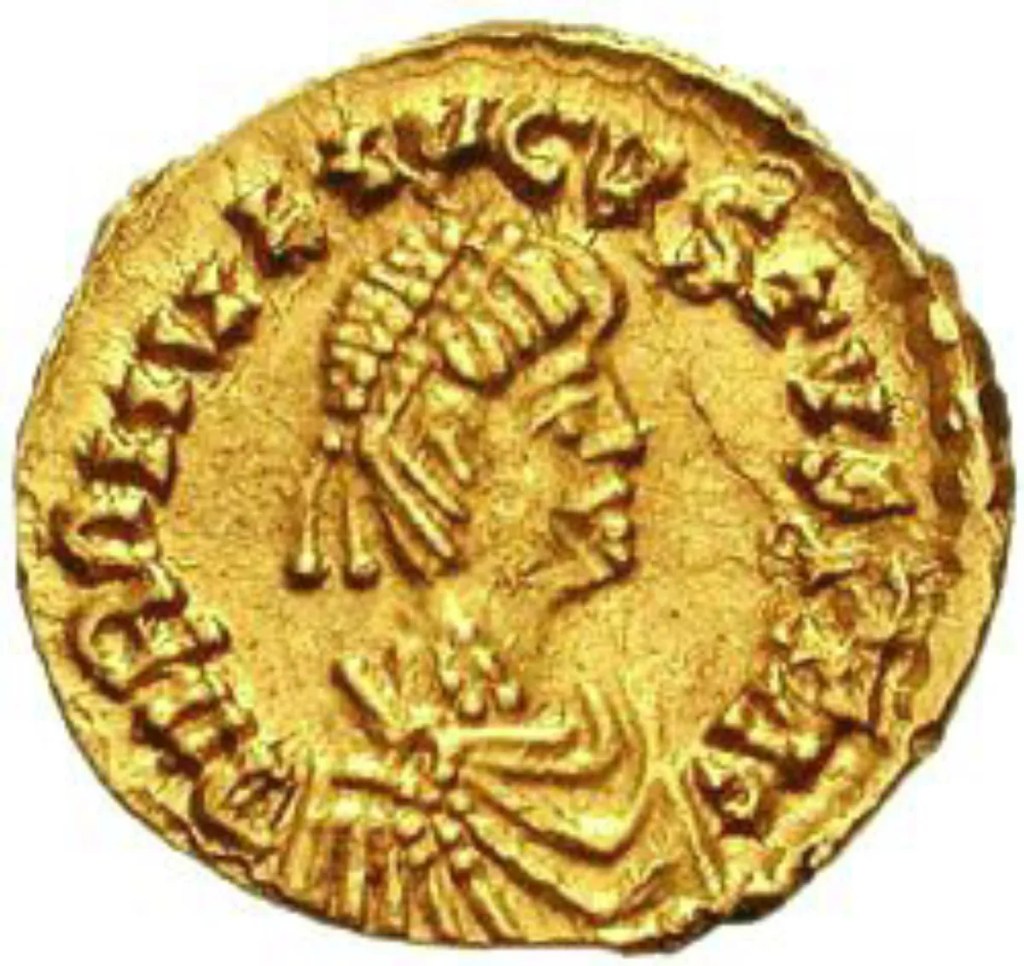
Romulus Augustus, also known as “Augustulus” which means “Little Caesar” in English, was the 98th Roman Emperor and the last Emperor of the Western Roman Empire. His father had worked up to the position of “Magister Militum” which is the leader of the whole military, and tried to kill the emperor Julius Nepos, but failed. The emperor got away, but never reclaimed his emperorship. Instead of becoming emperor himself, Orestes proclaimed his son, Romulus, as emperor in the hopes that the common people of Rome would think “Hey, that kid Romulus (who was 10 years old) is a cute emperor!” instead of “that guy Orestes killed the emperor! let’s get him!” This tactic proved effective, since the people never rebelled, but the Barbarians outside of Rome didn’t care how old the emperor was. Shortly after Augustulus became emperor a barbarian chief named Odoacer came to Rome and demanded them give him 1/3 of Rome’s total land, which Orestes promptly refused to do. Odoacer then kidnapped Orestes and tortured him to death, which left a child in control of Rome, and the military refused to follow a child, meaning Odoacer was able to walk right up to Rome, walk through the city, walk through the palace, and politely asked Romulus Augustulus to kindly step away from the throne and Rome as a country. We have no idea what happened to him, or if he had any children, or how far he went from Rome. What we do know is that Odoacer began to rule Rome, though never took the title of emperor, instead being a king of Rome. This brought the Roman Empire to its end after 503 years. The Eastern Roman Empire, also known as the Byzantine Empire, continued for some time, but the Western Empire was the true heart of Rome, and without it the Byzantine Empire was a completely different Empire.

Gnosticism

Gnosticism is an offshoot of Christianity, and is generally considered a heresy by “proper” Christians, and that believing in it would send you to hell when you died. The main difference between Gnosticism and “proper” Christianity is the fact that Gnostics find the material world (things we can touch and feel) disgusting and impure, while thoughts and spiritual knowledge are extremely pure. Christians thought god created all material things, so all material things are pure, and that spiritual things were also pure because god is spiritual and must go as Jesus in a physical form. The Gnostics say that there are in fact two godlike beings, one is a pure and spiritual god that is named Monad and is extremely benevolent, and one is a blind, horrible, evil god, named the Demiurge. It is this Demiurge that created the world and us people, which is why the material world (and us) are impure. The Gnostics then say that god sent Jesus to Adam and Eve in the garden that the Demiurge created. Jesus then took the form of a snake and told Eve to eat the apple of Eden, which housed some of the true knowledge of Monad. After this Eve took the apple to Adam, who ate it, which gave them sentience, which in turn gave them superiority over the other animals. Realizing the Demiurge was a wicked being they fled from it and started civilization. Later on in the bible they have Jesus come again, after helping Eve. Jesus in Gnosticism is not a physical person on the earth, but a concept of knowledge that has come to help people, and so he is knowledge that the disciples have discovered on there own, though Judas understood the concept of Jesus better than the others. Since jesus is not a person, merely beneficial knowledge, he was never raised on a cross, never died, and never came back to life. There were several books that promote Gnosticism that never made it into the bible. Some of these books, such as the book of John, the book of Judas, and the book of Thomas, implies that heaven is not a place you go to but a symbolic representation of knowledge. He says “If those who lead you say to you: ‘Look, the kingdom is in the sky!’ then the birds of the sky will precede you. If they say to you: ‘It is in the sea,’ then the fishes will precede you. Rather, the kingdom is inside of you and outside of you.” By this the Gnostics believe he means heaven is knowledge, and is therefore “inside of you and outside of you.” Gnosticism is a very uncommon religion because the early church fathers did a good job burning all the books, but recently archaeologists have discovered new books that support Gnosticism.

Commodus

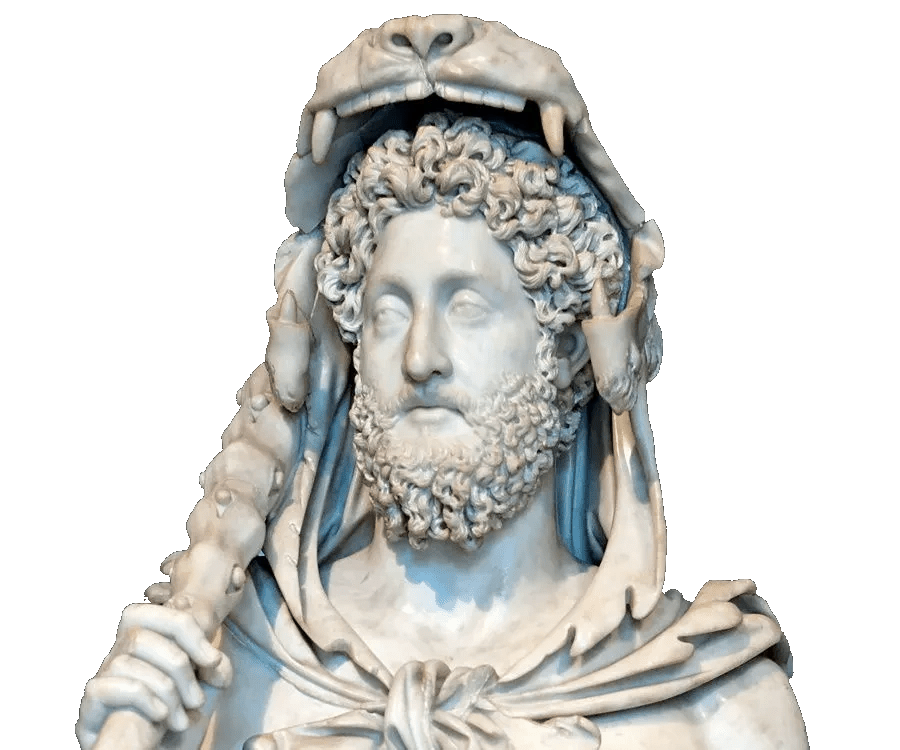
Commodus was the eighteenth Emperor of Rome, and is remembered as one of the worst. He was the son of the previous emperor, Marcus Aurelius. It is believed that his being brought up through childhood with his every whim answered that made him into the conceited brat we know. His father is known as the philosopher emperor, so it is odd that Marcus did not teach his son about philosophy, or if he did, his son didn’t listen to him. Marcus had started many wars and wasn’t able to end them before his reign ended, so the wars carried on to Commodus’s time. But Commodus did not care about expanding the borders of the empire or making more money off more taxpayers, he only cared about enjoying himself. So he quickly traveled east and north and signed treaties with the rebellious people that were greatly to Romes disadvantage, so when he returned home he was known as a coward by some people, and as a peace bringer by others. These conflicting opinions on the Emperor were quickly ended however, when he began to enter the coliseum. Before Commodus the coliseum was a place where the common people were able to gather when they wanted to see some bloodshed, with gladiators fighting animals from all over the known world in the morning, while gladiators would fight each other in the afternoon. During these afternoon battles the emperor would choose if it had been an entertaining fight or not. If it was entertaining both slaves won their freedom. If it was a poor fight, however, the winner would kill the loser and wouldn’t win his freedom. During Commodus’s reign, however, he joined in on the gladiator fights, something that was considered by all to be very menial and far, far below an emperors station. But Commodus didn’t care what people thought about him, he only wanted to have fun, so he would fight animals and gladiators, and it is unclear what his actual skill was, since the gladiators knew they would be punished if they killed or maimed him, but the animals wouldn’t have had such qualms. Commodus is recorded to have killed many dangerous creatures such as rhinos, elephants, hippopotami, and most famously, ostriches. All of these he killed by the hundreds or thousands, at least, that’s what was recorded. Alongside the crocodiles he mass slaughtered gladiators, though this doesn’t really mean anything about his strength. All throughout his reign he did this, and he would often execute members of the senate for not pandering to his every whim and want.

He started showing off his full ego when he began naming things after himself, such as the city of Rome, the senate, each of the twelve months of the year, and the military. He left nothing in Rome without his name, and he even renamed the fleet of ships that transported wheat and grain to Rome from Egypt. Eventually, in 192, the senate had had enough of him and put a poison in his drink. He immediately tasted the poison and spit it out. After this failed assassination attempt he started bragging that he had the strength and vitality of Hercules, which angered the praetorian guard, and so they sent a professional wrestler into Commodus’s bath so that he could strangle him. This murder succeeded and Commodus was no more. After this the remaining senate (he had killed quite a few) completely reversed all of the name changes and laws that Commodus had made, restarting the old wars. The movie “Gladiator” is based on this time period.

Food in Rome

Food was very important in ancient Rome. Farms did not have the machines we have today, so they were not able to harvest or plant nearly as much food, meaning food was a lot rarer and more expensive. This meant the poor people could only get the bare minimum of food for their families. The bare minimum for their families usually consisted of a bit of bread in the morning and some porridge and bread for dinner. Because of this the wealthy people in Rome saw food as a way to prove they were wealthy. An example of this is the stupendous food parties the richer people would throw. They would have almost all the food be imported items from other faraway lands. Some of the meals they had consisted of jellyfish, squid, flamingo, peacock, ostriches and their eggs, and pork and bacon were also uncommon in Rome. All of the above were often tried in many different cooking methods, such as roasting, boiling, and frying, and many different spices would be used to literally spice things up. Along with the food that the rich would eat they often had many different drinks available, such as wine (watered down and regular), fruit juices and coconut milk. Needless to say, the providers of these foods became quite rich quickly, and the Romans spent a lot of money on food. Sometimes the emperors and other successful Romans would buy food for the poor and would hand this food out, which would be a very nice gift to the poor people living off bread, making these rich people very popular with the people.

Rome’s Economy

The Roman economic system was based of the classes of wealth the people had. Meaning what jobs you could get was based on how much wealth your family had when you were born. Now, in Rome there wasn’t really a middle class, people who are doing well but not as good as the really rich people, there was only the really rich people (the patricians), the poor people (the plebeians), and the slaves (the slaves). If you were born to a very wealthy patrician family you had a few options. You could rise quickly through the military or become a politician, and becoming a banker was a highly profitable business, particularly since the bankers could take the man he’s loaning to and the same man’s family as slaves to be sold or used. But if you were a very well educated patrician you could become a doctor or other high standing job that required high intelligence like being one of Romes famous architects. If you were a Plebeian, however, your not going to be able to make a lot of money unless you somehow manage to become fast friends with a patrician, which is unlikely since most patricians look down on plebeians distastefully. Despite this you could still make a living for your family by becoming any one of a hundred things that help life get on. Some of the more prominent examples of these are bakers, farmers, craftsmen who made furniture, and shopkeepers, though there are many more. At the bottom of the food chain there’s the slaves, often made slaves because they failed to pay up on a loan or because they stole from their soon-to-be master, and as a slave you can have very differing lifestyles, depending on the master. If it’s a patrician who has you as a slave you’ll probably live a very nice life as their unpaid servant, because you’ll get a sleeping area in the patricians house which is always pretty nice, and you’ll only have to do the dishes, clean the house and do any menial task they give you, which is rarely life threatening. But as a plebeian’s slave you’ll have to do particularly unpleasant work and you have to live with them in their small home. But the worst possibility for a slave is if they get sold to the Empire for labor, because you’ll then have to constantly work on building roads, palaces, aqueducts and any other building project. There’s also the chance you’ll have to work in the mines, which is horrible because you’ll probably be crushed by the earth, or suffocate because of the lack of air. So life in Rome was really dependent on what class you’re born to, meaning it was pretty depressing for plebeians and some slaves.

Pompeii

Pompeii was a Roman city located on the point on the map above. Pompeii was a pleasure city with 20,000 people living in the city. It was in the Roman empire until 79 A.D. greatly resembling modern day Las Vegas. The reason it stopped being ancient Las Vegas in 79 A.D. is that the nearby Mt. Vesuvius became nearby volcano called Vesuvius, which erupted and sent out giant clouds of ash for miles around. These ash clouds buried the city 20 feet deep, killing all 20,000 people and completely hiding it from later Roman searches. During the eruption of Vesuvius a man named Pliny the Younger was on a boat in the bay of Naples, the water between Naples and Pompeii. From that boat Pliny was relatively safe from the heat and while he was below decks he was safe from the ash. Pliney was a writer, and so he wrote a first-hand report about the eruption, which is quite useful. Pliney spent most of the rest of his life talking to other survivors and eye-witness’ from another lesser known city called Herculaneum which was also destroyed by Mt Vesuvius, but by the lava and mud flows, not the ash clouds, while he investigating where Pompeii disappeared to, because the roman searchers couldn’t find it. It wasn’t until 1863 when Giuseppe Fiorelli began systematic searches that Pompeii was fully unearthed. Part of the digging process was that they would pour plaster of the better quality resin into gaps left in the ash by decomposed bodies of the people in Pompeii, thus giving us accurate images of the dying people. This is why Pompeii is so famous in Rome, though another major aspect of Pompeii is how debauched and depraved it was, leading people to think of it as ancient Las Vegas.

Emperor Caligula

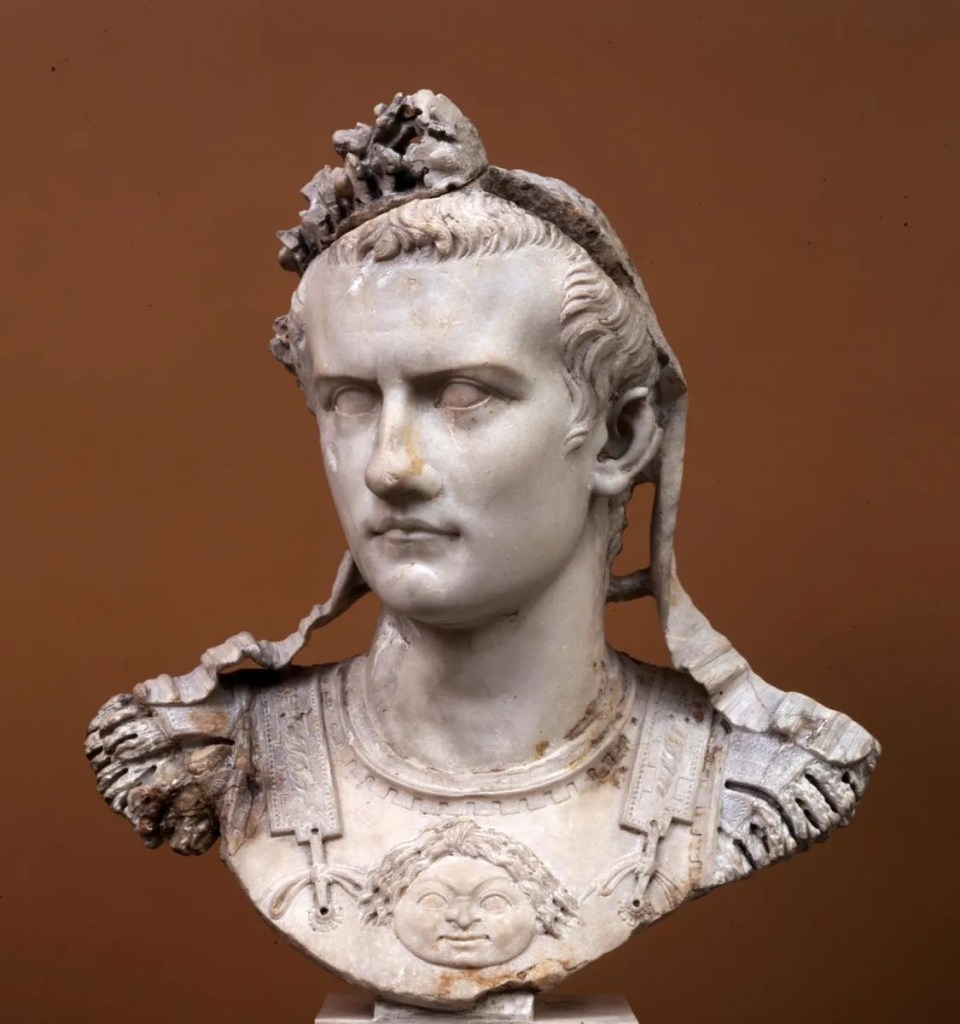
Caligula was the third Roman emperor if you don’t count Julius Caesar as an emperor. He was born in 12 A.D. with the name Gaius Julius Caesar Augustus Germanicus, so it makes sense that today we know him as Caligula. His father was Germanicus, a very popular and successful general who got his name Germanicus, “Thrasher of the Germans”, by successfully conquering Germany. Caligula’s father spent so much time around military camps that he took Caligula with him often, and his mother Agrippina the Elder made him a miniature soldiers uniform, complete with armor and little military sandals. This became so iconic that the soldiers started calling him “Caligula” which means “little boots” in Latin. Because of this Caligula became the unofficial roman military mascot, meaning the majority of the army liked him. I believe Germanicus did this on purpose so that if Tiberius (the current emperor) tried to make someone else his heir, the army would side with Caligula in a civil war. Tiberius probably saw this, so in 19 A.D. Germanicus was killed by poisoning, and the man who was believed to have done the poisoning committed suicide just before official investigation started. Shortly after the death of beloved Germanicus, Tiberius forced Agrippina to flee the city, leaving her son to Tiberius. The emperor trained Caligula in being an emperor and named him his heir before his death in 37 A.D. After becoming emperor Caligula did many things such as stop treason trials and call back exiled Romans, among others. But in October of 37 A.D., just 7 months after becoming Emperor, he became seriously ill. He recovered physically, but all reports say his mental state rapidly deteriorated. It’s hard to say if these reports of his craziness and perversity as emperor really happened, or were stories made by his enemies who had very good propaganda. If he found out that in today’s world we call him Caligula, he’d be shocked to the bone. During his reign he did the best he could to get rid of his past as “little boots” and to be simply “Emperor Gaius”. If his enemies are so good we still call him by their propaganda, who knows if he really was a depraved and debauched emperor, or an emperor who simply made to many enemies. He is also remembered for his building projects, which were numerous. Most of them were temples dedicated to himself as a god and palaces for him to live in, though he is also famous for building two major aqueducts that supplied a large amount of water to the city of Rome. Another less well known building project was his two Nemi Ships, giant pleasure yachts that were 70 meters long and 25 meters wide, not found and pulled to the surface after sinking until 1944. Caligula died in 41 A.D. after being knifed to death by his own bodyguards. Caligula is remembered as a debauched emperor, though we have very little knowledge of what really happened during his reign, and the information we do have is probably propaganda.