The Swiss Family Robinson book that I read and the Disney movie based on it are so different in the story and personalities of the characters that it seems to me almost pointless trying to compare them. The book is all about a family getting shipwrecked on an island and the family doing their best to survive on the islands resources and the few provisions they have from the shipwreck. However, the movie has the storyline of a shipwrecked family setting up Home Alone traps while fighting pirates. The characin the movie Jack doesn’t exist, and his character is instead blended with Ernest so that Ernest was more interesting. They also made a love triangle with Ernest and Fritz fighting over Roberta, the movies Emily. The character of the Mother was changed from a happy “we can do well here” in the book to a “this place is so horrible we can never live here under any condition” in the movie. I understand that Disney wanted to make a fun movie for kids, and I think they succeeded splendidly, but it’s not the book. the book was all about the family making inventions and catching animals, which is quite slow-paced and wouldn’t make for a great kids movie. because the stories and themes are so different I think you might as well consider the book and the movie completely different entities that can’t be compared in how well they did one thing or the other.
Jesus Christ

The Jewish people had been restored to their home of Jerusalem in Palestine by the Persian Empire in 539 B.C. after being captured by the Babylonians. In 332 B.C. they were mostly left alone by Alexander the Great as he conquered the Persian Empire because they were afraid of Alexander. After this the Jews were caught between the Seleucid Empire and the Ptolemaic Empire as Alexanders Empire came crashing down. They weren’t stuck in the struggle for long though, because the Ptolemaic Empire decided that it wasn’t worth it to battle against the Seleucid Empire, meaning the Jews were now under Seleucid control. Antiochus was the king of the Seleucid empire and thus controlled the Jews. Antiochus is remembered as a cruel ruler who relentlessly broke down the Jewish beliefs and utterly disrespected Jewish customs. He was eventually overthrown in 141 B.C. by a group of Jews called the Maccabees. This rebellion is celebrated by the holiday of Hanukkah. Shortly after this event Pompey added them to the Roman Republic in 63 B.C. though Rome let them rule themselves for the rest of the time it was a true republic. After the assassination of Julius Caesar, Mark Antony appointed Herod as the ruler of Judea. Herod is known for his tendancy to murder anybody that he suspected of trying to gain his own power, and therefore killed most of his own family. It was during the rule of Herod that Jesus Christ was born. Octavian Augustus Caesar became the emperor of Rome beforehand, however and called for a census of his empire, because he wanted to know how many people he ruled over. Because of this Jesus’s parents, Mary and Joseph were forced to go to Bethlehem to be counted in this census. It was in Bethlehem that Mary gave birth to Jesus. Far to the east three wise Persian men called Magi saw a brilliant star shoot off towards Bethlehem and since they had a legend about a brilliant star leading them towards a newborn great king they followed the star all the way to Bethlehem. When they got there they went to see the king Herod and asked him if he’d had a son. Herod had not had a son, and was thus furious at the idea that a futere king had been born and immediatley began thinking about how he would deal with the problem. The Magi then continued on their journey and met Jesus as he was a baby. They then presented him gifts fit for a king and warned Mary and Joseph to get out of the city since they knew Herod was planning to kill all baby boys under the age of 2. Herod did this, but Jesus had already gotten out of the city and fled to either Egypt or India and lived there until he was 30 years old. Once he was of the age of 30, and Herod had died, he returned to Rome and began his ministry and his preaching. During this time Christians believe he preformed many miracles, and everyone believes he did lot’s of preaching on the way to live that would bring the most joy to their lives and afterlives, though not nearly everyone agrees that what he said was true. Eventually the Jewish people heard what he was saying and realized that he was saying he was God and that was very blasphemous, so they payed one of Jesus’s disciples, Judas Iscariot, $600 to detain Jesus for them so they could bring him to the courthouse. Pontius Pilate, the new Roman ruler after Herod died, realized he couldn’t do anything without eliciting the Jews rage so he gave Jesus to the people to do to as they wished. They put him on a cross rather famously and he died, but according to the christian religion he came back to life three days later and continued to preach for 70 more days before going up to heaven. Christianity is still a prevalent religion today and is practiced by many people.
Julius Caesar
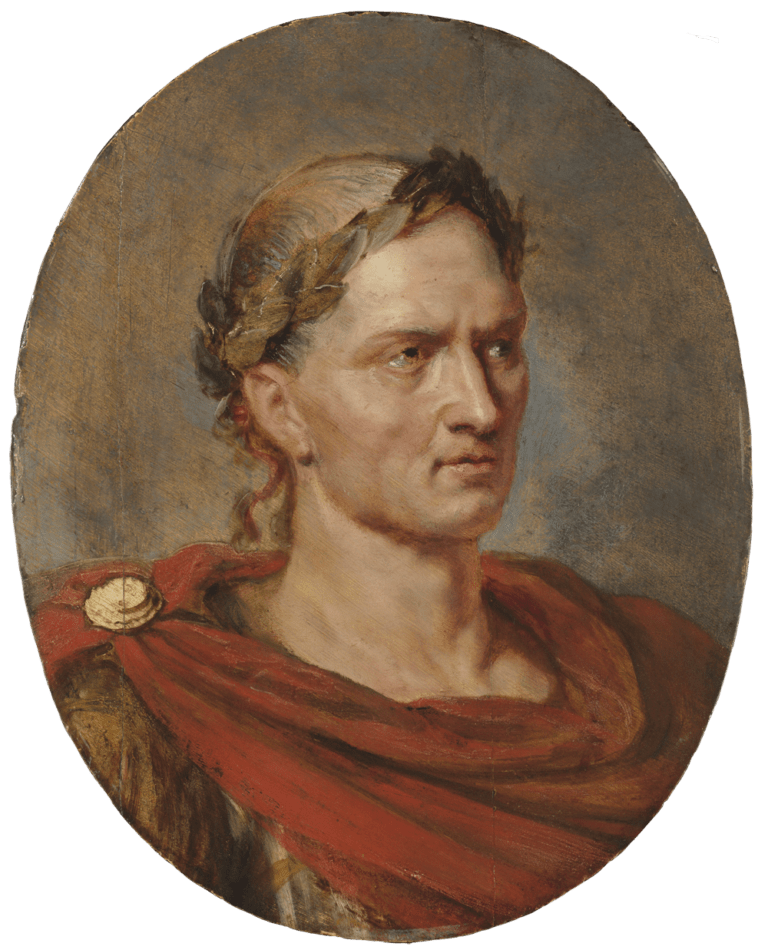
In 170 BC the Roman Republic was going through some political difficulties as Marius and Sulla began their rivalry. It started when the army started having difficulties keeping its soldiers in the army. The reason behind this was a law that said all roman soldiers had to be land-owning citizens. The problem with this was that the wars the soldiers partook in would be too long for the soldiers to be able to keep up on his land and farm, so they wouldn’t be able to make money or food off the farms, forcing them to sell it to a big company that didn’t go to war. As soon as they sold their land just to get some food they weren’t land-owning citizens and couldn’t be in the army. A general named Marius saw this problem and when he became consul (one of two leaders of the Roman Republic) he changed how the army worked and allowed non-land-owning citizens to join the army, and even to earn citizenship if they weren’t already citizens. I covered some other changes he made in a post called Roman Military. He was made consul for driving back the Gauls, which he had done after being exiled by a consul named Sulla. He was made consul and had driven out the Gauls while Sulla was out conquering new bits of land when he heard about Marius being consul. He rushed home to find that Marius had died peacefully of old age. Sulla made several other laws that were all very bad for Rome when two generals Pompey and Crassus decided to do something about Sulla. But, they needed the help of another general to be able to be effective. The name of the third general was Julius Caesar. Together these men made up the first Triumvirate and they managed to banish Sulla and take control of the entire Roman Republic. However, Julius Caesar wanted more power, so he arranged for Crassus to be killed in Syria and for Pompey to be at war in Portugal while he became Dictator for life, which is a polite way to say emperor. His plans worked, and Pompey was caught by surprise. After a few bloody battles Pompey was eventually defeated and killed, making the way clear for Julius to stay basically-emperor-but-not-really for the rest of his life, which wasn’t long because the senate realized their own power would be diminished as long as there was a dictator for life, and stabbed Caesar to death rather famously. Caesar’s last words were “Et tu, Brute?” which means “You to Brutus?” referring to the fact that his best friend and senate member Brutus had also stabbed him.
The Punic Wars
The major powers in the Mediterranean at 280 BC were Greece, Rome, and Carthage. There was a king of Greece named Phyrrhus at the time who decided to go to war with Rome, because Greece didn’t like the treaty they had with the Romans, and to go to war with Carthage at the same time because he wanted to conquer Sicily, which was under Carthaginian control. The war ended five years later in 275 BC and Greece actually won, since they got a new treaty with Rome they liked and took Sicily from Carthage, but Greece had lost far more men the Romans or Carthaginians had, had became a territory of Rome, and both Carthage and Rome swooped in and took Sicily from Greece. This form of victory that’s really a loss is called a Phrrhic victory. After this the only main powers in the Mediterranean were Carthage and Rome. Carthage owned most of Sicily and Rome owned a small portion of the island but some of the city’s were free, such as Syracuse and Messina. Syracuse attacked Messina and since Syracuse was stronger than the city, Messina asked Carthage for help. Carthage was dealing with it’s own problems at the time and said no. Messina then asked Rome for help and Rome agreed. Carthage wanted to fight Rome, so they used this an excuse to fight Rome and sided with Syracuse, the attacker. This led to many more battles between Carthage and Rome with Rome winning almost all of them. Eventually they beat Carthage and took Sicily for themselves. Carthage, angry at the Romans, eventually broke the peace and fought Rome in the second Punic War. The Carthaginian general who fought the second Punic War was named Hannibal, and he is known as one of Rome’s greatest enemies. He led his army across North Africa, through several mountain ranges including the Alps, though Spain and France, into Italy. Once there, he fought a continuous battle for 17 years before the Romans sailed straight through the Mediterranean to Carthage and enslaved it. Hannibal rushed back home only to be killed by the Roman army. Carthage survived, but remained a slave of Rome until they disrespected the treaty they had made with Rome. Once that happened Rome went over and completely annihilated the city. That is the majority of the Punic Wars.
English 6 Lesson 125
If I could live wherever I wanted I would live in the world of Pokemon. I would live more specifically in the Sinnoh region, because I have the most experience with that area. I would like the Pokemon because I do like raising them like pets and I’m very sad when i don’t have much friendship with them. I would also enjoy getting the gym badges and proving my Pokemon are raised well. I believe I would enjoy completing the Pokedex would be more fun as well. That is why I would live in the world of Pokemon.
Roman Military
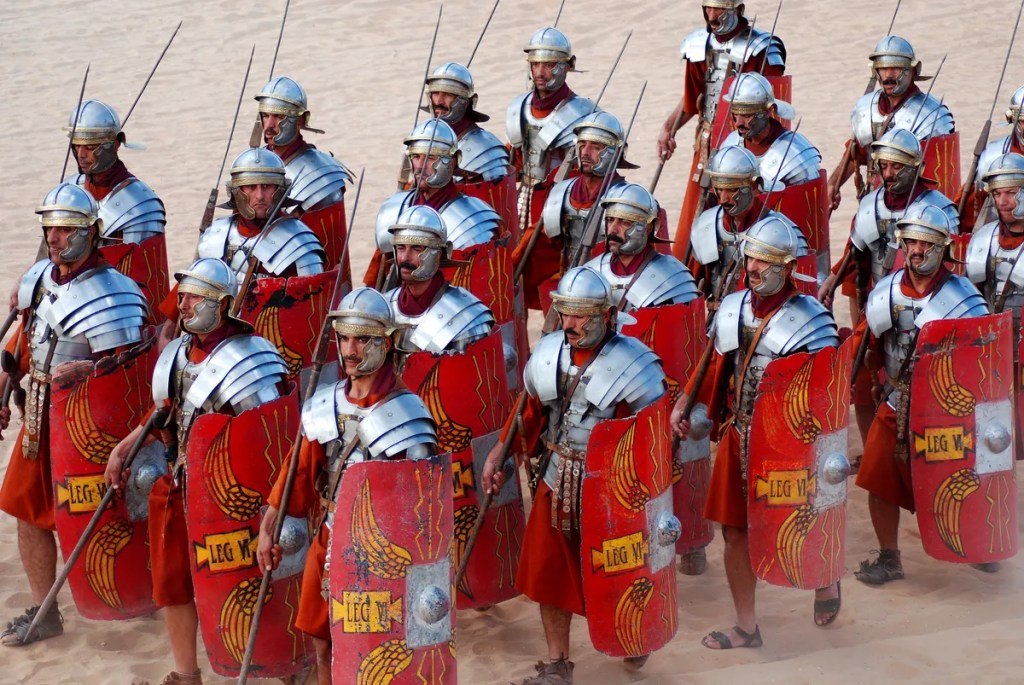
Whenever there was a war in Rome all land-owning male citizens of Rome were forced to report to the field of Mars, god of war. The field was in the center of Rome, where all could easily reach it. At the field the permanent soldiers would train the citizens to be soldiers. Soldiers were grouped into legions, each of which held 4200 men. The legions were further divided into roughly 20 maniples. The military wasn’t very coherent and they did’nt write down reliable information until they changed the system altogether. This military system was kept up by the Romans up until 107 B.C. when they were conquered by the Gauls. A military commander named Gaius Marius had been exiled for political reasons before the events of the Gallic Wars. When he learned that Rome was being destroyed by the Gauls he gathered an army from the countryside on his way to Rome and fought with the Gauls. When he won and drove the Gauls back to France was named second-Romulus, who was the most respected figure to the Romans. As such he was reinstated as leader of the roman military and decided to fix some things about it and clarify some rules. This new rendition of the Roman military upped the size of a legion to 5000 men. Each legion was divided into 5 cohorts, which were in turn divided into 10 centuries. Marius also changed the qualifications for the military, making it so even slaves could join the military and earn their freedom if the got promoted high enough. This form of the military stayed the same for 470 years. This form of military is part of the reason Rome became so famous and powerful, so if anyone reading this has plans to do what Rome did I recommend using this military formation.
English 6 Lesson 120
My favorite character out of all the books I’ve been assigned to read this year is Passepartout from the book 80 Days Around the World. Of all the characters he is my favorite because he is funny, something that can’t be said for the other characters. another thing going for him is that he’s a total idiot, a buffoon, and the writer actually intended him to be silly and dumb, whereas in other books most of the characters are just, if not more, stupid then he is, although they’re stupid because the author is dumb and thought he’d made his characters smart. Combined with his humor and idiocy is the fact that he is put in relatable situations and that makes him endearing.
Roman Mythology
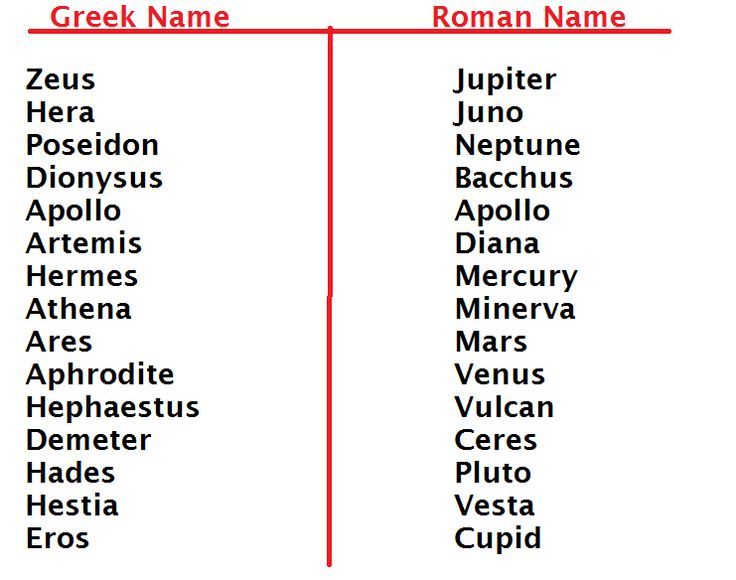
Rome had a religion just like all the other ancient kingdoms before Christianity, and then atheism, took over. Rome is well known for copying things from other cultures the conquered or traded with and then adding their own little flair, like architecture, military formations, and religion. Like architecture, the Romans copy-and-pasted their religion from Greece into Rome, but not before changing it up a bit. The most famous thing they changed is the names of the gods, like Zeus into Jupiter, Poseidon into Neptune, Hermes into Mercury, and so on. The picture shows all 12 Olympians, plus Hades/Pluto Hestia/Vesta and Eros/Cupid. But a less well known change in the mythology is in the gods personalty and the emphasis on their godly domain. For example, Ares in Greek mythology was one of the worst gods and was disliked by everyone because nobody in Greece liked war, or more accurately, dying in war. But one of the most famous aspects of Rome was how much conquering they did and how brutal of fighters Romans were, so when Ares became Mars for the Romans they worshiped him and made him the second most important god in their pantheon. A change they made to all the gods, however, was that they were much more formal and interacted with the Romans in the stories with much more of a “higher class looking down upon a lower class” vibe. As such, they no longer had children with mortals, and so the Romans came up with different versions of all the hero’s parentage. Hera in Greek stories was much more antagonistic to the heroes of Greece and to the other gods, but in Rome she was a protector of families and always did her best to protect soldiers out at war and to get them home safely to their families. Notice that doesn’t mean that she helped them win, however, since that was Mars and Minerva’s duty. Minerva’s Greek form was Athena, goddess of wisdom and architecture. She was then shifted to Minerva, goddess of battle strategy and wisdom. The ruler of the gods, Zeus in Greece, was a pleasure-seeking old guy that threw lightning at people that displeased him, but in Rome Jupiter was a sharp ruler that made sure the people in Rome were treated right and protected the rulers with his lightning. Among all the Greek gods, however, only one remained unchanged by the Romans, and that was Apollo. There are a great many other changes and gods that the Romans made, and if this post about the Roman mythology have interested you, I hope you will research the rest of them on your own.
A Wonder Book for Boys and Girls and Tanglewood Tales, both by Nathaniel Hawthorn
A Wonder Book for Boys and Girls and Tanglewood Tales are both books written by a man named Nathaniel Hawthorn. They both have six short stories that recount different Greek myths or sections from longer myths along with an overall story in both of them, with A Wonder Book having a modern day story-teller tell a group of children about Greek myths, and Tanglewood Tales having the same story-teller show his publisher six new stories he’d like to publish as a book, which he does. Hawthorn has obviously watered down the stories and nobilized the hero’s, leaving out the (by todays standards) bad things they did and not including the often horrible deaths they had for children, since it would be bad for their role models to cheat on their wives (Jason), murder their families (Heracles, repeatedly) and so on. So I get why he did it, but it still frustrates me that he just changed the stories, often made made up large parts of the story, and left out the original moral of the story with a bit of typing. I don’t know if he intentionally or unintentionally meant for adults to believe them, but as far as I know everyone who doesn’t directly study Greek mythology believes these versions of the stories, and it frustrates me immensely. I recommend reading these books only if you have read the originals or if you plan on reading the originals, just so you know what he made up and what’s actually Greek. Otherwise, it would be better for you to remain ignorant and uncaring.
King Romulus
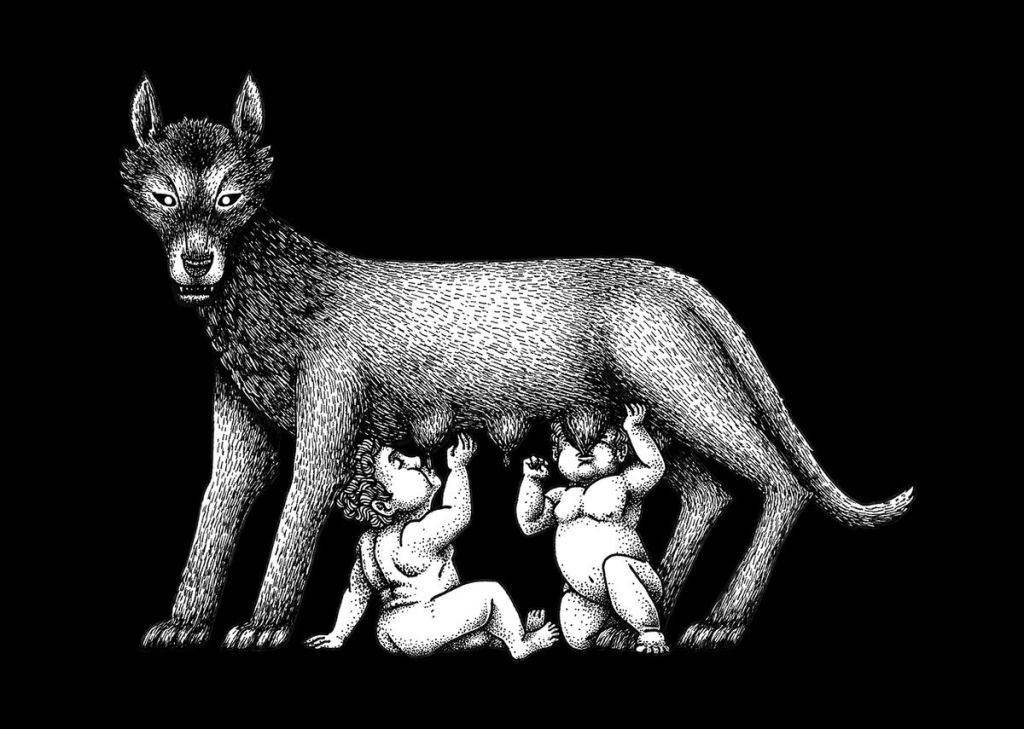
Romulus was the founder of Rome, the first king of Rome, the most famous king of Rome, and the most beloved king by the people. He was born near 770 B.C in Alba Longa to his mother, Rhea Silvia. Rhea had been forced into priesthood by her uncle, Amulius, who had killed her brother and imprisoned her father so as to take the throne for himself. The specific goddess she served was Vestal, known to the Greeks as Hestia, a virgin goddess. Since she was a virgin goddess her followers were virgins as well, and Amulius had therefore cut off all chance of a legitimate heir. However, Mars Ultor meaning Mars the avenger, known to the Greeks as Ares, decided she should not be a virgin, and raped/seduced her. When she had the twins Romulus and Remus Amulius was furious and sentenced her to imprisonment for not honoring her oath to Vestal, and ordered the twins thrown into the Tiber river. Before they drowned, though, they were fetched out of the water by a mother wolf named Lupa. Lupa cared for them with her own pups until they were found by a local farmer who then cared for them as his sons. It quickly became obvious they had royal blood, and they went with the people and farmers to kill Amulius. They were successful and set their grandfather back up as king. Later, in 753 B.C, Romulus and Remus decided to make their own city they could be the king of, but they couldn’t agree on who would be king or where the city would be, so Romulus killed Remus and built the city on Palatine hill, naming it Rome after himself. People came flocking to this city, but it was mostly men, since Romulus promised a clean slate and protection for former criminals, who were mostly men. To rectify this, Romulus invited the Etruscan people to the north to a magnificent feast where they could talk about making a treaty. There was no treaty, but Romulus kidnapped almost all the Etruscan women and given them to his men as wives. They prepared for a war, but then the Etruscan women ran out and told their families they liked there new husbands, so they were at peace. Romulus continued this type of trickery until he had a big enough army he could conquer his neighbors. He soon conquered the Fidenae and the Veientes, which dramatically increased the size and wealth of Rome. He also installed a type of government called a senate that could do all the things that were below a kings dignity but still needed doing. There are two stories about his death, one from the senate and one from the people. The senate said that when a cloud came over Romulus’s throne they killed him with a knife and dragged him from his throne before the people could see beyond the cloud. The people, who pretty much thought he was a god, said that a cloud came down around his throne and took him up to Mount Olympus, the seat of the gods. All that we now from these stories is that a cloud went around his throne and Romulus disappeared in the year 716 B.C. That was the life of the great king Romulus of Rome.
 School Essays