The Cell Phone

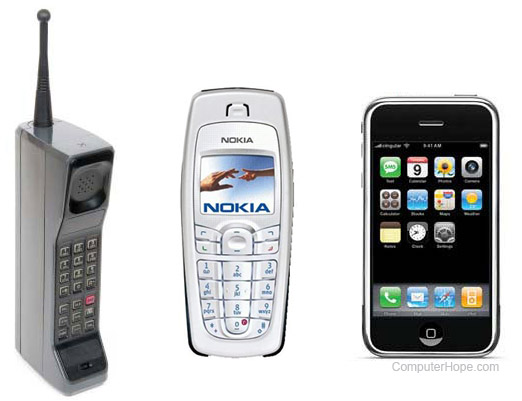
Before the telephone or telegraph was invented people would send letters to people that were a long distance away, but letters can be stolen or intercepted easily, or the mail might not be able to get somewhere because a bridge fell or the road flooded. Mail is also very slow so you could send a letter that is tells someone what time a birthday party is starting but when they get the letter, the party was a week ago. So, the telegraph was invented to let you send messages quickly and have a conversation in real-time. You could only click the tool so as to send dots and dashes which could be translated. Then came the telephone which enabled people to talk to the person on the other end easily. After the telephone people started thinking of ways to improve it further, and so the idea of a wireless telephone was made. Some artists made pictures of what they thought the mobile and wireless telephone would look like, and they look strange because of the holder on the front pocket of their coats. But the technology for a portable telephone was made in the 1940s for the car phone. The car phone was a phone that was in your car, as you can probably tell from the name, but the phone part of it was in the front section of the car and was connected to the technology placed in the trunk that would receive the signal and transmit the signal so the only problem left was making the whole thing compact so that it would fit it a pocket. Motorola did this in 1973, making the cellular, or cell, phone.


Graphical User Interface

The first computers where really machines that ran on electromagnets. They quickly evolved into electrical computers with the help of the vacuum tube. But they were very, very annoying and aggravating to use and program. The ENIAC computer was the size of a large room and it didn’t use any memory to store programs, so people would flip switches and plug/unplug wires to turn on a program. This could take a day or a week depending on the program. Then you would have to check that you did it right. Then in the 1950s the programming was made easier with punch cards. Punch cards are stiff paper cards that have holes punched in them that the computer will feel and translate into code for the program. In the 1970s video displays and keyboards appeared that allowed you to type the program into the computer, but it still wasn’t consumer friendly. A program called sketchpad allowed you to draw pictures on a computer screen which was an amazing step forward in computer technology. It wasn’t long after sketchpad was made that the mouse was created so that you could move a mouse on your desk to move a digital hand on the screen. A company called Xerox opened a lab in Silicon Valley called PARC. It was at PARC that they made the first graphical user interface which is called GUI for short. A GUI is a user friendly program runner. It makes the icons that you click on to go to. Folders of digital pages are also apart of the GUI.

English 5 Lesson 170

If I could do one thing to help the world I would get rid of governments. Governments steal people’s money through taxes and will throw you in prison if you don’t pay them. They will have their police shoot you or threaten to shoot you if you don’t do what their laws tell you to do. Also, they will shoot\imprison you if you do not go off to a war that they started, which will kill most of the people drafted. They are horrible people who have the power to end your life if they don’t like you.

Video Game Console

The very first game was a board game called “Senet” and it was played from almost the start of Egyptian civilization but its popularity fell in Roman times and the original rules are unknown today. Chess was developed in the middle ages and is still played today. Games in the 1800s were mostly based on the Christian religion. Arcade boxes appeared in the 1920s and in 1969 Sega’s “Missile” game introduced a joystick and fire button for the missile. In 1974 Dungeons and Dragons appeared as the first role playing game. Ralph Baer was born in Germany in 1922 and fled Germany with his parents in 1938 because of Hitler. He was interested in radio and electronics so he became a radio technician. After he was drafted for World War 2 he became a head radio technician. After the war, he went to work for a small electronics company and quickly rose to chief engineer. He moved through lots of jobs at different electronics company until he came to be vice president at Sanders Associated. It was at this job he designed the video game console. He knew that it was to iffy for his CEO to fund, so him and his friends made a prototype that they could use to move a dot on the TV screen. His boss liked it and agreed to fund it. The Magnavox Odyssey was the result of that funding. Atari entered the video game industry in 1977, and was the leader of the video game industry until 1983, when they released the horrible E.T. video game and caused the video game crash. In 1985 Nintendo came and revived the industry with the NES and is the leading video game

Shipping Container

Back before 1956 all supplies and goods that you would want to ship overseas on a large transportation ship would be packaged in barrels or boxes, then hauled onto a truck or other transportational vehicle by workers, then drove to a shipping dock, unloaded the barrels and boxes, then dock workers would carry the goods up onto the ship, the ship would sail to another dock, get unloaded by dock workers, loaded onto another truck or other transportational vehicle and driven to a store or factory that bought the shipped goods. The loading and unloading process was very labor intensive work since there were so many barrels and boxes that needed loading and unloading it was hard for the dock workers to do it all. Another problem with it was that when a ship was being unloaded it wasn’t making money and it wasn’t shipping goods. Another bad aspect of it for the seller and was that when you ship 478 barrels of rice over the sea on a ship it was very easy for the captain and crew to steal a barrel or two. The dock workers could also steal a barrel of rice. So now the rice seller doesn’t get paid for 478 barrels of rice, instead they get paid for 475 barrels of rice since 3 of them got stolen. The seller also can’t prove it was the captain who stole them so the captain and crew get fully paid. A truck dealer named Malcolm McLean found that he couldn’t ship his 18-wheeler trucks since they were to big. So he designed a large metal container that could fit an 18-wheeler in it. It became the standard container for shipping and nullified the above problems.

English 5 Lesson 160

I would like to learn how to move silently. If I could move silently I could sneak up on people and scare them. I could also move around upstairs without waking my mom, who works night shift and sleeps during the day. It would also make me one step closer to being a ranger from the Ranger’s Apprentice book series. I could also easily catch my chickens and put them in their coop for the night since they run away whenever they see or hear me.

Nuclear Fusion

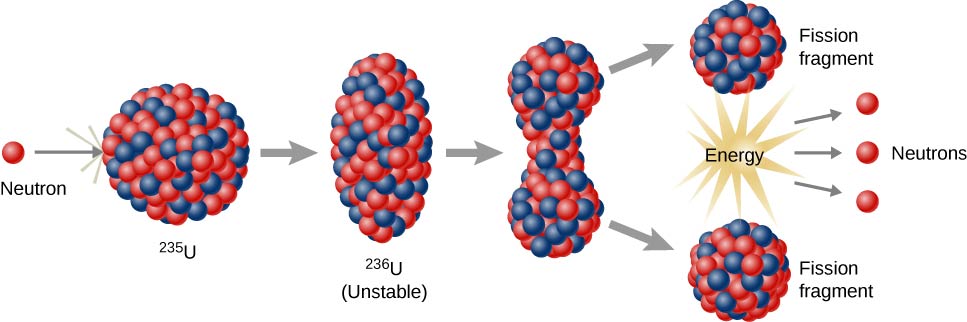
A man named Wilhelm Rontgen was experimenting with electrodes in a vacuum when he discovered x-rays in 1895 and took the first x-ray of his wife’s hand. Henry Becquerel, a french scientist, was studying phosphorescence, which is caused by a material glowing in the dark after absorbing light from a light source. This being in 1996 there was still excitement around Wilhelm’s discovery of x-rays, so Henry decided to try to x-ray uranium salt, which he thought was a phosphorescent material. It turned out that uranium salt did produce invisible x-rays, but that it wasn’t a phosphorescent material, it instead produced radiation light all on it’s own, whether in the dark or light. Marie Curie was interested in uranium salt and with her husband discovered both polonium and radium in 1898, which are both much more radioactive than uranium. It was the Curies who coined the term “radioactive”. Another man named Ernest Rutherford who had also been studying radiation discovered the 3 types of radiation: Alpha, Beta, and Gama radiation. Rutherford also split atoms and recognized the amount of power that came from splitting it, but decided it took so much energy to split it, you wouldn’t make enough energy to make it worth it. Leo Szilard disagreed. Leo saw that Rutherford used alpha radiation to split the atom, but Szilard found that if he fired a neutron at an atom it would split, and fire its own neutrons at other atoms, and it would cause a chain reaction that could end up releasing a ton of energy in an explosion, and when controlled it powers 20% of the US’s power grid. The splitting of an atom is called fission.

Penicillin

Any people that got dirt in a scratch would probably die from a disease and in wars like World War 1 soldiers would most often survive their wounds but since wound would get infected they would die. And since there was no good medicine to kill the disease before it killed you, they always died. There were some medicines that the Bayer company made, but the diseases were able to build up an immunity to them pretty quickly. As a doctor in World War 1 Alexander Fleming saw, first hand, how many soldiers overcame the wound, but fell to the disease. Before he served as a medic in WW1 Fleming studied under an important vaccine professor named Almroth Wright. After the war Alexander experimented with different snot samples and diseases but didn’t find any good cures for the diseases. One day in August he decided to go on a vacation, so he put his petri dishes that held diseases in a corner until he came back. When he got back he found his petri dishes had been infected with mold, and that the disease near the mold had been killed. With more study, he realized it was the juice produced by the mold that killed the disease. There was a problem with the mold though. The mold didn’t grow fast enough to effectively be used to kill diseases. It would take another ten years and another doctor to find a way to use it. His name was Dr. Howard Florey and he discovered a new version of the mold that prodused 200 times as much juice. He named it penicillin.

English 5 Lesson 150

The Springfield public library is the coolest building in Springfield. There is a parking garage underneath the library building that has a road going through it. In that parking garage they have a small station that you can return your books at. The library also has a really cool fountain in front of the main entrance. There are tons of parking spots around it and one of them is a giant parking lot meant for it and some surrounding buildings. It used to be a big shopping mall, which is why it has all those parking spots and fountains. Inside the library there is a large platform that, when it was a mall, people did theatrical plays on, but now it’s just a cool reading spot. I also just like reading a lot, so I think libraries are cool.

The Airplane

Humans have always wanted to go to the sky, to fly with the birds. In ancient Greek myths and stories the heroes could fly, whether on Pegasuses which are flying horses, or with the help of winged sandals. During the Italian renaissance Leonardo da Vinci drew plans for gliders and a modern looking helicopter, although he never built them. In 1781 hot air balloons were invented and hot air balloon touring became a thing, allowing people to see things from a birds eye view. There were also airships which are hot air balloons with propellers and motors for more controlled flight. But this was lighter than air flight, and it depended on the balloon to float up, and people wanted a heavier than air flying machine since air balloons would have to get bigger to hold more gas until it got to expensive to lift really heavy objects. Several aeronautical societies and clubs formed in Britain and France to try and make a successful, heavier than air flying machine. However, they were just sticking bigger and bigger engines to winged boats. Wilbert Wright was born in 1867, Indiana and Orval Wright was born in 1871, Ohio. One day, when they were 11 and 7 respectively, their father brought them a toy helicopter to play with, and when it broke they fixed it up and made a few improvements to it. When they grew up they still liked mechanical devices so they opened a bicycle repair shop. They were giant fans of Otto Lilienthal who was a very successful glider, a person who uses gliders, and when he died they decided to pick up where he left off. They did thousands of glider tests and when they found the right one they put an engine on and made the first successful, heavier than air flying machine.