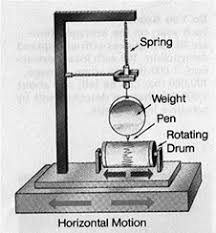
The Seismometer

The seismometer is a device that you put in the ground. It has a lot of circuitry that can detect shivers and shakes in the earth and it sends signals to a computer that tell it if there is going to be an earthquake and if there is, how bad it is going to be. A seismograph is different from a seismometer. A seismograph is set on the ground instead of in the ground. A seismograph has a metal frame and hanging from the top of the frame hangs a pendulum with a pen on the bottom of the pendulum that writes on a roll of paper. If the earth shakes then so does the pendulum which makes the pen scribble on the paper. When someone checks it they would see if there is going to be an earthquake.

Anton Van Leeuwenhoek

Anton van Leeuwenhoek was a business man who bought and sold cloth. He did not trust the sellers to always give him the right type of cloth so he would use a microscope to count the threads and make sure the cloth was good quality. He needed good quality cloth because his customers would notice the bad quality and never buy from him again. He had made a super microscope that had from 200 to 500 magnification while all compound microscopes of the day had 30 to 40 magnification. He did not know Latin but he looked at the pictures from a book written in Latin and decided to look at things other than cloth with his microscope. He didn’t write any books but he sent a lot of letters to scientists and he discovered bacteria.

English 4 Lesson 120

My favorite thing about my family is that they love me. My parents make me awesome breakfasts with meat patties, butter-toast, fruit, and fried egg. My dad always makes delicious meals for dinner. After dinner me and my dad will read a comic book and I always try to read a bit of my book. Sometimes on weekends my dad plays his video game. This is why I love my family.

The Pendulum Clock

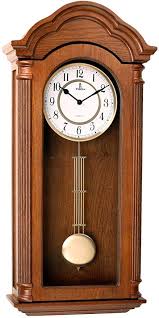
In the middle ages mechanical clocks were a lot more accurate than the clocks they had before, like water clocks and hour glasses. The mechanical clock lost or gained about 15 minutes per day. Galileo Galilei had noticed that a chandelier swaying took the same amount of time to do a cycle no matter how far it swings. This is untrue for larger swings but it is true for small swings. Galileo did not end up making a pendulum clock his son tried to but didn’t so Christiaan Huygens ended up making the first pendulum clock. While the mechanical clock lost or gained about 15 minutes per day the pendulum clock lost about 15 seconds per day. People began to have better more accurate clocks and do more complicated experiments.

The Mechanical Calculator

Long ago the ancient Greeks Romans and probably Egyptians used a tool called the abacus – and yes it does sound like an Egyptian god. The abacus is a box that has sticks in it and has beads that you slide up and down on the sticks. Blaise Pascal’s father was rich in the government but he all of it in bonds that the government didn’t pay back. A long time later Blaise’s father became a tax collector and had to do a ton of addition and subtraction and couldn’t risk miscalculating. Blaise Pascal made the mechanical calculator so his dad could be faster and more accurate. That calculator lasted until 1970 then it was replaced by digital calculators that keep getting better and better.

English 4 Lesson 110

A talent that I have and really like is reading. I like books that are good and not boring. Two of my favorite book series are “Percy Jackson and the Olympians” and Timothy Zahn’s Star Wars books. My favorite author is Rick Riordan. I am good at using context clues to figure out what a word means. I am also (sometimes) very good at actually remembering what happened in a book.

Galileo Galilei

Before Galileo Galilei was born Savonarola burned a lot of cool paintings and books and the renaissance was ending. When Galileo was a kid his dad introduced him to math and science. When he was 6 years old his mother took him up on a hill to see a comet. When he was 9 years old he saw a lunar eclipse which is where the earth blocks the moon from the sun. it is also known as a blood moon. When he grew up he wanted to be a priest but his dad convinced him to be a doctor. While he was at school however he stumbled into a geometry class and convinced his dad to let him be a mathematician. Later in his life he made a telescope and discovered the moons of Jupiter.

The Compound Microscope

The Greeks were the first people to make the lens but they never made the compound microscope. The Dutch who live in the Netherlands made the compound but it is unknown who exactly made it because so many claims shot up at the same time that it is near impossible to know who actually made the compound microscope. It is said that the compound microscope was made by someone who watched kids play with the lenses that he made. The kids supposedly put one lens on top of another lens and saw that they made things look even bigger. That really is all that the compound microscope is-an eye lens that you put your eye to and an objective lens that is closer to the object you are looking at.

English 4 Lesson 100

If I had a super power it would be to talk to animals. I would be able to talk with my dog and could scold him properly when he barked. I could tell the birds where the bird . I could hear the squirrels yell at my dog as he chased them. When I go to the zoo I could hear all the animals and what they had to say. that is what I would do I would do if I could talk to animals

The Back Staff

England had a bad start in the age of discovery because they had just lost the 100 years war. The English had a civil war because they couldn’t decide who their ruler would be. It was called the war of the roses because each family house had a differently colored roses as their crest. In the end the winners were the Tudors. The first king of England was King Henry VII. During the age of discovery queen Elizabeth I led England into their golden age. A sailor named Jack Davis asked the queen to fund his sailing to Asia via north pole. He found the way but there was too much ice. On this travel he made many inventions including the back staff which can tell you your longitude.