My Hobbies

I have a few hobbies that I like to do in my free time. I like to read books, so I’m often going to the library or bookstore, since the local library isn’t exactly exhaustive. The latest series I started is called “The Chronicles of the Imaginarium Geographica” which is all about a secret society of famous authors throughout history who’ve guarded a special book, the Imaginarium Geographica, and it combines lots of mythological stories and more modern ones, like The Argo and Noah’s Ark, or the Pied Piper and Peter Pan. Overall it’s a good series, and I recommend it to anyone who likes myths and old stories.

I also like playing video games, the latest one I played being the newest Legend of Zelda game, which I got just as the last school year ended, so I’ve spent pretty much the entirety of my summer beating and completing it. It’s an openworld action-adventure game, with an extremely expansive map, so if you like that sort of game I highly recommend playing Tears of the Kingdom, as well as the rest of the Zelda series.

I also spend a decent amount of time playing with Legos, a building set toy that let’s you build different things out of the provided plastic bricks. They have sets that range from Viking longboats to spaceships and skyscrapers. They also have different difficulty levels, placed in age groups from 2 years old (assuming they’ll get at least a little help) to adults, defined as 18 and older. Personally, I like the Medieval themed sets that have dragons and knights best, as well as the pirate and viking ships.

Another thing I do is play with my little brother, who’s close to three years old. His favorite game he likes to play with me is for me to wrap him up in a huge blanket and then bury him in pillows, where he then has to wriggle out of the blanket and climb out of the pillows. He also likes to cuddle with me under said blanket while watching Scooby Doo, one of his, and my own, favorite shows.

What I Did This Summer

This summer I did quite a few things. I went to the Enchanted Forest, a quaint theme park based on popular kids stories, like Snow White and Alice in Wonderland, as well as general themes, such as the Wild West and medieval Europe. It was built mostly on the side of a mountain, so the paths are very hilly making it difficult for strollers and the such. They also left the surrounding trees standing, making it shady as well as beautiful.

Some of my family on my mom’s side came up from Texas to visit us during July, so we were able to celebrate one of my cousin’s birthdays as well as get a haircut, since my aunt has always been my barber.

We also went to Colorado for a week and a half, to visit my Grandpa and that side of my family on my dad’s side. We were able to stay at their cabin in the mountains for a few days, during which we were able to fish for a little, and I managed to start a campfire using only a flint and steel and some grass.

My average days I spent the mornings reading books from the library, and the afternoons playing the newest Legend of Zelda video game, Tears of the Kingdom, which I highly recommend. I had a good summer, and I’m not sad about the way I spent it, though I am glad that we’ll be getting colder days now that we’re entering fall. I’m also glad I’ll be starting home school again, as it will keep me busy learning.

7th Grade History Course

The Ron Paul Curriculum for homeschooling has had me take the 7th grade History course, which has covered everything from the fall of Rome in 476 AD to 1750 AD, just before the American Revolutionary War. If you would like to learn some of the things that I have learned about during this course, I have written summary posts about many of them on this same blog, and the course I took is still available. This post is a review of the lessons themselves.

The highlights of the course went mostly as: the growth of the Pope’s power, the growth of Islam, the Crusades, the Renaissance, the Reformation, the Explorers of the New World, and the colonization of the New World, as well as England’s extreme growth over all this time from an island country to the world power during the colonization era. This was by no means at all the whole of what we learned about, but it is what we spent the majority of our time going into detail about.

The videos that contained the lesson material, or the important part of the lessons, were averagely nine minutes long, with the shortest being five and the longest being around 15 minutes or so. They got the lessons across well and I very rarely felt that I didn’t get enough information about the subject from them, but they tended to skim over some things that felt rather important, like the Ottoman Empire, while going very in depth on some tangents, mostly religious, like the Reformation.

The vast majority of the lessons, excluding only a few, were accompanied by reading assignments of varying length. These were somewhat annoying, as they often repeated what the lessons had already stated, but with a lot more words, as the reading assignments were often quite long. They would, occasionally, be optional extras to the lessons, like a more detailed biography of a famous person, or an excerpt of a book written by them, though they were often mandatory.

The final part of the lessons were the homework assignments, which would be pdf files that I could download and then either print out or work on them on my computer, which I often did, then fill out the questions on them. There would often be 7-10 questions relating to what I had learned, but were fairly easy as long as I paid attention to the videos. The next day’s lesson would correct the worksheets.

I enjoyed this 7th grade History course on the Ron Paul Curriculum, as well as the previous grades that I have taken, and heartily recommend them to anyone interested in a history course.

7th Grade English Review

I am referring to the 7th grade English course in the Ron Paul Curriculum, as should be obvious when taken with my previous posts. In the 7th Grade English course this year I have done quite a bit, which I’ve recapped in my previous post, but this one is intended to review what I liked and disliked about the course, not recap it.

With regards to the video lessons, they were fine, they conveyed quite a bit of information about the authors of different books, and about the lesson material, especially in the first lessons that talked about analyzing literature, and near the end when teaching the different forms of poetry. However, none of them were more than six minutes long, with the shortest being less than two, the average being two and a half minutes. For these shorter ones, and the ones that only talked about vocabulary words, I don’t think they needed to be video lessons, I think that they could’ve been purely reading assignments and bullet points with the vocab words defined, since that was all those lessons really did.

Speaking of the vocabulary words, I did like them, since many of them were ones that I had heard used but never learned myself, with a sizable quantity being words I had learned long ago, though some were new to me. My only complaint is the unevenness of them, with some lessons having one and others having eight, seemingly arbitrarily. I feel that they could’ve easily been regulated, thereby improving them.

I quite enjoyed the books and reading assignments in the lessons, especially since so many of them are famous stories, like Alice in Wonderland, Treasure Island, Robin Hood, A Christmas Carol, Macbeth, and so many others. the only thing I found lacking was humor, but that’s to be expected in old classic stories like these.

Overall I really enjoyed the 7th Grade English course in the Ron Paul Homeschooling Curriculum, and truthfully recommend it to any one interested in homeschooling.

Asia From 500 AD to 1750 AD

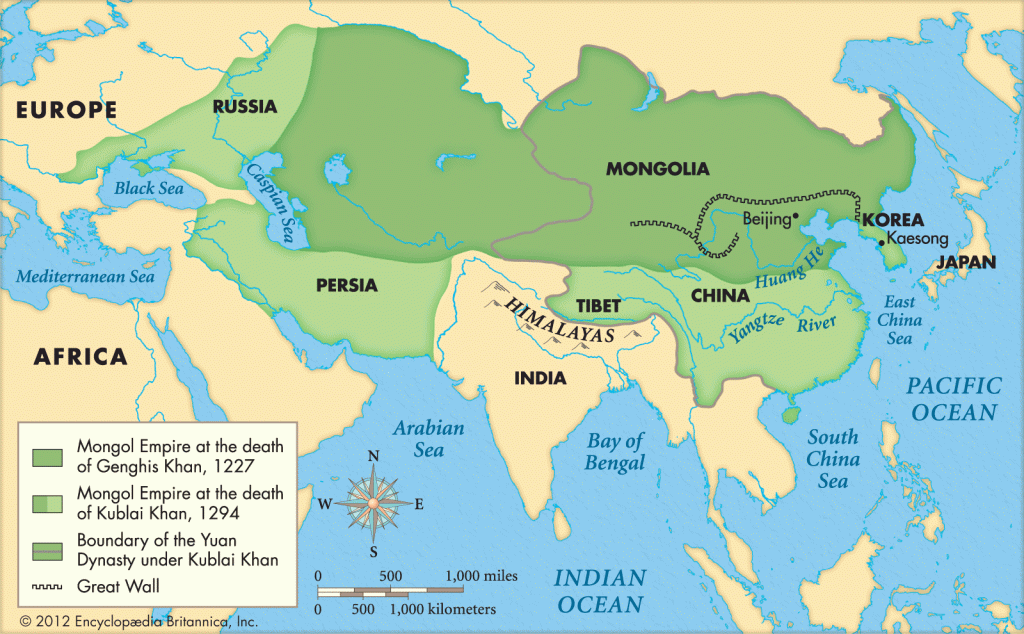
In Asia there had already been several impressive empires by 500 AD, primarily in China, with the most notable being the Xia, Shang, Zhou, Qin, and Han dynasties, the Han being the primary inventor of the soccer, or football. From 618 AD to 907 AD the Tang Empire united and conquered much of the same territory that China occupies today. The Song Dynasty ruled next from 907-1206, and lost much land to its outer territories, though it was nothing compared to its future losses. It was at this time that Genghis Khan showed up from Mongolia and conquered pretty much Asia, and that which he didn’t get to during his life from 1162-1227 his descendants conquered, the only thing that they missed being India, due to an inability to ride their horses well in India’s climate. It was during Genghis’ grandson Kublai Khan’s reign that direct contact was made with Europe through Marco Polo and his family in the late 1200s. Eventually the Mongol Empire dissolved from infighting, with the primary death taking place in the early 1400s and the final death still not happening to this day, with the country of Mongolia still existing and not moving on culturally the way Italy did after the fall of the Roman Empire. By 1450 China had recovered sufficiently to bring back their own empires with the Ming Empire. It gave way to the Qing Dynasty in 1644, however, and was a good deal more successful than the Ming Empire and lasted until 1912.

Japan separated itself very thoroughly from the rest of Asia, following what’s known as a Shogunate, or military leader. By ignoring the mainland Japan had an extremely stable history, all the way to the 1800s.

India had a rather unstable history, with large empires rising and falling to many small nations. First the Gupta Empire ruled northern India from 4th to 6th centuries, then fell to the piranha-nations. The Rajput Kingdoms ruled from the 9th century to the 12th though they were more of a shared culture than an empire. Finally, the Mughal Empire ruled northern India from the 16th century to the 19th century. If you’re wondering about southern India, it very rarely united into a single face. Part of all this instability was, and is probably caused by the warring religions of Buddhism and Hinduism, two popular religions, as well as Islam, which didn’t get as much popularity as it did in the middle east.

Ron Paul Curriculum 7th Grade English Class

In the Ron Paul Curriculum homeschooling program I’ve been taking four classes, and one of them is the 7th grade English course. I am writing this as a review, or recap of what I’ve learned over this last school year.

In the first two weeks I reviewed the five parts of a plot that I had learned about last year, the exposition, rising action, the climax, falling action, and the resolution, or the start, build-up, final goal, let down, and end. I also read “The Dragon and the Raven” by G. A. Henty, which is historically set in England during the Viking invasions, and is historically accurate as to what the main character saw happening around him, though he himself didn’t exist. This, like all the books, was provided in the lessons.

In the second two weeks I learned more about the setting of stories as I read “A Connecticut Yankee in King Arthur’s Court” by Mark Twain, real name Samuel Clemens, in which the physical setting, social standing, and time period all played important roles. This helped evidence what I was learning during the lessons.

In weeks 5 and 6 I read “Wulf the Saxon” by G. A. Henty, which followed the historical accuracy of the first book, but this was set 100 or so years later. I also learned more proper terms for studying literature like “static” versus “dynamic” characters, while learning more about character development.

I read “Treasure Island” by Robert Louis Stevenson and learned about themes, the underlying messages in stories, during the 7th week, which are far more subjective than anything else I had learned, since themes are inherently unobtrusive.

In week 8 I learned about authors style, or the method of writing distinct to each writer, while reading “White Fang” by Jack London, since he has a rather distinct style.

I read “A Knight of the White Cross” again by G. A. Henty during weeks 9 and 10, this time set in the Mediterranean 300 years after the last one. I then wrote a two part analysis of it by using what I had prior learned in the class, and therefore didn’t get a whole lot of help from the video lessons. They primarily covered many vocabulary words, most of which I knew of, but hadn’t actually learned.

In week 11 and week 12 I read “The Adventures of Robin Hood” by Howard Pyle, one of the first written books about Robin Hood. I also learned about the differences between novels, short stories, novellas, dramas, and poems, since Robin Hood is almost like a collection of short stories and novellas (shorter than a novel, longer than a short story). I would read several poems and dramas later in the year, as well as short stories, but for this half of the course we stuck to novels in prose, which means regular writing.

I learned about genres during weeks 13 and 14, such as fiction and nonfiction, sci-Fi and fantasy, while I read “Robinson Crusoe” by Danial Defoe, which is a realistic-fiction survival story by the way.

In week 15 I read assorted Sherlock Holmes stories, and learned about the origin of the mystery genre, which is much newer than any of the other ones, our culture having only developed proper detectives and police around the 1800s.

Week 16 was the week before Christmas, and so he basically gave me the week off, just having me read “A Christmas Carol” by Charles Dickens to read.

in weeks 17 and 18 I read “Alice in Wonderland” by Lewis Carroll, which was a bit too scatter brained for me to enjoy. I wrote my first semester report during this, summarizing the weeks 1-18 just as I have here.

Weeks 19 and 20 had me reading “Lion of the North” by G. A. Henty, taking place about 150 years later during the 30 years war. This was also the last G. A. Henty book of the year. The lessons had me studying how to properly organize to write a book report, which I wrote about that book.

Weeks 21 and 22 had me reading “Journey to the Center of the Earth” by Jules Verne, which was somewhat anticlimactic, and taking in-depth lessons on note taking, even providing a guide on how to use Evernote, a note taking website, to use the best possible notes.

I learned about a plethora of worldviews in weeks 23 and 24 as I read “Little Men” by Louisa May Alcott, which was an extremely wholesome story. I summarized a great deal of the worldviews at the end of week 24.

In weeks 25 and 26 I learned quite a bit about narration, first, second, and third person perspectives, passive vs active voices, and more vocabulary for writing as I read “Tom Sawyer” by Mark Twain.

In week 27 I read the script for “The Taming of the Shrew” a comedy by William Shakespeare, as well as learned a lot of the dictionary for dramas. This helped get me used to the style of play scripts such as this.

Week 28 had me reading “Macbeth” again by Shakespeare, though this one was quite dark and had a much more philosophical theme. I spent the lesson part of the lessons learning more dramatic and poetic vocabulary.

In weeks 29 and 30 I read “Idylls of the king” by Alfred Tennyson, which is a collection of poetic styled stories about King Arthur’s knights of the round table. These stories were also dark at the end of the book, though the first ones were lighthearted.

I read the important part of the “Odyssey” by Homer in week 31. By important, I mean the major and famous part with the monsters, none of the parts with his family or him reclaiming his home, which I had to find elsewhere. I learned a lot of the poetic dictionary as well.

In week 32 I read assorted poems by Robert Louis Stevenson, Robert Frost (my favorite), and Robert Sandburg, as well as “The Raven” by Edgar Allen Poe.

Week 33 had me reading assorted short stories by Edgar Allen Poe (The Purloined Letter), O. Henry (The Gift of the Magi), Jack London (To Build a Fire), and Mark Twain (The Celebrated Jumping Frog of Calaveras County).

Week 34 and week 35 have had me reviewing everything I have learned in this class and writing this end-of-year report, which has been quite the hurdle, as you may tell.

The last week has me taking vocabulary practice tests that are at a college level, using all of the many, many vocabulary words from this year.

The Navigation Acts

In Colonial America the 13 Colonies were restricted in what they could do by British laws. The laws that England made specifically for their different colonies around the world were called “Navigation Acts” and they would often limit what the colonies could do, though in 1651 the Acts started to get worse and worse, resulting in the people of the colonies disliking their English rulers more and more until the Revolutionary War.

The first of these Acts was the 1651 Act that was introduced during Oliver Cromwell’s reign, and it restricted all English trade to English ships, but since the colonies ships were considered English ships this wasn’t too bad of a restriction, it just limited imports from the rest of Europe. However, in 1660 when Charles II reclaimed his throne he repealed this act. This was thought to be good, until he reissued it as the Act of 1660, which now defined an “English ship” as having at least ¾ of its crew be Englishmen. This was a good deal worse than the first version of the Act, since so many of the colonists were from other countries. The same Act also added the rule that nothing from the colonies could be shipped to any country other than England. This was by far the worst part of the Act, since the colonists made a great deal of their business shipping to countries other than England, like France, Spain, Portugal, Holland, Denmark, anywhere else in Scandinavia, and even other colonies in Africa.

The Act of 1663 didn’t restrict the colonies however, it instead restricted all of Europe. They said that any goods going from Europe to the 13 Colonies had to first go through England and be carried on English ships manned by a ¾ English crew. Anything else was considered illegal and the colonists would be arrested for buying the goods from such a ship. This caused an extremely high increase in smuggling and piracy.

The colonists suffered through these for a time and got continually better at smuggling and piracy, until the 1733 Molasses Act that required a huge tax on the sugar coming from the French islands in the Caribbean. The tax was so high that nobody in the colonies could afford it except for the richest governors, who wouldn’t do it because they had ties in England and often grew their own sugar. The Molasses Act was meant to help the English sugar sellers since they could charge even more for their lesser, European sugar. It was designed to expire in 1763, but it returned as the Sugar Act in 1764. Though none of the colonists acknowledged the Act, continuing to smuggle and steal, they understood entirely that England didn’t care about them.

The colonists had their own currency that was independent from the English money supply, but it was generally just as acceptable as a British pound. However, due to the 7 Years War the Americans had inflated their money, losing its value. The English merchants were offended by this and asked for an Act that would give them the money that they wanted. Since these merchants lived in England and were rich, they got the Currency Act of 1751 which stated that the colonists had to pay with gold, silver, or British currency, not their own. This was then extended in 1764 to make it so that the already heavy taxes were only payable in British pounds. This obviously throttled the colonists. While the Currency Acts were lessened in 1773, it was still a major eye-opener to the colonists that the government was not their friend, which nicely set up the American Revolution.

Glorious Revolution of Britain

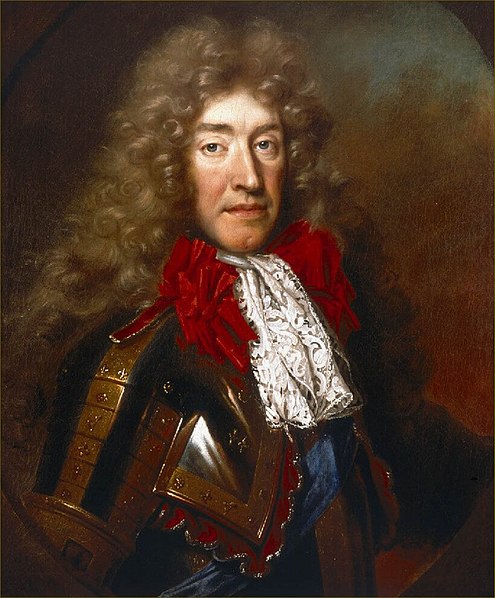
The Glorious Revolution took place in England and Scotland between 1688 and 1689, and it’s goal was to depose James II, shown in the above image. James II was the great grandson of James I, who helped the colonies get started, and like James I, James II was rather Catholic and rather fond of absolute monarchies. Unfortunately for him England and Scotland, over whom he ruled, were extremely Protestant, and though Ireland was Catholic they didn’t have any power compared to the other two. England and Scotland also really loved their Parliaments, which took power from the king and acted as the voice of the peoples of England and Scotland, which were separate at this time, though they agreed on this subject.

The Parliaments held enormous power at this point, so much that any more power would make the King little more than a rubber stamp, or a figure head. Their views and the king’s clashed considerably, of course, but the Parliaments and churches of England and Scotland were willing to endure him since his only heirs were his Protestant daughters, Mary II, and Anne, both of whom were married to Protestants in mainland Europe. Mary II was married to the Protestant William III of Orange, great-grandson of William of Orange, the dutch freedom fighter. However, James had a son, James III, and since he would be raised by James directly and not married off like Mary, he would be extremely Catholic and would most likely follow closely behind his father. This was considered completely unacceptable by the people and churches. Due to this they decided to ask William III to get rid of James for them, since James controlled the English army, not the Parliament.

However, this wasn’t really necessary, since even the army didn’t really like James. There were only really two light skirmishes, excluding anti-catholic riots in some towns. James then fled to Catholic France, who were happy to house him and give him funding, but didn’t really give him troops. He did go to Ireland in 1689 and attempted to rally enough support to retake Britain, but William III squashed him again, and he lived in France for the rest of his life. William III insisted that he be made King alongside of Queen Mary II, which wasn’t common back then for a foreign husband of the Queen, but since he had his army there, Parliament said why not? William’s reign gave Parliament a great deal of power, since he cared much more about his native home of Holland, and lived there for much of his life. With this power Parliament made a law saying there could be no Catholic rulers of England or Scotland, and made the next Queen, Anne, the younger sister of Mary but big sister to James III, little more than a figure head, under whom the Parliaments of England and Scotland united as Great Britain. The next heir was George I, and the one after that George II, both of whom lived and stayed in the Holy Roman Empire. At this point no one doubted the power of the Parliament, and the “ruler” didn’t really rule at all.

There was a small group called the Jacobites who thought that James III should’ve be made King instead of Anne, George I, or George II, but they never accomplished anything other than being a nuisance to them.

Great Grandmother: A Short Story

George was having a particularly bad day. It was not at all helped by his sister’s nagging.

“You have to come! I don’t understand why you won’t!” He sighed. This was why he didn’t like to keep in touch with family all that much. They didn’t understand that his workplace was cutting corners, and that meant high risk. He had started taking extra shifts and worked overtime to 1, get the extra pay in case he got fired, or 2, seem essential so that they wouldn’t fire him. This meant however, that he was going to miss his great-grandmothers funeral, and dodge a whole lot of family talk. This, he was fine with. It was not fine with his sister, however.

“The least you could is show up. You don’t even have to talk to anyone, just show up and leave.”

“I can’t, it’s right in the middle of my shift.”

“That you picked up.”

He sighed, as he often did when he couldn’t form a proper argument.

“I’ll pay my respects later”

“When? If you don’t ask for time off for the funeral, heck, if you won’t stop asking for work for the funeral, then when will you make time for visiting?”

“I don’t know.” It was her time to sigh. “Bye.” He knew he had handled it badly, but he was too tired to care. Turns out humans weren’t designed to work night-shift and day-shift.

The next day, the day of the funeral, saw him at work. It did not, and had not, been going well there. He was an electrician, and the electrics were going haywire. George had no idea what was going on, and it must have showed, for his coworker, Jim, told him to “Get home, I can handle all this.” though George seriously doubted that, he knew he wasn’t going to be any help at all. Once he got home he stumbled over to his favorite chair in his apartment, and started to take off his shoes when he heard a hoarse “Oi!” from right beside his ear. He jerked up, as is natural when you hear a hoarse “Oi!” from right beside your ear. He looked around, trying to locate the source of the word, presumably a robber.

“Right here, you dingle dork. Now get off’a me!” He had frozen when he heard “Dingle dork” for it was a name most familiar to him, but at the end of the sentence he was shoved from the chair by, apparently the chair. He scrambled to his feet and froze as he looked back at the chair, for it appeared to him as if his great grandmother was sitting in his favorite chair, in her disgruntled way.

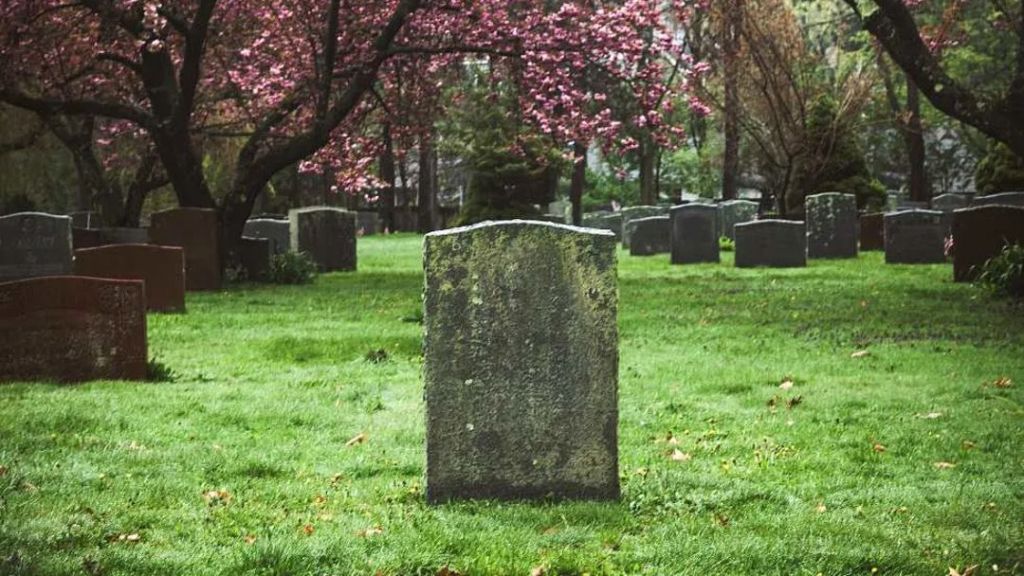
“Everyone was there, y’know. Even Arnold, your uncle, and he hated me, though I guess he did cuss at my coffin.” she shrugged, like it was of no consequence, which, he realized, it wasn’t. “G-g-grandma?” he asked tentatively. “Great” she amended. “wha-why-how are you here?” “‘what am I here?’ that’s not a question. Why am I here? Cause you ain’t respecting me. How?” she grinned. “that’s on a need to know basis. Now, why did YOU not show up to my funeral, hmm? And I know how you could’ve done it too, so that’s a kinda rude thing to do, ain’t it, seeing as I died. I’d understand if I hadn’t died, but I did, so where were you, hmm? At work. And why-o-why were you there?” “I might get fired if I don’t, they’re-” “Your an electrician! You’re one of the better ones there! They ain’t firing you, they might have to pay some other lout to do electrical stuff. Besides, what’s the point of having a job that makes it so that you can’t even go to a funeral? There’s no point to having a job without a life! What’s the point of money if nothing interests you? Go have a life! put flowers on my grave! Or I’ll keep haunting your workplace.” with that, she began to fade away. “Wait, what? What did you do?” but she was gone. He stared at the chair for a while, then called his sister. “Hey, where was the graveyard?”

Colonial Life in the Americas

The first English towns in America were harbor towns, such as New York, Boston and Charleston, in addition to other cites and towns built on rivers, such as Philadelphia. These harbor towns became the biggest and most important of the cities in the colonies, since they had access to England and the rest of Europe, as well as having extra time to develop, since the English founded the towns on the coast before the inland towns. These towns are still famous and important even today, like New York and Boston.

The first building in most new towns was often a church, so that the people could pray to god to help with the rest of the town, and because the majority of the initial colonies were started by people seeking religious freedom, and if you’re willing to leave your home and civilization for your religion, it must be pretty important to you. The entire city would often be made in a Roman grid format, allowing travel between the buildings. The homes would then be made in that grid pattern, and they were often one story tall, with only one room where a family would sleep, eat, cook, and spend their idle hours. If families grew too large, they would get an extension that made the home look like a salt cellar, earning them the name saltbox houses.

Children were thought to stop being babies and start being kids at age six, when they were expected to help in the home and were taught to read and write. If they were a boy then he was likely to learn arithmetic and, possibly, go to a college like Yale or Harvard, which are still around today. This was less likely for girls, but still possible. Boys would be apprenticed anywhere from 13 to 20 if they didn’t go to a college, and if they did they would then look for a job after. A boy wasn’t considered a man until he got a job and became self-sufficient in the towns and later colonial times, though the farmers would often just have their sons help them on the farm. The girls became women after getting married and moving out with her husband, often at age 15, who probably had his own home at this point.

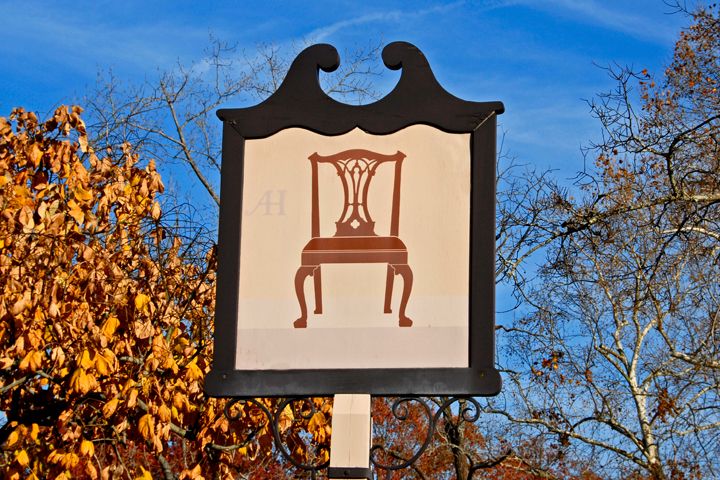
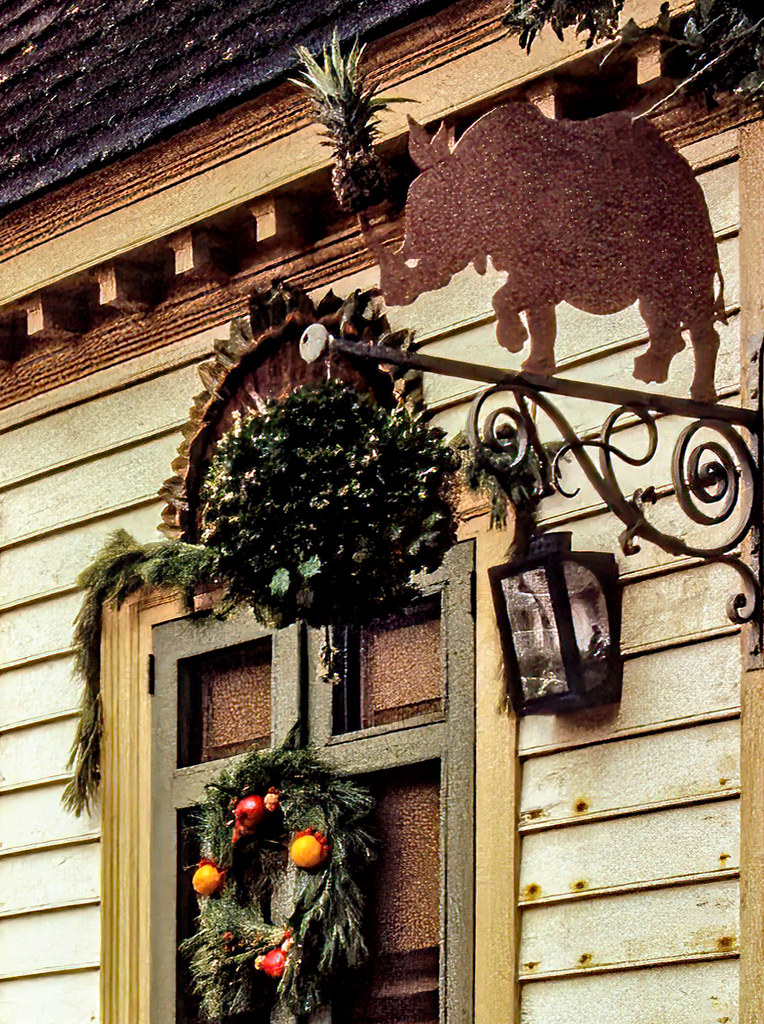
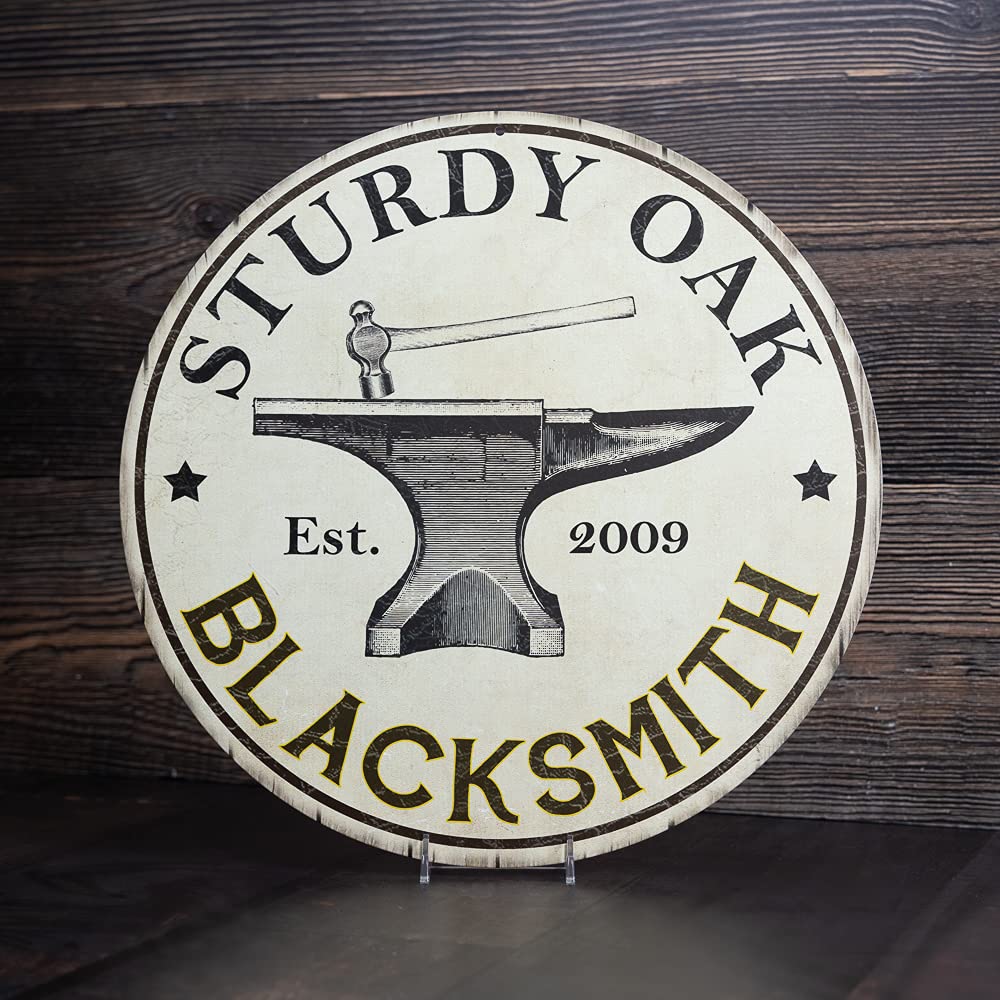
Markets were developed much the same way they are now, with the many shops opening up on one large road, often called Main Street, where people could walk up and down the road looking at the major shops. The major shops and jobs that you would find in Colonial America were: The barber (shown with the red, white, and blue pole), who cut hair as they do today, but also acted as a “bloodletter” which was where they would stick leeches on you while they cut your hair. The goal of bloodletting was to have the leeches suck out “excess” blood, or bad blood. This is not done today, though if you really wanted to, I suppose you could buy some leeches. The Blacksmith (shown by a hammer and anvil(yes, I know it says 2009, still a good example)) worked with metal such as iron and steel, making weapons, pots, and pans, as well as horseshoes. The Silversmith, or goldsmith, made and repaired jewelry, such as rings, necklaces, and earrings. These were expensive enough to get him by without nearly as much work as the blacksmith. All the townsfolk tended to pitch in when a new house was made, but it was up to the cabinetmaker (shown by a chair) to make chairs, cupboards, clock cases, and of course, cabinets. It went to the cooper, however, to make barrels. Barrels were extremely important back then, since they were the most surefire way to store anything, from fish to steaks to beer to water to grain and back again. The farmer grew food and raised animals, providing enough food for them and the other people to live off of, since they didn’t get much from England other than crackers and tea. The Grocer (the rhino, since grocers thought they were lucky) was the one who sold the farmer’s food as well as any other knickknacks that could be found but not specialized in. There were many other jobs, but too many to go into here.

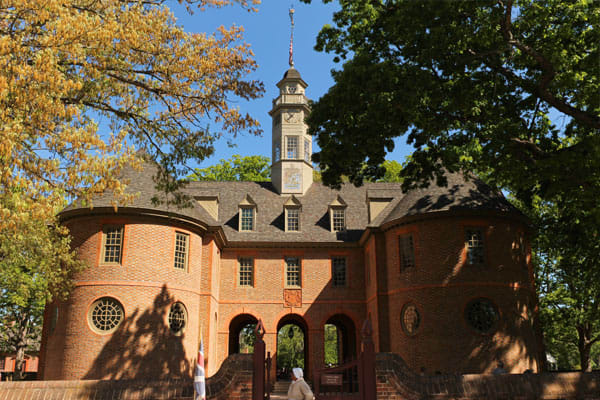
There would often be a government building in a town, sometimes two if it was a big town, the town hall, where people would judge crimes and grievances, and sometimes the prison. If it was a capitol, the capitol building would be there. The capitol building, was often an H shape, like in the picture. One side housed the Governor’s council, and the other the House of Burgesses (not burgers, I know, I too am disappointed). The Governors Council represented and advised the Governor, who worked for the English King and was in charge of keeping the king happy with that particular colony. The House of Burgesses however represented the people, and was elected by them to ensure the Governor didn’t turn into a dictator. We still have a similar government structure to this day. The two sides would figure out what they wanted in their wings of the building, then negotiated in the bridge of the H.