The Taming of the Shrew Recap

The Taming of the Shrew is a play written by William Shakespeare about how two Italian sisters get married off to their respective husbands, and I have recapped it here, missing some details of course, but still the same story.

The older sister is very rude, and disagrees with anyone about anything she can, meaning nobody wants to marry her, but the younger daughter is quite nice and beautiful, having three different suitors. The Father refuses to let the younger daughter (Bianca) marry until someone took the older daughter (Katherina) since it was considered “improper” for the younger to marry first.

At the beginning of the book Bianca only has two suitors, Gremio and Hortensio, and after they try competing with each other to see who gets to marry Bianca, the father (Baptista) tells them he needs to firstly marry off his horrid first daughter, Katherina the shrew. Hortensio then contacts his friend Petruchio, who has been wandering Italy looking for a wife who comes with a large sum of money, which Katherina does, having so unattractive a personality. Petruchio agrees to marry Katherina, and when he goes to tell Baptista that, the marriage is scheduled for the very next Sunday.

With Katherina’s marriage out of the way, Baptista then decides on who to marry Bianca to. Lucentio is then introduced, and he comes as a merchant to make a deal with Baptista, but upon seeing Bianca he decides he wants to marry her. For an unclear reason, he decides the best way to court her would be to switch places with his servant and act as a tutor for Bianca, because Baptista was looking for tutors. Gremio is quickly decided to be too old to marry Bianca, meaning his character has no purpose throughout the whole story, but Hortensio, upon seeing how well Bianca and Lucentio are getting along decides to marry a random widow who apparently used to like him.

Cutting back to Petruchio he was late to his marriage, but still married Katherina and is trying to “tame” her, and get her to stop being so annoying and argumentive. The best way to do that, he decided, would be to thoroughly exhaust her with lack of sleep and food until she didn’t want to fight him anymore, and he would take every little thing and make it into an argument, escalating every minor issue until she was to tired to argue with him, and at one point she says “And be it moon, or sun, or what you please; And if you please to call it a rush-candle, Henceforth I vow it shall be so for me.” after one of the last arguments about whether the sun was the moon or the moon the was the sun.

Lucentio then proceeded to marry Bianca in secret, but Baptista was totally fine with it because he came from a rich family. The book then ended with a bet between the three husbands on whose wife was more obedient, and so they sent a servant to call them to come down and talk to them. Bianca first, but she said she was busy sewing, then the widow, but she said that Hortensio could come to her, and finally Katherina came down without a fuss.
History of Thanksgiving and the Pilgrims

Thanksgiving was originally started by the Pilgrims, a group of English Puritans. The Puritans were a group of Protestant Reformers who didn’t like the way the English Reformation had turned out, thinking that the Catholics should have been kicked out of the country. This did not, of course, happen. They were also mad at the English King, James I, because he was so friendly to Catholicism, having been raised by the Catholic Queen of Scotland, Mary. When he told them that they could deal with it or move out, they did just that. Move out, I mean, not deal with it.

They first moved to The Netherlands, since it was much more hostile to Catholics, having recently fended off Spanish government. But they were not able to live well there because it was so small that all area was urban area, and this naturally didn’t work for the Puritans who had lived on farms and rural/suburban areas all their lives. They then decided to strike out to the new world, where there really weren’t any urban areas yet. They made a deal with the London Company, a company specializing in shipping people and things to the Americas. This deal got them two boats and the appropriate crews, letting them make their way to North America.

Unfortunately one of their boats, the Speedwell, sprung several leaks, making it unseaworthy. The Pilgrims couldn’t afford a new boat, however, so some of the Puritans didn’t make the trip, staying in England and the Netherlands. The rest of the people crowded in on the other ship, The Mayflower, and they had to fit the extra equipment on the already crowded boat. They finally set out, however, on September 6th 1620, with 102 pilgrims and 30 crew members.

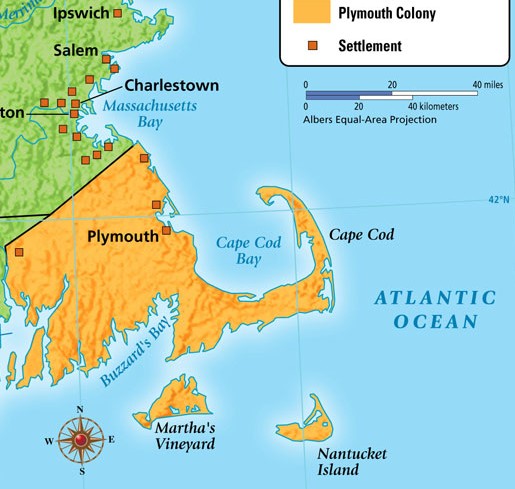
They landed on the tip of Cape Cod on November 9th 1620, finally reaching land after two months of sailing. They then sailed inland a bit and founded the Plymouth Colony on the opposite side of Cape Cod. Winter was already setting in, So the Pilgrims wasted no time in building homes for their people. Unfortunately, the lack of proper living space, the cold, and the lack of food resulted in the deaths of almost half the Puritans, and only 53 survived the first winter. I’m glad that more didn’t die, really, but the perfectionist in me is a little annoyed that it was only 2 people off from exactly half of them dying, and it being 53/102 instead of 51/102.

It was in this Spring that they met the Indian tribe that lived in that area, called the Wampanoag tribe. The Pilgrims started to form into a militia, in case they needed to fight, and the first few months of interaction were tense. Thankfully, an Indian named Samoset came down from a hunting trip in the north, and while there he had learned English from white hunters who were also up there, and once he got back to the Wampanoags he was able to help trade and understanding grow between the two peoples, and they were able to coexist. The 53 Pilgrims then celebrated the anniversary of their arrival in Plymouth in November, offering thanks to God for helping them get through that rough year, and for allowing peace with the Indians. This is still a popular holiday in America to this day, devoted to being thankful for that which we have.

Tom and Huck, Comparing and Contrasting

In “The Adventures of Tom Sawyer” Tom’s best friend is a homeless kid named Huckleberry Finn, and they are extremely similar. They are both adventurous, and love playing at being outlaws or pirates, but Huck doesn’t go to school, being homeless, and thus doesn’t know what several things are, requiring Tom to define several words for him, which is nice if the reader doesn’t know a word. While he is somewhat jealous of Tom knowing how to read, or knowing about stories like, say, Robin Hood (whom Huck didn’t know about until Tom told him) he doesn’t seem to think it’s worth it when (spoiler alert) at the end of the book he was adopted by the Widow Douglas, since he ran away after three weeks of “suffering” and only came back when Tom said he had to be respectable if he was going to join his (Tom’s) bandit camp.

Huckleberry also seems to be much more content than Tom, at least when he was homeless, because he was always just wandering around living off scraps until Thomas comes up with an idea like treasure hunting or pirating, and once he hears the idea he’s all for it. This contentedness seems to fade once he gets adopted by the Widow, so it could just be that he didn’t have ideas for adventures because he lived a much free-er life that didn’t need breaks in the monotony.

I can’t tell if Huckleberry is more superstitious than Tom or if he just thinks about it more, because he’s often in the middle of some ritual or “spell” such as throwing a dead cat in a graveyard to get rid of blisters, but Tom also does this sort of thing occasionally, and while Huck is the first to point out the fact that Injun Joe’s ghost might be guarding his treasure, Tom seems to be equally afraid once he realizes. Tom then pointed out that there was a cross in the room, rendering the ghosts powers null, so they skipped over that subject a bit.

Overall I believe Tom a Huck to be very similar, the only real differences being caused by the fact that Huck grew up with a great deal more freedom and was raised in comparative isolation.

The Anglo-Spanish War

The English and the Spanish were mostly peaceful throughout their kingdom’s histories, but in the late 1500s this peace ended.

The Spanish had been the first to colonize the New World, also known as the Americas. The Spanish mainly colonized the Caribbean, but also managed to nab the majority of the western coast of North and South America, a few islands in Oceania, and a few countries in Africa, meaning Spain had an “Around the World” Empire. This was important for kick starting the war.

England had very, very few overseas possessions, in stark contrast to Spain. They had a few towns in the Caribbean and another few on the east coast of North America, but they didn’t have anything else at this point, though they would in only a hundred or two years.

Sir Francis Drake was born in 1544 to a simple peasants fishing family in Plymouth, southwest England, and became what is known as a privateer, after quickly growing to love sailing and the sea. Privateers were proto-pirates, or pirates with papers. This means that they would preform acts of piracy (i.e. stealing and breaking their stuff) on countries that their country didn’t like, and then give the King or Queen of their country some of the stuff they stole in return for, you know, not being hung, and for having some backup on big raids. Francis got so good at being a pirate- er, privateer, that Queen Elizabeth I of England asked him to go on a privateering expedition in 1577, and Drake couldn’t refuse.

In 1577 Drake set out on a circumnavigation of the world, making him the second man to sail like this around the world, the first being Ferdinand Magellan. As you can see from the above picture, Drake’s path is in blue while Magellan is in red, and Drake took a slightly more scenic route, the reason for this being that he was not just sailing around the world like Ferdinand, he was robbing every possible Spanish town, city, harbor, and ship that he could. Again unlike Ferdinand, who’s ships and men were lost, including himself, until only eighteen men made it back to Spain, Drake’s expedition grew as he went, because many people decided they liked the look of the loot Drake was getting, and part of the loot he got was other ships, so he never ran out of space for new editions. This is how he got his own ship, The Golden Hind. He got back to England in 1580, and gave the Queen half of the entire treasure he had collected, which was more than the rest of England’s treasury and taxes combined that year. His reward was the other half of the treasure, and was made a knight, and the Governor of his hometown Plymouth.

This obviously irked Spain, just a bit, and the fact that Spain was Catholic and England was Protestant didn’t help, and the fact that Phillip II (King of Spain) had tried to claim England when his wife Bloody Mary (Elizabeth’s half-sister and previous queen) died could be the reason Elizabeth hired Drake to privateer in the first place. Well, in culmination of these events Spain declared war in 1585, and riled up the Catholic Irish, neighbors of England. England then riled up the Protestant Netherlands, who the Spanish had recently conquered. Francis Drake then went back to privateering for the English, fighting the Spanish.

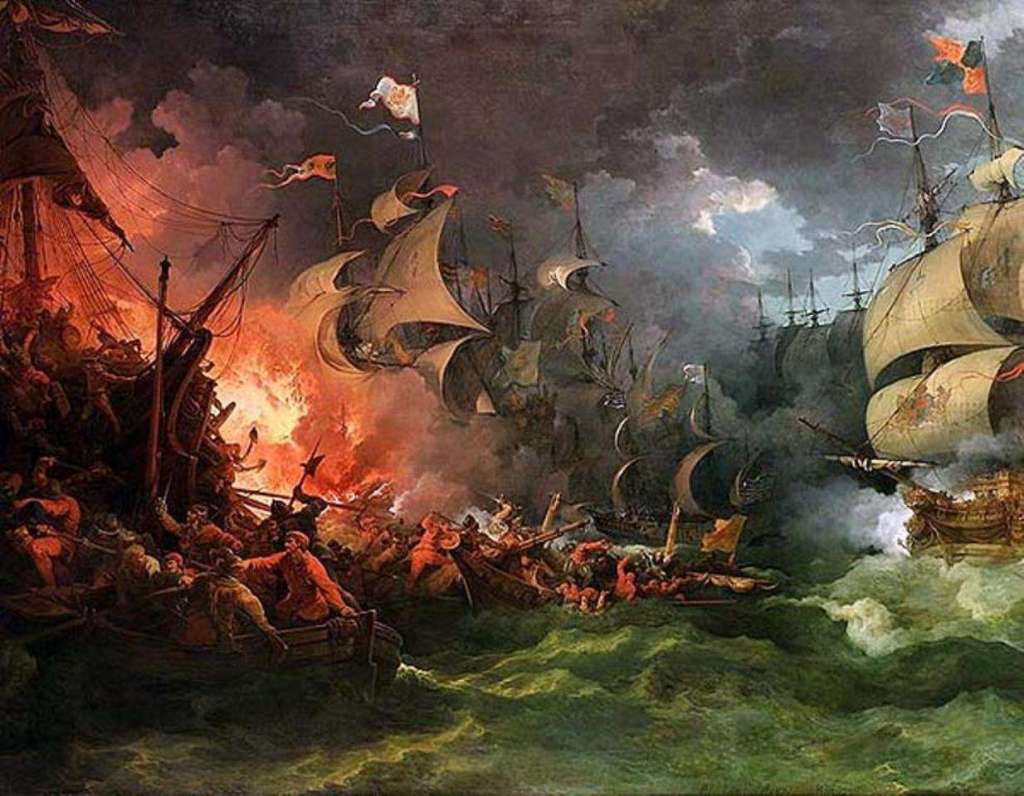
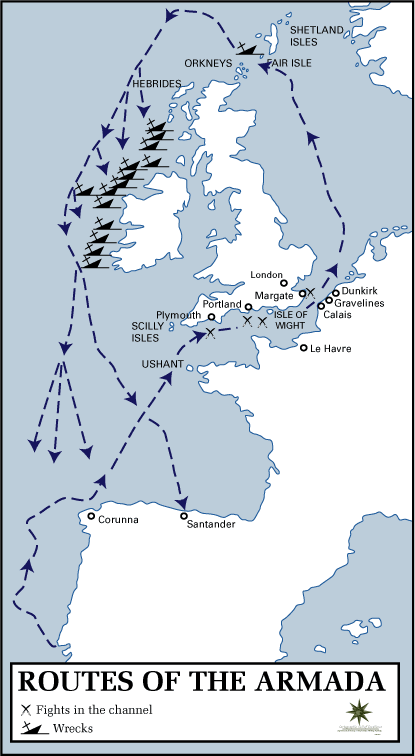
At this point Phillip II had had enough. He built the Spanish Armada, a fleet of ships that was unbelievable, with 130 gargantuan ships that housed a total of 26,000 soldiers, and they would have absolutely, undeniably, destroyed England if they had gotten there. To make a long story short, they didn’t. To make a short story slightly longer, they planned to arrive on the eastern coast, meaning they had to go past Plymouth, home of Francis Drake, and Drake didn’t like Spaniards. He shouldn’t have had a chance in this battle, the Battle of Gravelines, but he used fire ships (ships packed with tar, wood, and anything explosive, then sent to blow up anything on the water) and small, fast ships to ram and sink the huge, slow, large sided Armada ships, and he still wasn’t capable of sinking all of them, but they had decided to cut their losses and go up and over Scotland, returning to Spain. As the above map marks, the Armada was smashed on the Scottish and Irish coasts during a series of storms, and only 65 of the original 130 survived.

This pretty much made Spain lose interest in investing more into the war, obviously, but they remained at odds with England and fought a number of primarily inconsequential battles until 1604, when Queen Elizabeth I died and gave way to King James I and after King Phillip II died and had given way to King Phillip III in 1598, and these two were able to make a treaty. So even though there was only one real meaningful battle, the war dragged on for 19 years, 28 if you count Drake’s raids. Drake himself died in 1596, after being injured by a cannonball just off Puerto Rico. He was thrown out into the sea in a lead coffin, and divers are still looking for it today.

A Tom Sawyer Short Story

This is completely original to me, and nowhere in the book.

Aunt Polly decided to make some cookies. She felt that things had become strained between Tom and her, what with his constant pranks and shenanigans. She did feel that she had been harsh earlier in the week, but really, what did he expect would happen when he put mud in her washing basin when she wasn’t looking? Anyway, some cookies would make it better. She started the cookies (switching the salt and sugar back to the way they had been before Tom had switched them) and put them in the oven. After a couple of chapters in her book she took them out of the oven and set them on the window sill to cool down. As if her years had taught her nothing, she left them unguarded.

Muff Potter, the town drunk, was just waking up to a hangover. He was groggy, but something strong still caught his nose. As he sniffed around he realized what he was smelling. His eyes widened when he got to the window.

Huckleberry Finn was, by contrast, fully awake, and had been for a while. He had smelled the cookies as well, but had backed off when he saw Muff. Soon as he had gone though, (with four cookies! Greedy old thing) Huck went in towards the window. He was just glad he’d gotten there before Tom had woken up, otherwise he might not have gotten a cookie, and Potter certainly wouldn’t have!

Potter couldn’t believe his luck! He just got away with four whole cookies! His excitement, however, abated as soon as he saw Injun Joe walking towards the same tavern he was going to. He considered turning around, but decided Joe would see him do it.

“Hey, Muff!” that was Joe. “What’s that you you got there?” This was good. He seemed to be happy. Potter decided to risk it

“What der you mean?” it occurred to Potter he might still be a little hungover. Joe immediately lost his good humor.

“The thing behind your back. Give it here.”

“C’mon now, Joe-”

“Now.”

Muff sighed and handed over the cookies. Joe took them and studied them, then ate one.

“That’s a good cookie.” he eventually said, then ate another one. He made no sign of giving them back to Muff. This made Muff sad.

“Well, welcome, I guess.”

Later, Joey Harper went over to see Tom, to make sure they were still on for a play war later in the day, but found the Tom wasn’t awake yet. He also found the cookies. He took a couple, then decided to take a couple more to Amy Lawrence, trying to impress her.

Both Mary and Sid woke up before Tom, and decided to help themselves to a cookie. By the time Tom did wake up he went to the kitchen and ate the second-to-last cookie right there in the kitchen. Unfortunately, Aunt Polly had decided that the cookies were probably cool enough now.

Tom did not know what had gotten into his aunt! That was one of the worst beatings he’d gotten! Somethin’ bout breaking her trust- He didn’t know what she was talking about! It was only one cookie! But still, he had a play war to get to with Joey Harper, so he decided to just get on with his day, but still, Joey and Huck were actin’ real weird when he showed up that afternoon.

The Reformation of England

From 597 AD to 1534 AD the country of England was a Roman Catholic country, and that meant that the church of England was under the rule of the Pope, but in 1534 the King of England left the Catholic church and fell in with it’s greatest rival, Protestantism.

King Henry VIII did not actually prefer Protestantism over Catholicism, but instead had a disagreement with the Pope, after the Pope said that he could not divorce his wife, Catherine of Aragon. See, after much trying the king and queen could not have a baby boy, an heir for Henry, she only managed to give him a daughter, Elizabeth. He wanted a divorce so that he could marry a different wife and have a son. Since it was sinful to get a divorce without the blessing of the Pope, Henry asked for permission. Unfortunately for Henry, the Pope was currently under the Holy Roman Emperors thumb, and the H.R.E Charles V was the nephew of Catherine, so Catherine asked her nephew to ask the Pope to tell Henry that having a male heir was really overrated. This made Henry mad, and much history shows you don’t want to make an English King mad, because they do radical things, such as passing the Act of Supremacy, that made it law that the English King was in total control of the church in England, not the Pope. Henry then went on to divorce and banish Catherine, marry, have a daughter with, divorce, and execute Anne Boleyn, then marry Jane Seymour, who didn’t get divorced because she gave birth to Edward VI. Despite the split from the Pope the church went on pretty much the way it had, and it still taught Catholicism.

Edward became king at nine years old in 1547. He died nine years later at age 18, and since he never reached adulthood he never really ruled England, since a council of advisors did the actual political stuff for any child Kings. However, the Act of Supremacy made it so that Edward had control of the church, and the advisors couldn’t decide anything for him. While he was raised in a mostly Catholic country, one of his teachers was Thomas Cranmer, a Protestant who went to England after it’s separation from the church, and so when Eddie realized he had power over the church, he decided to complete the separation and turn England into a Protestant country. When it became apparent he was dying in 1553, he didn’t want his half-sister Mary (Anne Boleyn’s daughter) to become queen, because she was a staunch Catholic, so he named her illegitimate, and incapable of becoming Queen. His other half-sister Elizabeth was protestant, but he had to name her illegitimate if he named Mary thus, so he elected his protestant cousin Jane Grey to be queen after him. Unfortunately, Mary won the favor of the council who used to rule, and had them depose and execute Jane. She was only queen for nine days, earning her the name “The Nine Day Queen”

As mentioned before Mary (in the picture) was a staunch Catholic, and was obviously violent, since she executed Jane instead of, say, banishing, imprisoning, or just deposing her. She then married the King of Spain, and must of learned something from their inquisitors, since she became extremely strict about religion, burning over 280 protestants at the stake. This doesn’t count the other religions, or the ones killed in less creative ways, and this is actually rather impressive, since her reign only lasted five years, giving her the name “Bloody Mary” which is strange, because people don’t bleed when they are burned atthe stake. Despite this fierce Catholicism her half sister Elizabeth took the monarchy from the King of Spain when Mary died and reversed all of Mary’s actions, and England has overall been Protestant ever since, though Catholics where allowed into England hierarchy starting in 1770.

World Views

World views (also worldviews) are the way that a person can see the world, and their beliefs in what is true, or what is most important in life. There are many, many worldviews, and while I do list many here I by no means list all of them, and I’m not sure I can list all of them, but these are some of the more major world views that people have. Some of these definitions are crude and don’t fully capture what the belief means, but some beliefs are hard to put into words.

Theism is the belief that there is a god or gods that made the world and that the gods continue to interact with the world.

The opposite of theism is atheism, which is the belief that there is no god or gods, and the world came into existence through other methods, primarily evolution, though that is not always the case.

Rationalism is often paired with atheism because it is the belief that one should think logically and use reason before taking any action, as opposed to the belief that you should take action based on emotion alone.

Transcendentalism is the belief that a sense of (I couldn’t find a better word for it) divinity transcends all people and things, and that people should begin living simpler lives without material things distracting them from the essence of life.

Pragmatism is the belief that all things are more important and worth more when they are more useful to a person using them, and puts little to no stock in things of sentimental or theoretical value.

Nihilism is a bit of a black sheep among philosophies and worldviews because it says that there is no point to life and that nothing holds any importance. it’s surprising that nihilism doesn’t have a high suicide rate, but this is primarily because to them dying is just as pointless as living, so why bother buying a rope?

Existentialism is the belief that existence is more important than essence, or spiritual being, and that you should act before pondering the meaning of life, for only through your actions can you find the meaning of your life.

Post-Modernism is the belief that you should always be skeptical of anything and everything. you should try and figure out the very basic definitions of anything before you do anything.

Deism is the belief in a God who does not intervene or interact at all with the world (this world) that he created. The classic example is that of a clock maker who does not touch a running clock after making it.

Somewhat similar to pragmatism is materialism, but while pragmatism believes that physical and useful things are best, materialism believes that a spiritual or transcendent realm doesn’t exist at all.

New age pantheism believes that material or physical differences mean nothing, and that deep down in our spiritual being we are all one and the same, including all things in the world, not just people.

Humanism is the belief that the most important thing in the world is man, and that he is the most rational creature and therefore is the best being in the world. Humanism is, obviously, an atheistic belief.

Hedonism is the belief that pleasure is the best/most important thing, and that all people should strive to have as much happiness and as little pain as possible, and while that may sound extremely childish to some, many hedonists will endure pain for more pleasure later, a somewhat more rational form of hedonism.

Finally, socialism and communism are the ideas that all resources (money, food, etc.) should be evenly spread among people, no matter what they did, or even if they did anything to deserve it. Communism is just the more extreme form.

Again, this is an extremely cursory guide, and many of the definitions didn’t capture the full essence of the belief systems.

The Protestant Reformation

The Protestant Reformation was a movement that started as early as the late 1300s, but only got into full swing in the 16th century. It questioned the Pope’s authority and put all belief and faith in the Bible alone, which the Pope obviously did not like.

The very first seeds of it first appeared in 1320, when John Wycliffe was born in England. He questioned whether or not the Pope had the authority to sell indulgences, which was a piece of paper that said the person who owned it was absolved of their sins, which was a major argument between the reformers and the Catholics. He also thought that people should be able to read the Bible in their own language. He didn’t achieve much, and his translation of the Bible didn’t go far, but he planted the seeds for the reformation.

Then, from 1398-1415 Jan Hus preached in the Czech city of Prague, promoting Wycliffe’s ideas and spreading his books, and for a time he was ignored by the Pope, but when he started to convince the common people that the church system was corrupt, the church started pursuing him, and he lived in the countryside until he was caught and burned at the stake.

The next reformer lived at the same time as Hus, but didn’t take a direct stand. In the late 1300s the Dutchman Gerhard Groote survived a bout of the black plague, and after coming close to death he decided to start schools that would take in orphans and wealthy children alike, teaching them languages, math, and, as was common in the day, religion. He didn’t directly teach Protestantism, but his teaching implied the reformed teachings, and laid the groundwork for all the major reformers after him, and his schools managed to last 150 years after his death in 1384.

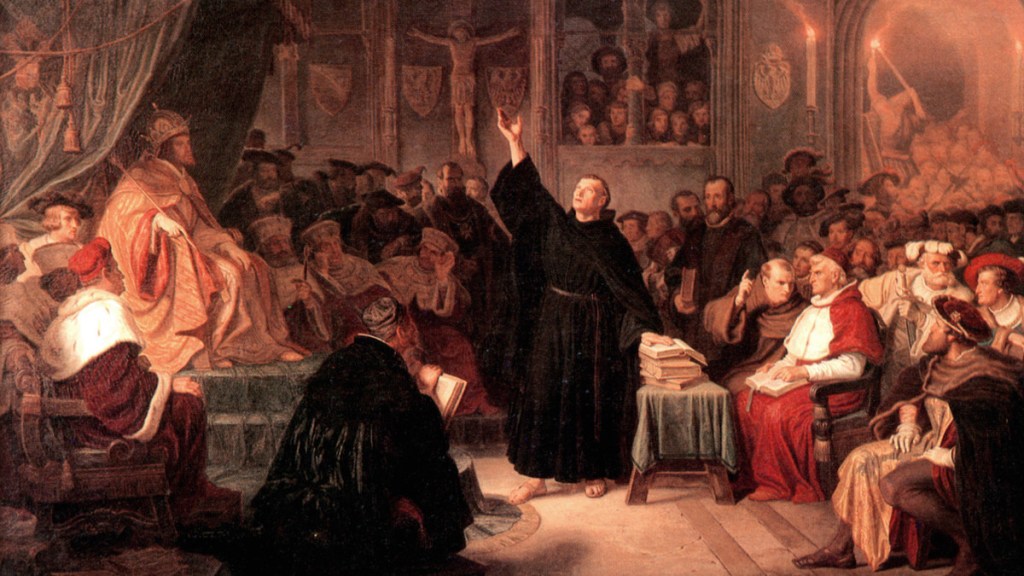
Martin Luther is by far the most famous reformer, living in Germany in the early 16th century, having become a monk after surviving a thunderstorm, and he was disgusted when the Pope claimed to be able to absolve people of their sins for a price, and so he wrote down his arguments, titled “95 Thesis” and nailed them to the church door, which many mark as the start of the reformation. He was excommunicated by the Pope in 1521, but managed to live a quiet life after his initial bravado.

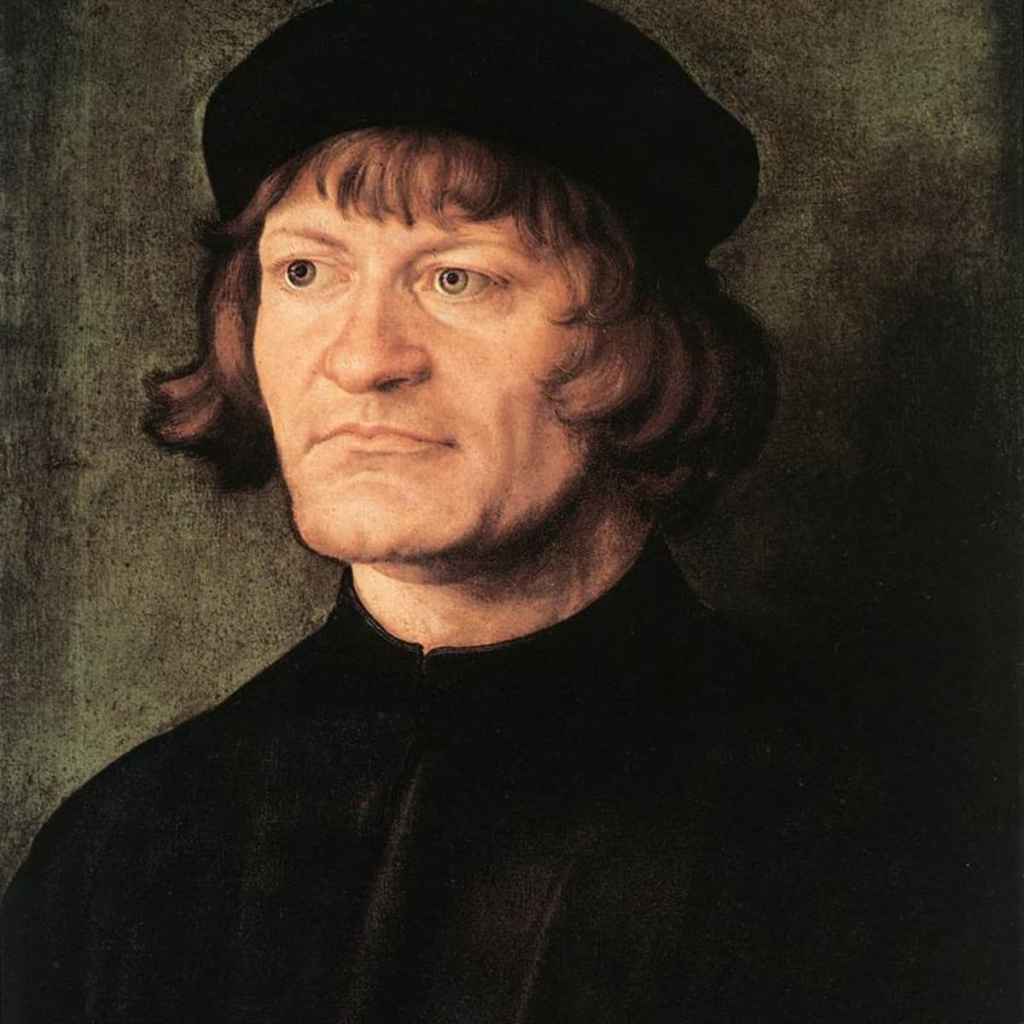
Ulrich Zwingli was a Swiss reformer, posting his “67 Articles” 6 years after Martin Luther posted his “95 Thesis.” Zwingli was much more radical than any of the others, and wanted to execute huge changes in the church, and the majority of them were in fact adopted, albeit later than the calmer changes. He also wrote a Swiss translation of the Bible, and actually went to war with the Catholic church, and died on the battle field.

France had several internal wars of this subject, since the movement gained so much momentum since Luther. The French Protestants eventually had to leave France after several massacres and failed treatises, going to other countries like England and Germany which were much more friendly to the reformative cause. This may have laid the groundwork for the 30 Years War, which was fought in central Europe over people’s right to be a Protestant.

Over the course of the 16th and 17th centuries England, Germany, Czech, the Netherlands, Switzerland, and all of Scandinavia converted to Protestantism, coming out from under the power of the Pope, and they all believed in the ideas that only belief in Christ can save you, good life can only come from god, and only the bible should be listened to, among others. Because these countries also had large stakes in the new world the Protestant ideas spread quickly in an area that had never known a Pope.

A Little Men Short Story

This short story is completely original to me, and not from the book, so don’t try to judge the book by this.

“Hey Demi, how’re you doing?” Nat asked, on his way back from math lessons with Mr. Bhaer.

“Oh, hey Nat, I was just getting some books.” Demi was looking awfully proud of himself.” I got them from Jack.”

“Jack? Jack Ford? Jack Ford who overprices everything?”

“Well, yes, but he didn’t overprice these, they were quite cheap, since he knew I had been missing mine.”

“Missing yours? How do you mean?” this was sounding worse and worse the more Nathaniel listened.

“Well some of my favorite books went missing earlier, I think I lost them going to the tree house,” Demi had built a tree house with Tommy a while ago. “and so when I went looking for them I met Jack who said that he had some of the same books, and that he’d let them go for a ‘steal’ he laughed when he said that, but I don’t know why.”

Demi looked thoughtful here, but it didn’t last. Nat had a horrible feeling in his gut. Jack had always been overpriced and squeezed as much from a deal as he could, but he would never steal, and certainly not from innocent Demi, would he?

The days went by and Nat didn’t see anything from Jack, but one day he saw Demi searching for something.

“Hi Demi, you all right?”

“Yeah, but I seem to have misplaced my books again.” he said this with a worried face. “I don’t know where else to look. I guess I’ll have to get a new one if it doesn’t turn up again.”

“You haven’t talked to Jack again, have you?”

“Funny you should ask, he was just in here and said that he had some more if I wanted to get them. I guess I should, since I can’t find them.”

“No, Demi, I think he’s, um, taking your books, and selling them back to you.” Nat managed to get the accusation out.

“What? Why would he do that?”

“To turn a profit, you know that matters to him, you need to tell Mrs. Bhaer.”

“But he wouldn’t! He’s not mean, he just… uh…”

“Please Demi! Talk to Mrs. Bhaer!”

“Alright, alright I’ll say something!” Nat watched as Demi went down the hall to see Mrs. Bhaer. He knew that other kids might call him a telltale, or a tattletale, but he also knew that stealing was horrible, and so he only found a shred of remorse when Jack came to dinner with slightly red eyes.

Ulrich Zwingli

Ulrich Zwingli was a Swiss reformer that lived and tried to reform the Catholic church at the same time as the more famous Martin Luther. He was born in 1484, born into the family of free peasants, which meant they were the closest thing to a middle class in olden times. He went to a good school that taught him Latin, and much about the bible and theology. He came close to becoming a Dominican monk, but decided against it. He became a priest a few years later and went back to his hometown in 1506. He was then ordered to leave, however, and went to a town called Glarus, where he spent ten years of his life. Switzerland was not at peace with any of it’s neighbors, however, and so Ulrich decided to become a chaplain, or a priest for the soldiers. This didn’t last long, though, because he quickly came to believe that war, military, and mercenaries were all immoral, so he was actually fired from the job after trying to get soldiers to quit. He then spent some time working on self improvement, and in 1523, six years after Martin Luther published his 95 Thesis, Zwingli posted his 67 Artikel, or 67 Articles. These were all of the problems that he saw in the Catholic church, and he thought they could be fixed using his articles. Among these articles were his ideas that: images and pictures should be removed from churches and prayer, priests should be able to marry, mass should be replaced by community talks, and organs should not be used as much. These are only four, and they don’t seem very strange since they are in affect today, but back then these were radical and mind blowing changes, but he managed to get a rather large following, since Martin Luther had already softened peoples minds to the point where they wouldn’t shout “No!” and slam the door. He based all of his changes on the bible, however, and the Catholic church never provided a proper argument and thus, we have his changes in today’s church.

Another group broke off of his, specifically because they thought he was not really attempting to get his reforms to work, and they thought he wasn’t being radical enough. These people that were considered crazy by the people that were considered crazy by the normal people were called Anabaptists, because their most famous crazy idea was that a person should not be baptized until they have sworn faith to god on their own, while everyone else just baptized babies. We do still have pockets of this group in the Amish and Mennonites, but these people are not nearly as plentiful as Zwingli’s.