My favorite thing I did last summer was going on a car trip to Colorado.One thing we did on the trip was going to the grand canyon and it really looked like a painting!another thing we did was going to the Four corners and I got a cool coin from one of the shops.Another thing we did was going to Mesa Verde.The ruins look really cool!We also went to the Adventure Dome in Las Vegas. and when we got to Colorado we had fun with my family.So my favorite thing I did last summer was going on a car trip to Colorado.
Blog Feed
Cain and Abel
The story of Cain and Abel begins by telling us that Cain and Abel were the children of Adam and Eve. Cain was the older brother of Abel, and was a tiller of the ground. The younger brother, Abel, was a shepherd, taking care of sheep. At some point both Cain and Abel took sacrifices to God, and we are told that Cain brought crops that he had tilled up from the ground as his offering, while Abel took the first lambs from his fattest sheep as his offering to God.
We are told that God respected the sacrifice of Abel, but had no respect for the offering of Cain. It’s not clear why this is. It could be that God didn’t like the offering of crops because it came from the ground, and that Cain should have become an animal tender instead of a tiller of the ground. It’s also possible, because of the emphasis on the fact that Abel took the youths of the fattest sheep, that Abel simply took more care in preparing the offering to God, and had Cain been careful to take only the best of whatever it was that he was tilling (presumably wheat) he too would have found respect from God. It’s also possible that God simply preferred Abel to Cain as a person, but whatever the case may have been, it resulted in the death of Abel.
Cain was angry at his treatment by God, and recognizing this, God told him that he would be accepted should he do well, and that sin was always close at hand and would overcome him should he not be careful. Soon, we are told, after speaking with Abel, Cain killed him. It was impossible for Cain to benefit from this, and very clear that he would be punished for doing this, but he did it anyway, and even believed he could get away with it without punishment. At some point, presumably soon after the killing, God asked Cain where Abel was. His famous response was first to lie, saying he did not know, then to ask whether or not he was his brother’s keeper. In modern days this is often taken as meaning he really was his brother’s keeper, and that he was responsible for him. This was almost certainly not the case. Cain was the equal brother of Abel, not his superior as a keeper, and this question was meant as a rhetorical in order to avoid the responsibility of knowing of his brother.
God, of course, sees through such a manipulation, and says he can hear Abel’s blood crying to him from the ground. God therefore curses Cain from the ground, forbidding him from being able to raise crops. He also banishes Cain from the area, naming him a fugitive and a vagabond. Cain protests this, saying that he will be killed be any people he meets on the road, so God puts a mark on him, so that all know that the killer of Cain will be punished seven times as harshly. This is also mostly unexplained as to why God would protect him in this way.
On the Hierarchy Shown in Genesis 1-3
In Genesis 1 of the Bible, after creating light, dividing the heavens from the earth, and revealing dry land, God creates plant life, and then created the stars. Then does God create animal life in the sea, animal life in the air, and animal life on land before finally making Man. From the start God creates Man to be superior to all life previously created, and even tells him that it is his duty to subdue the earth, and to have dominion over all life.
Genesis 2 takes a deeper look at the creation of Man. It says that God formed Man of the dust of the earth, and breathed life into his nostrils, granting Man a living soul. After creating Man, God forms a garden known as the Garden of Eden, as a place for Man to reside. God is said to put Man in this garden to “dress it and to keep it.” as well as telling him he may eat of every fruit of every tree, except for the tree of the knowledge of good and evil, showing God’s authority to create moral laws as well as the natural ones made during the creation of the world. God then decides to create a helper for Adam, but first brings all the animals to him, that he would name them. After naming every living creature, God grants Eve, the first woman, to Adam as an equal helper for him.
Genesis 3 begins with telling us that the Serpent asked of Eve whether or not she was allowed to eat of any tree in the garden. Upon telling him of the only moral law that God had ordered of her and Adam, not to eat of the tree of the knowledge of good and evil, the Serpent contradicted God, saying that neither she nor Adam would die were they to eat of the tree, as God had told them. The Serpent instead says that they would become like God. Eve eats of the tree, believing the Serpent, her inferior, instead of God, her superior, and takes the fruit of the tree back to Adam, who also eats it. Then they sew clothes of fig leaves in order to cover their bodies. God finds them doing this and asks Adam whether or not he ate of the tree. Adam then attempts, not to lie, but to displace his guilt onto both his superior, God, and his equal, Eve, by saying that the woman who God gave to him gave him the fruit to eat, as though God were responsible for all she did, and that Adam had no choice but to eat the fruit when she gave it to him. God then asks Eve why she took the fruit of the tree, and she too displaces the blame, not to Adam, but solely onto the Serpent, whom God asked nothing of, letting the blame rest.
God then punishes all three involved in the matter. First the Serpent, who God declares lower than any other beast, forces to crawl on his belly, and to forever more have a mutual hatred with all children of Eve. Eve then was punished with painful childbirth, and instead of being an equal helper to Adam, will now be ruled over by him. Adam’s punishment was to have to fight the earth for his food, tilling and farming the land instead of gathering fruits. All the animals who were previously servile to Adam, as their acknowledged master set by God, now turned on man, and would have to each be tamed and disciplined independently if they were to be controlled.
God is shown to be the Lord of all things, as he made all things and all life. He set up Man as his inferior, to be lord of all things through the authority of God, but when he rejects God he must become the master of the land and the animals through his own authority, which is far less than God’s. Eve is now the inferior to Adam for being beguiled by the Serpent, who himself is set as the inferior of all living things for contradicting God and lying to Eve, a representative of Man.
Socrates vs. The Sophists
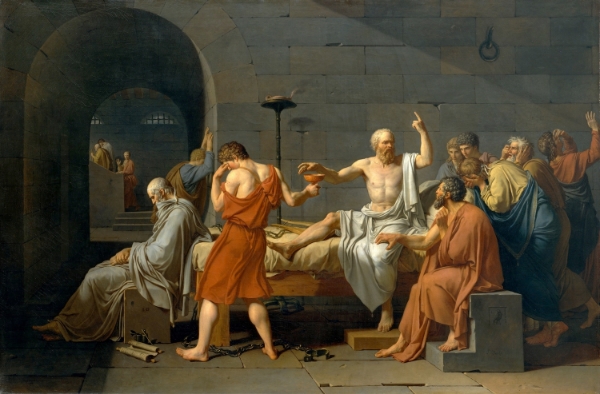
Socrates and the Sophists had contradictory views on the Truth, which brought them into conflict, and as the Sophists were by far the more popular the the rivals, eventually resulted in the execution of Socrates. Though, not before he shook the Sophist’s from their popular pedestal.
We don’t really know how the Sophists came to their views, but there are some theories. The first theory is that they thought that the absolute Truth was so elusive and impossible to figure out or attain, that there was no real point to trying to find it. And if there isn’t anyway to verify the truth, then you might as well go along in life believing in and practicing in whatever you think will benefit you most, since, after all, who’s to say that isn’t the Truth? The second theory is that they didn’t believe that an absolute Truth existed in the first place, and so you might as well do whatever you wanted to. Or, it’s possible that they believed the the Truth was a subjective thing and that the best thing for yourself was the Truth, at least for you, and at that time.
The Sophists were quite popular, as they would teach the wealthy and the wealthy peoples children rhetoric and public speaking, important skills in ancient Athens. They would also be tremendous suck-ups in order to get more money and popularity, as was in keeping with their “what’s best for me” philosophy. when arguing they would also not care if they were inconsistent, so long as they won that particular argument.
Socrates, on the other hand believed in pretty much the opposite, that Truth is an absolute, incapable of changing, and that it is fully within the powers of man to discover this eternal truth. He was also quite patronizing in his teaching style, first forcing his students to admit that they did not know a thing before guiding them to discovering the answer. And while the Sophists charged money to teach a student, Socrates didn’t, believing learning to be a universal goal that everyone should strive for, regardless of wealth. He also considered everyone who didn’t know a thing that he knew, to be his student, regardless of whether or not they wanted to be.
This all combined to make Socrates a much disliked figure in Athens, and so he was sentenced to death for corrupting the youth with his philosophies. Yes, you read that right, he was sentenced to death for teaching children about objective morality, while the subjective Sophists who believed in doing whatever you wanted, kept on teaching the most powerful of the people. But Socrates did shake their monopoly on Athens, and they were never quite as popular as the were.
Consequences of Jim Lehrer’s Heart Attack
Jim Lehrer was a TV NewsHour anchor, who had a heart attack and wrote an autobiography. He wrote his autobiography, A Bus of my Own, after having the heart attack, so he included it in the book. He goes over many changes that the heart attack caused for him in his life, such as dietary changes, his prioritization of his habits and hobbies, and the path that it let him take in his career.
He had to completely revamp his diet to exclude all the things that he liked to eat, since all of the things made up his old diet were incredibly bad for his health, like Mexican food, sugary food, peanut butter, and all greasy and salty things, which were his particular delights. Instead he was forced to eat vegetables, fruit, and low-fat yogurts, all of which he treats with exceptional disdain. The only food he was allowed to eat and was capable of enjoying was bread (without butter, of course). He had also been an extremely ardent smoker, smoking cigarettes at all times; driving, eating, talking, and even before going to bed. This had to stop, of course, not that he wanted to. But all of these changes in his diet benefited his health, and his relationship with his wife, seeing as she hated his smoking.
He also made far more time and put a lot more energy into less stressful hobbies of his, such as writing. He had managed to write a successful book earlier on in his career (Viva Max!), but in the years leading up to his heart attack he didn’t manage to get anything published. Realizing he wasn’t making any headway with his novels, he tried writing plays, some of which were good, like Chili Queen, but he realized that he wasn’t really all that great at it, and so went back into novels with Kick the Can, which became a 7 book series. He began to enjoy his life much more with the new focus on his writing.
He also managed to do a bit of good in the world thanks to the whole heart attack experience. He wrote a special episode of the Macneil/Lehrer Report, his news show. He discussed the symptoms of the disease, and precautionary measures that could be taken to ensure that others wouldn’t have heart attacks in the first place. Multiple people came to him afterwards, with stories of how he had saved their, or their friends’ lives. This was one of, if not his most important act in his life.
Jim Lehrer’s life was threatened by the heart attack, and there was a real possibility of his dying from it, but his life was certainly improved by his actions to prevent another one, though the lack of tasty food is a rather sad development in his life, even if it was healthier for him. He managed to help himself through the breaking of his bad habits and into good ones, only some of which I’ve mentioned here.
Abraham to Moses
Abraham is a major character in the Old Testament of the Bible, and seems to have been a historical figure as well based off of genetic tests from the Jewish population. In the Bible, he is said to have been from the Mesopotamian city of Ur, before leaving the city to go to the land of Canaan, which was promised to him and his family by the Lord.
God, at one time, demanded the sacrifice of Abraham’s son Isaac. At the last moment, however, when it was clear that he was willing to kill his son, God told him to stop and kill a lamb instead. This was simply a test of Abraham, not a real human sacrifice.
Isaac doesn’t do much, but he does have two sons, Jacob and Esau. Esau is very brawny, but not too smart, and Jacob tricks him into giving up his rights as the elder brother. Esau swears vengeance, and Jacob flees to his uncle’s farm. He works for his uncle for 14 years, and married both of his uncle’s daughters. He returned home and was forgiven by Esau. From his wives he had twelve children, the youngest of whom was Joseph.
Joseph was Jacob’s favorite, and the other 11 sons hated him for it, so the sold him to slavery. He was eventually bought in Egypt, where he became known for being able to interpret dreams. The Pharaoh was having disturbing dreams, and sent for Joseph to decipher them. He declared that a famine was coming, and with that heads-up the Pharaoh was able to successfully stock up for the famine. Joseph also became a favorite of this Pharaoh, so when his family came to beg for food during the famine they were welcomed with open arms.
Eventually Joseph died, and so did the Pharaoh, and so the Hebrews were turned into slaves. Eventually Moses was born, and he was told by God to demand the freedom of the Hebrews. He did so, but the Pharaoh denied the request. God then visited the 10 plagues on the Egyptians, which forced the Pharaoh to let them leave. Moses the split the Red Sea, and the Jews walked to the other side in search of the land of Abraham.
They find Mt. Sinai, which Moses hikes up to the top of. There, he receives the Ten Commandments, which forms the law of the people of God. Moses, however, is cursed to never enter the Holy Land due to his lack of belief. So they wander for thirty years before he died, and they were allowed to enter the Holy Land.
Keeping a Blog
Keeping a blog is a helpful tool to have, as it has many benefits. One such benefit is that it provides practice in recording my thoughts on topics, such as book reviews or historical summarizations, which occupy the entirety of my blog. This practice helps train me to summarize my thoughts quickly and in an intelligible way (at least, hopefully this is intelligible). It can also improve the way that I think about the subjects I write about, since the writing down of a subject requires much more thinking and planning than simply feeling and thinking about a subject, and explaining it even more so.
It also provides a record of what I have done and learned, and how I have changed, hopefully for the better. By looking over this record, I can see where I’ve been and what I’ve done, and use that to, ideally, figure out where I need to go and what I need to learn. It also works as a a kind of résumé, letting people see what I’ve done and said without directly asking me.
By posting my thoughts I also gain experience with the internet, which should only set me in good stead. Worst case scenario, I just learn that I’m really not that great at writing and nobody reads anything of mine, at least I’ll continue to improve, and best case scenario I somehow become popular, or at least manage to use this site to my advantage. And then there’s the possibility that I manage to help someone by providing a decent review, which would more than make this worth it.
I recommend keeping a blog site yourself, for any of the reasons that I have mentioned on this post, or any other that I’m sure I’m missing, so as to better your life by a little, or possibly a lot.
Keeping a blog is a helpful tool to have, as it has many benefits. One such benefit is that it
In His Steps
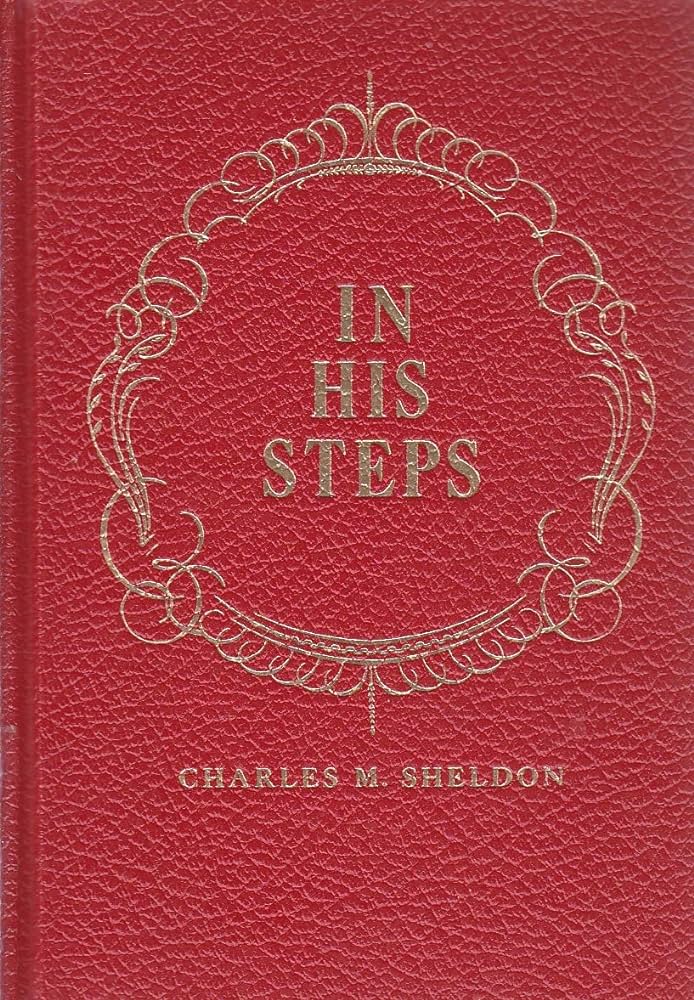
Written by Charles Sheldon, “In His Steps” was written as propaganda for the social gospel, and resulted in a complete Utopia, in that Sheldon’s imagination led him to believe and write that should just a hundred church members in some remote town adopt Sheldon’s own morals, they could effect nothing less than a revolution throughout the nation.
One of the Charles’ worst deficiencies is the lack of any kind of Creed, which he totes as a benefit, saying that, somehow, by the people asking “What would Jesus do?” which is the oft repeated motto of the entire book, would result in people’s lives getting much better, even if they had no clue as to what he would do. And his lack of any creed results in people having no way to figure it out. The result is that people end up doing whatever they feel they ought to, which traditional Christianity warns of. Christianity does have a creed, which is to do what the bible says to, and it contains the teachings of Christ, which Sheldon and his characters seem perfectly content to ignore.
A major example of a character going against Jesus when wondering what he would do is Virginia, a young heiress who donates the modern day equivalent of 18.6 million dollars to a failing Newspaper. The newspaper is failing because the owner and editor of it has decided to do what he feels he ought to do, resulting in a newspaper without a Sunday edition (they still have a Monday edition, so people must be working on Sunday, though that isn’t addressed) no advertisements that include anything suggestive at all, like liquor of tobacco, who were pretty much the only advertisers back in 1896, no political recommendations, no reports on personal or corporate scandals, and no reports on violent crime. And all this based purely on how Norman, the Editor of the newspaper, felt Jesus would do, without so much of a glance at a bible or his pastor, not that the pastor would’ve helped, because he doesn’t care for it either, despite it being the record of Jesus’ life. So Norman, going bankrupt, asks for help, and receives it from Virginia.
Virginia had been eaten up by guilt because of her immense wealth, all of which was inherited by herself, not earned. She felt like she was sinful for being rich while other people were poor, and so ends up spending enormous sums on projects like Norman’s newspaper. When he asked for help, he simply asked for the money to keep going with his plan, which has already definitively bankrupted him. So Virginia gives away something between a third and a half of her wealth to a project that has already failed. Of course, thanks to Sheldon’s dreams, the newspaper then turns a profit, and we are told that “… it is one of the most interesting and remarkable papers ever printed in the United States.” Well, how can this be? It already failed, we know that, and it has no news of interest known to the world at large, so how can this be? What happened? Even Charles fails to conjure a reason this time, and it seems that, as far as we know, all laws of the free market and people’s interest have completely upended themselves.
This is but one instance of “In His Steps” being, quite simply, low level propaganda for the social gospel, which is a socialist take on Christianity, and as we see here, is just as nonsensical as standard socialism.
Looking Backward: Unbelievability
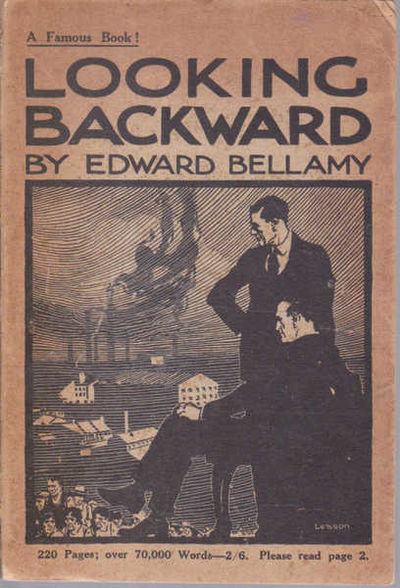
Looking Backward is Utopian literature, written in 1888 by Edward Bellamy, a Socialist. It was very popular in America when it was written, making it one of the only popular socialist works in America. Despite the many people who liked the book, and Bellamy’s best efforts, Socialism didn’t get popular, and has gotten pretty continuously less popular since the fall of nearly every communist and socialist country, with the exceptions of North Korea and Cuba.
It starts with the main character living in 1887 as a rich man, but is having troubles because of extreme strikes and riots going on in the workforce of America, and from the characters conversation, apparently all over the world. While there were a lot of strikes back then, they were not nearly so bad as Bellamy depicted, and had a totally different outcome. This main character had trouble sleeping, and so had a friend of his mesmerize him to put him to sleep. Somehow, the house burns down around him, but he’s safe because he slept in the basement, and is presumed dead. He then wakes up in an unknown room. Turns out, he slept for 113 years, and is only excavated in the year 2000. He finds that it is because Dr. Leete, the current owner of the land, was trying to build where the old house stood. Looking out at the city, he realizes that it has beyond a doubt changed, convincing him that he really slept 113 years. This is complete fiction, of course, and serves simply as a mechanic for Bellamy to contrast his 1887 culture and the Utopian one. So, while unbelievable, it wasn’t meant to be believable, and I don’t have any trouble with it.
What he did mean to be believable, however, is this Utopian society. Edward, through Leete, describes how the strikes were ended by assigning all jobs to be under one employer, the Government. This makes no Economic sense, as strikes exist as a retaliation against a lack of employers, trying to get them to change, as opposed to finding a new boss that would start with the demands met. He then goes on to say that all workers are paid the same, no matter the job worked, or the quality done. He contradicts this by later saying that less savory jobs don’t have to work as much, which begs the question, how can you claim both identical pay rates, and equality of outcome if the hours are different? Another contradiction that he has, is that supposedly the people can choose their job, and so certain (undefined) benefits may be granted to the less popular jobs until they are equal to the desirable vocations, so that people will naturally want to take those jobs. He also says that the state has the power to make people work any job if the benefits aren’t great enough, and that in any emergency (the State deciding what constitutes an emergency) the workforce can be changed and moved as they decide is needed. The biggest oversight in Bellamy’s Socialist ideal (so far, I’m barely a third of the way through the book) is probably the fact that the wages aren’t described. After dodging about the question of “How are wages decided?” Bellamy says that there would be no equivalent to wages in Utopia, despite him describing an exact one-to-one descendant to wages in his “credit” system. So if we try to answer the question that he couldn’t, we find that the pay can’t be decided by anything other than total subjectivity due to the fact that the government holds a monopoly on everything. Add tot his his contradictions on how people get paid the same amount, and his entire system has already fallen apart. Just like all attempted socialist societies.
The Fall of the U.S.S.R.
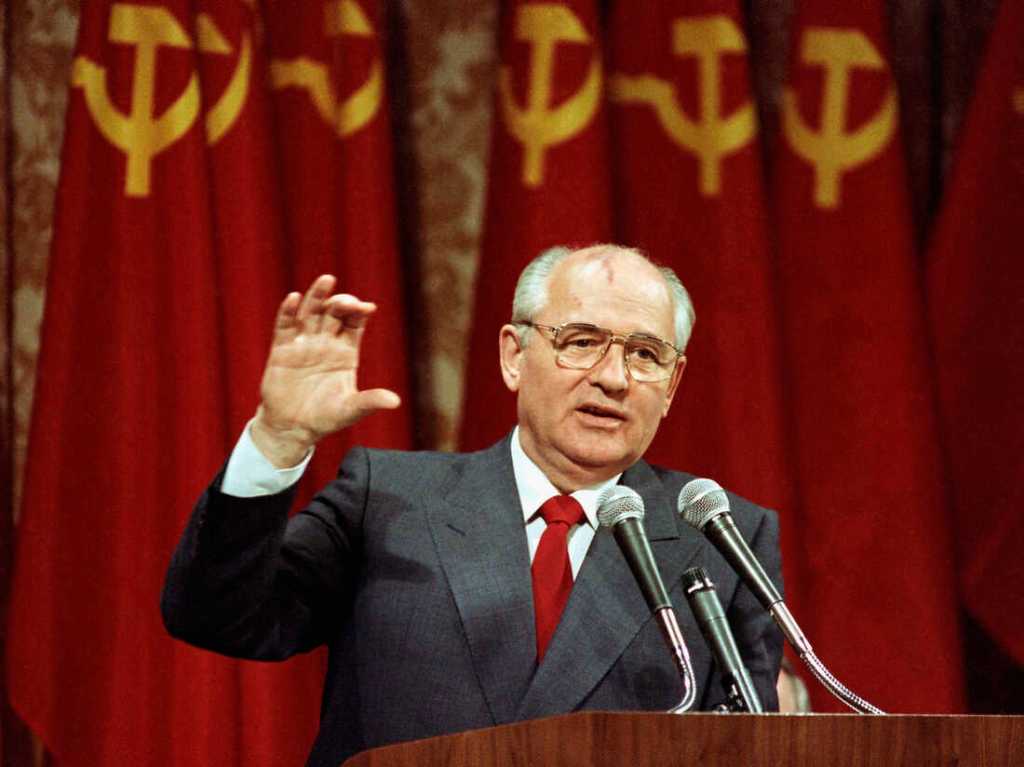
Started in 1919 after the Bolshevik Revolution, the Soviet Union finally fell in 1991, 72 years later. Technically speaking, the U.S.S.R. wasn’t started until 1922 when Joseph Stalin united all the communist parties that had been started by Lenin’s Bolshevik Revolution in 1919. Stalin ruled the Soviet Empire with a heavy hand until his death in 1953.
Then, Nikita Khrushchev quietly moved Stalin’s successor out of the way and took over. He instituted much less controlling policies, though was clearly still a dictator. The new policies helped improve relations with the U.S.A, who had engaged in a Cold war with Stalin’s government, until the Cuban missile crisis in 1962. The crisis started when communist Cuba began installing Nuclear Missiles on their island, given to them by the Soviets. This was incredibly dangerous for the U.S.A. since Cuba is practically a next door neighbor. Frantic negotiations were carried out, that nearly resulted in nuclear annihilation. However, it instead brokered a deal that stated the Russians would remove their missiles from Cuba, if the Americans removed their missiles from Turkey, and promised not to invade Cuba. Things calmed down from there, and nothing very important happened until 1979, under the reign of Leonid Brezhnev, who took power in 1964.
In 1979 the Soviet war on Afghanistan began, and the U.S.A, who didn’t want the Russians to expand, funded the Afghans. They didn’t outright go to war with Russia because that would initiate Nuclear death, but instead funded the people Russia was already trying to fight. Eventually, in 1989, under Mikhail Gorbachev, the war was ended, since no real conclusion was to be found, and the U.S.S.R. couldn’t afford a continual drain on their resources. But then, in 1990, Iraq attempted to conquer Kuwait, an oil rich country, and was funded by the Soviets, while America and many other countries decided to keep Iraq out of Kuwait. Despite the Russians best support, Iraq fell inside of a year. This was the final blow that showed that the Soviet Union was well behind the Capitalist world.
Then, Gorbachev decided to try making the Union less dictatorial, instituting several reforms. He then held a poll in 1991 to see if the Empire wanted to break up the U.S.S.R. After finding an overwhelming majority of the population supported the idea, he decided to do it. However, the remaining Communists did not like this idea. They decided to stage a coup, and rolled in on tanks to depose Mikhail. When faced with the rest of Russia’s military, however, they backed down pretty quick, and the communist party was ended in Russia.
Gorbachev resigned on Christmas day, 1991, and the entire soviet country collapsed and disintegrated. Out of it’s remains 15 new countries were formed: Armenia, Azerbaijan, Belarus, Estonia, Georgia, Kazakhstan, Kyrgyzstan, Latvia, Lithuania, Moldova, Russia, Tajikistan, Turkmenistan, Ukraine, and Uzbekistan. America’s position with Russia and the rest of these countries has been quite strong, though friendly ties to Russia have began to deteriorate in modern days over it’s treatment of Ukraine.
The Space Race
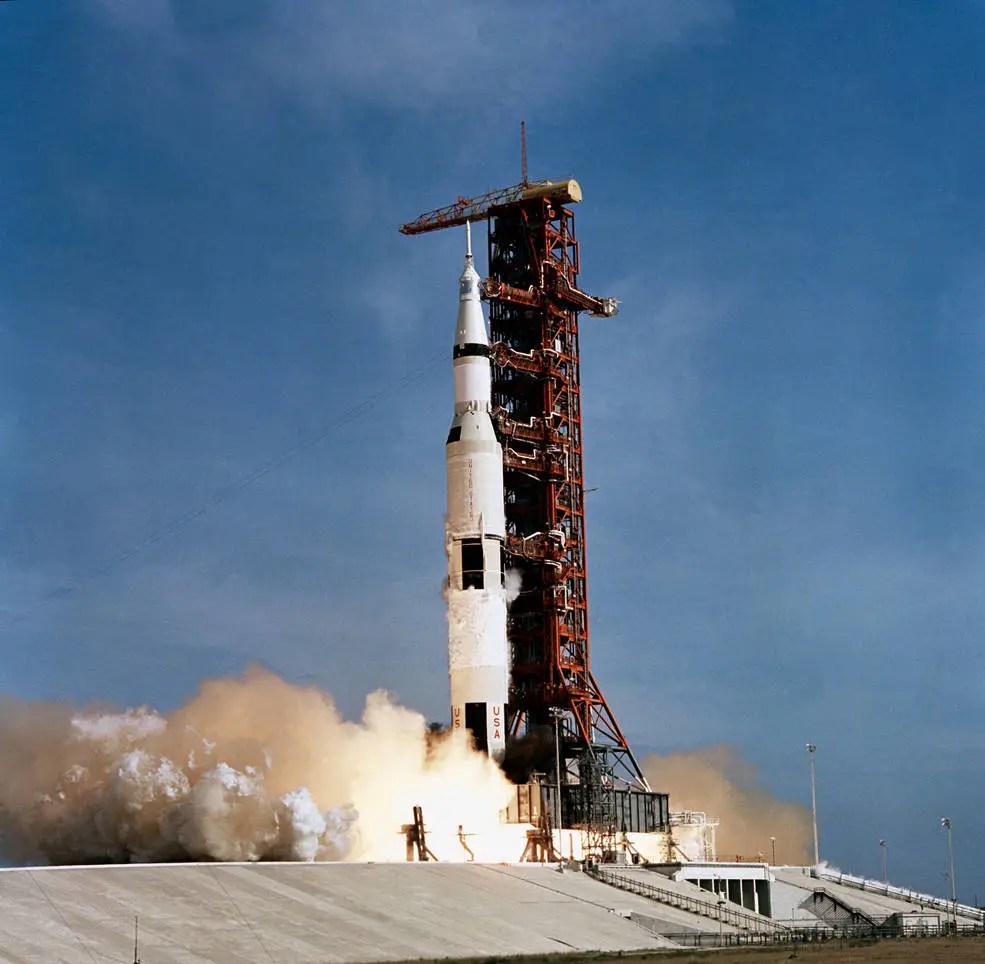
Unable to even fly until the Wright brothers came around in 1903, humans had no chance of reaching space until Nazi Germany began building jet planes near the end of World War II. The Germans invented the very first rocket that was capable of reaching space, which is defined as 100 kilometers above the earth. This first Rocket was called the V2, which could fly to 206 kilometers high. After the war, both the U.S.A. and the U.S.S.R. began capturing a taking V2 rockets and Engineers from Germany.
The first experiments done were by the Americans using V2 Rockets, examining cosmic radiation and sending up fruit flies to see their reaction to space 1946. The Russians quickly did these same experiments in their own V2s, as well as a new rocket called the R1 in 1947. It’s important to note that these rockets would go up, and then come back down, they wouldn’t stay in orbit for long enough to do serious experiments. Partly due to this, partly due to the growing intensity of the Cold War, the space race was put on hold as both countries put their German rocket scientists to work on ICBMs, also known as Inter-Continental Ballistic Missiles, which would be capable of sending nuclear bombs all over the world.
Russia decided to jump back into the space race after they realized they couldn’t get a meaningful advantage through missile manufacturing, and sent up the first satellite, Sputnik 1, in 1957. They followed up with the first living being in Space that same year, when they sent Laika the dog up in Sputnik 2. The American populace was affronted by these communist successes, and was worried that it meant the Russians were ahead of them, technologically speaking. So President Dwight Eisenhower founded the National Aeronautics and Space Administration (also known as NASA) in 1958 to compete with the Russians. The Russians then sent up the first Human in Space, Yuri Gagarin, in 1961. 23 days later in 1961, NASA sent Alan Shepard up as the first American in Space. A year later, NASA sent up the first orbital Solar Observatory,meant to study the sun. then the Russians took the first man out of his shuttle for a space walk, that man being Aleksei Leonov, in 1965. they then sent a fully automatic shuttle to the moon, with no one on it. Then in 1968 NASA sent the first manned orbit around the moon, though not touching it. President John Fitzgerald Kennedy declared in 1962 that the goal of the Space Race was to put a man on the moon and return him to earth. Both Russia and America began frantically preparing for a manned moon Landing, and America put both Neil Armstrong and Buzz Aldrin on the moon in 1969.
After the Apollo Program not much happened in America, though the Russians managed to make a Space Station in 1971. America came back to it in 1981 though, with the Columbia, Discovery, Atlantis, Challenger, and Endeavor Space shuttles. The Challenger Shuttle suffered a massive explosion in 1986, killing everyone in the shuttle. This was highly publicized, since it was popular due to having civilian astronauts aboard. The Columbia also exploded in 2003, but the other shuttles were used until 2011. the cold war had ended in 1991, and the Russians and Americans helped helped each other after this, and using the shuttles, the International Space Station (ISS) was built off of the Russians 1971 space station in 1998, and is in use and has people on it to this day.
So, just 66 years after making the first flying machine, people landed on the moon, and 29 years after that we have a humans living in space at all times. Quite a far ways to go in a short time, who knows how far we’ll go in the future?
 School Essays