Blog Feed

Reception of Advice

People give and receive advice quite often, as we give it to help other people and receive it to help ourselves. However, it’s true that a lot of people dislike receiving advice, as they see it as insulting that someone thought they needed advice, or that they didn’t think of it, and so their pride blinds them to an easy way to learn quickly. Even mostly reasonable people often do this, disregarding other peoples advice in favor of their own, even when theirs is not nearly as good, in practice or theory. Despite this total disregard for others advice, these people give plentiful, and poor, advice of their own. In other words, dumb people want everybody to listen to them, but don’t want to listen to anybody who they see as dumber than them (which is everybody)

I believe that unintelligent people are often the most prolific spreaders of their own advice because they are incapable of realizing that they aren’t the best person around. On the other hand, the successful people who’re more than qualified to give good advice often don’t give commonly, only when truly pressed for their opinion, since they know that they don’t know everything happening, and are desperate to not give bad advice.

Unintelligent newcomers to a field will often believe that they know best, and refuse to accept advice from anyone else, resulting in their making easily avoidable mistakes. Intelligent newcomers, however, will often realize that they don’t know best, and willingly accept advice. Unfortunately, the advice often comes from the unintelligent ones, so they would often be better off without the advice. I think that this is where confidence plays a huge role, allowing confident smart people to evaluate advice, think it through, and ignore or receive it at will.

Of course, I’m not saying this is always the case, just that I think it often is. I’m also not telling everyone who reads this that they need to be more confident, or less prideful. I do think that in order to become better at giving and receiving advice one must adjust their pride or confidence but that it must be done according to you specifically, and the only way to do that, I believe, is to deeply reflect on oneself, primarily through meditation. Of course, this is just advice from me, and I could well be wrong about this, but I’m confident enough to give it, and prideful enough to believe it will help people.
Proper Real Time Responses

An action is an event that takes place in the world, and as people we will instinctively react to it, just like all living beings and non-living objects. Different people have different responses, though, and some react to an action instantly and instinctively, while other people respond to an action by thinking through the consequences of a reaction, and try to find the best possible reaction. As this takes time, they are often lacking in any real reaction, instead sitting around while actions rage around them, with their only reaction being inactivity.

This isn’t to say that they’re obviously worse than, or even worse at all, to the instinctive reactors, as they don’t have a thought out reaction, merely striking out blindly with their primal decision. This means that while they are quick to respond, their responses aren’t the best, and will even go directly against ones wishes.

An example of this: Someone you seriously dislike insults you, and does it well, striking a nerve. The instinctive reactor would immediately respond with something like “You’re a stinkyface!” As you can tell, this is not verbally impressive, and would be a reaction that markedly makes the situation worse. The thinker, on the other hand, might sit down and think about the insult for a while, and later, well after the dislikable person leaves, might come up with a devastating comeback that would make this poor person rethink all their life choices. This would be a wonderful response, had it been made promptly, but it’s now stale and useless.

The obvious best thing, of course, would be to use your mind like the thinker, and be quick about it like the instinctive reactor. This is often referred to as having a “quick wit” or a “ready wit” especially when talking about our example up above, though it’s important for far more than just recreational insults. When responding to things like an injury, or a fire, screaming and flailing immediately won’t help things, just make it worse. Standing silently looking at a fire raging on your shoes while you think about the nearest water source, is also clearly useless. The combination of the two, however, leads to a person immediately heading towards water and quenching the fire, which, for anyone apart from pyromaniacs, is obviously the desirable outcome.

It can be difficult to gain this ability, of course, but I believe it can be done, particularly when a thinker trains up his ability to respond quickly. This, I believe is mostly evident with people in positions like firefighters, who are trained in a specific set of skills, or responses, that they then use immediately and effectively to use in any variation of a few actions, like house fires, or stubborn cats in trees. This evidence, and my previous principle, make me think that the best way to have a proper real time response (if it isn’t natural, which would be truly impressive) is to plan things out in advance and practice those responses until they can be effective in a real time situation.

The Quasi-War

The Quasi-War was an unofficial war between the newly formed United States of America and their former ally, France. France had been an ally of the USA from its start, first helping them fight Britain unofficially during the American Revolutionary War, then officially coming out as their allies. But it was the monarchy of France that did this, and drove themselves and the peasantry into debt as they did so. The peasantry were already beginning to dislike their rulers, but this last war they funded to no obvious benefit to themselves (other than generally harming England), drove the peasants over the edge. In 1789 the peasantry rose up and began the French Revolution, and decapitated almost all the nobility in France using the famed guillotine. While this was the same idea the Americans had been fighting for in their country, they had become friends with the nobility during their war, and only a few Americans, like Thomas Paine, were consistent during both wars, fighting for liberty. Tensions mounted even higher in 1795 when the Americans made the Jay Treaty, which ended most of their dealings with France and struck up agreements with Britain, leading to 10 years of good trade with Britain and, eventually, a small war with France.

That happened during the tail end of George Washington’s presidency, and John Adams, the next president, had to deal with the consequences of these tensions. France started raiding American merchant ships after learning of their treaty with Britain, which Adams responded to by sending over three diplomats to France to smooth things over without agreeing to anything severe, like giving them money, or fighting England again. The three diplomats were John Marshall, Elbridge Gerry, and Charles Pinckney, Pinckney being the leader since he had already made the Pinckney Treaty with Spain, gaining America quite a bit of the Mississippi river. On the French side they met with Charles Talleyrand, a high ranking, and highly corrupt, French official, and his three intermediaries. Those intermediaries told them Talleyrand required a bribe from each of the dignitaries just to work with him, but being, y’know, not horribly corrupt, they refused. After a year of stalemating and compromising unofficially, since Talleyrand wouldn’t officially meet them, Talleyrand asked Pinckney and Marshall to go back to America, as Gerry was more open to unofficial communication and dealing.

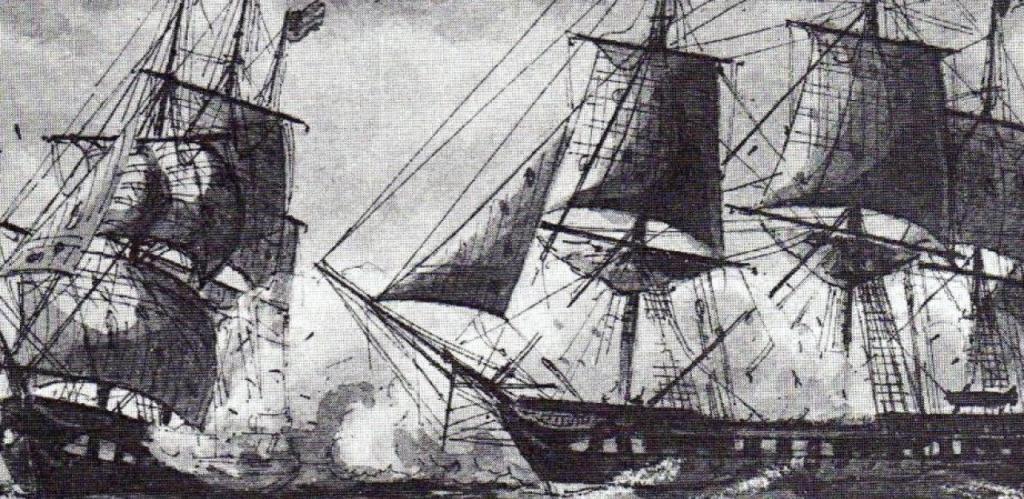
When they got back home they told Adams what had happened in a report, replacing the intermediaries names with X, Y, and Z. This gave the whole debacle its name, the XYZ Affair. Elbridge was called back to America, and the Quasi War broke out in 1798. It’s called the Quasi War because neither side actually declared war, they just attacked eachothers merchant and naval ships. This caused massive economic damage, as America and France lost a lot of merchants, and the remaining merchants were to scared to go out without a navy ship as a guardian. Eventually, in 1800, America managed to get France to sign a treaty to stop the unofficial war, but the feeling between the countries took a long time to heal.

Source of Happiness

Some people think that happiness stems from achieving goals, like getting things or doing things, while other people think that it’s the pursuit, the attempt, at getting those things that provide happiness. This means that they think that should someone achieve their goals, like having a kid, getting a good job, or something like that, they won’t be as happy as they were when they were striving for those things.

I think that this is rather silly, and that it is the attainment of those goals that make people happy, not the attaining. I think that the reason many people who have attained their goals aren’t happy is that they had the wrong goals, or settled for less than they wanted, or just had bad goals, ones that would not help them in life. When they’ve achieved a goal, however, and aren’t happy, they’ll have no goal and become bored with their sad, stale life. when they are achieving a goal, however, they distract themselves from their sad boredom as well as growing closer to something they think will make them happy.

This distraction doesn’t lead to their being happy, it just distracts them enough to not realize how sad they are, and it’s always possible that they’ve hit upon a goal that will in fact make them happier, and so it’s possible they will become happier as they approach and hopefully achieve a good goal, such as raising a child to be proud of.

Declaration of Independence

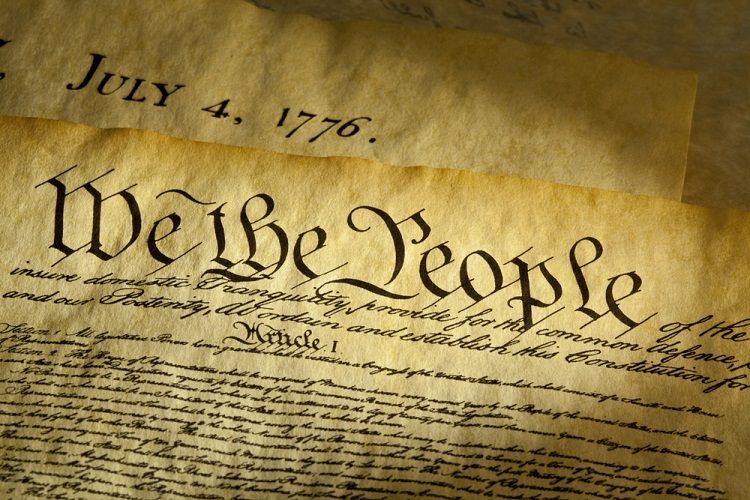
The Declaration of Independence was a declaration from the 13 colonies in 1776 that declared to Great Britain that they (Americans) were no longer ruled by them (Great Britain), and would instead form their own country with no relation to England. England objected to this, and proceeded to fight with the colonies for the next 7 years to reclaim the land. The declaration itself was rather short, only being some thousand words, and it got to the point quickly.

It had a short preamble, or introduction, that discussed the idea that all men are created equal, and that government should be designed to help its people, not harm them. It then said that when a country’s government begins to harm its people more than it helps them, the people under that government need to band together and remove the harmful government from themselves. They then end the preamble and move on to their list of grievances.

The list of grievances includes some 27 grievances, or injuries, that the colonists listed in the declaration as proof that the English king and his government were a harmful government, and needed to be overthrown if the colonies had any chance at all of becoming prosperous. The most important grievances were the ones pertaining to the king ignoring the rights of the colonists as citizens of England. Part of this was his passing taxes without their permission, the keeping of an army during their day-to-day lives, and the lack of attention he paid to their own laws and troubles. There were many more, and if you want to read about them, as well as the rest of the declaration, you can do so here. They also put heavy emphasis on the fact that the king had gone to war with them during the last year, 1775, after they had asked him to remove some of the taxes.

The end of the declaration then declares that they had repeatedly petitioned the king to remove or fix these grievances, and that they had told the British that they also needed to be rebelling due to these reasons, but to no avail. They then severed all ties with England, and declared themselves wholly independent. Of course, England objected to this, and the war that had already been going on for a year continued for another seven, starting in 1775 and going to 1783. It wasn’t until 1783 that Britain finally left the colonists, now the Americans, alone.

Technically, the final part of the declaration was the signatures of all the representatives of the 13 colonies, who then became the 13 states, which is what gave the paper the authority to declare the people independence. An interesting part of the declaration is that it constantly referred to the king, and not parliament. The king didn’t do much, it was mostly parliament who actually passed laws and taxes, but since they needed to disabuse the few remaining loyalists of the notion that the king was still a good guy, and that it was just parliament who was evil. To do this they pointed out that the king had never stopped parliament from doing any of the grievances mentioned, and even when he was contacted directly in a previous letter, and then the declaration, the king still sided with parliament, against the people.

Apple Pie

Apple pie is known as an extremely American dessert, and we get several phrases from it. One such phrase being “As American as apple pie” or the Chevrolet commercial “Baseball, hot dogs, apple pie, and Chevrolet”. It also featured heavily as a patriotic symbol during World War II, with newspapers saying “no pie-eating people can be permanently vanquished” and when asked why they went to war, a stock answer from soldiers was “for mom and apple pie.” However, there doesn’t seem to me to be a real reason for all this.

Apple pie wasn’t even made in America, and apples aren’t even native to the American continent, and are believed to be from Kazakhstan originally. It was then cultivated heavily by central and northern Europeans. It’s believed that apple pie as a dessert was made by Germans. We know from a Dutch cookbook the Netherlands had it by at least 1514, and it’s highly probable that the English and Swedish also had it for a long time, probably, along with the Dutch, a good deal longer than only 500 years ago.

Due to their lack of native apples, other than the crab apple, Americans didn’t have good access to apples, as crab apples were only good for cider. Even for a while after getting good apples imported to and growing in America, they often went into making even better cider, as that all they really wanted. In the later part of the 18th century however, it became common in Delaware to have an apple pie as a common dessert, mostly once a week to sweeten their standard meals. They could even make them the year round, by using dried apples instead of fresh ones. This was probably the start of the pie’s climb in popularity, eventually becoming iconic for the country as a whole.

Of course, apple pie is well loved nowadays, and as a 2008 survey by Crisco (a vegetable oil company, whose product is often used when making pies, to the point that they have pie recipes on their containers) found, about 19% of Americans prefer apple pie to any other pie. It is good, and I’m not trying to say I don’t like apple pie, I just think it’s odd that it managed to become as iconic as it has.

As a better iconic dessert, I offer pumpkin pie, as pumpkins are native to America. Unfortunately, pumpkin pie itself was made in France, using imported pumpkins. I was unable to find any dessert, much less a well known one, that was entirely native to the Americas, as I was discounting cornbread as a dessert. Pumpkin pie is already the second most popular pie according to that same survey by Crisco, with 13% of America loving it best. I think the reason it hasn’t become popular like apple pie is because it’s already a symbol for Thanksgiving (an American holiday) and because pumpkins can’t be preserved like apples, so apple pie could be made in the winter with dried apples while pumpkins necessitate them being a fall-time only dessert.

So I think that apple pie became popular in America due to its abundance throughout the year, and then the news and media began promoting the pie to give the American people a sense of comradery with each other and their soldiers during World War II. As most people can probably tell, apple pie has rather fallen off in its prominence, so much so I didn’t know there was a saying “As American as apple pie” until I began researching this essay topic. I think this helps prove my point that it was a symbol during World War II. Still great pie though!

The American Revolutionary War

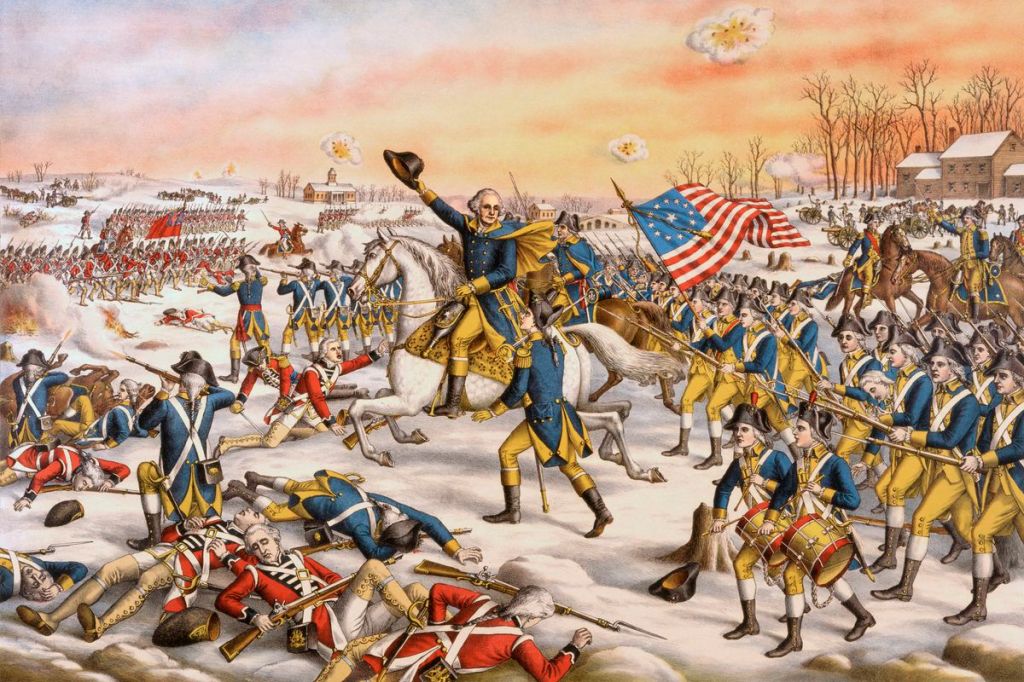
The American Revolutionary War was a war fought between the American colonists and their English rulers. The war was started by the Americans after the British started taxing nearly everything they owned, which I have described in my essay England’s Taxes on the Colonies. At first the war started as a rebellion against these taxes, but after the Boston Tea Party, England initiated even heavier taxes as punishment. This resulted in the beginning of the war, though the colonists didn’t initially want freedom in 1775, the beginning of the war, they just wanted less taxes. After England said they wouldn’t lessen the taxes, the colonists started stockpiling weapons, and learned how to use them against soldiers.

Britain heard about one of these stockpiles in Concord and sent a group of soldiers to take the weapons and warn the locals not to prepare for war again. The colonists learned of the British plan, and sent Paul Revere to warn the Concord locals. This was the famous ride of Paul Revere, and there was a famous poem written about it. This ride warned the locals at Lexington and Concord against the British, and the Battle of Lexington was the first in the war. It only lasted 15 or so minutes, since neither side was really expecting to fight. A slightly more lengthy battle happened at Concord, and because of Paul they were able to hide most of their guns, though the British were able to capture and break the few cannons the colonists collected. The colonists then began to defend their homes, pushing the British all the way to Boston, initiating the Siege of Boston. At this point most of the colonial army was able to come to Boston to help the Concord militia. During this siege the British tried to break out of Boston by taking Bunker Hill and Breed’s Hill. The British did take the hills, but lost 1,054 men, compared to the 367 that the colonists lost in defending the hills. Thereby both sides were able to claim a victory. Also in 1775 the colonists offered to stop fighting the English if they just took back some of the worst taxes, but England did not like the precedent of removing taxes, so they just kept fighting.the only difference was that the colonists now wanted total freedom.

During that winter of 1775-1776 Benedict Arnold, an impressive leader (though he would later betray the Americans), went up into Canada and took several forts and port towns, resulting in a lot of new cannons, bullets, guns, and even ships. Most of these supplies went south, where the cannons were used against besieged towns like Boston. The sea Battle of Valcour Island proved that the colonists could be a match for the British Navy, using the ships they took in Quebec. While this was a good start to the war, the British were able to keep Boston, take New York, and even Philadelphia. The end of the year saw the colonists win Trenton, Princeton, and the amazing victory of Saratoga, where general Horatio Gates was able to capture 5,700 English soldiers. This made Gates very popular, almost surpassing Washington and taking his place as leader of the Revolution, but Camden prevented that.

Washington got holed up in Pennsylvania during the winter of 1777-1778, along with a new Prussian ally, Baron von Steuben, who was able to train the army in the Prussian methods that let them (Prussia) equal the combined powers of Russia and Austria. So the British decided to focus on the southern colonies, and Horatio Gates. The British took Savannah and Charleston, as well as Camden, where Horatio Gates lost 1,900 men, and only took 300 English. This ended his popularity pretty quick, and Nathaniel Greene, Washington’s practical second in command, took control of the southern part of the war in 1780. Thanks to Francis Marion, an extreme guerrilla fighter, and Nathaniel’s strategy, the colonists won the Battles of Cowpens and King’s Mountain, backing the English soldiers against the coast, in Yorktown. They were expecting English ships to sail in and resupply them, but the colonists French allies came and chased the English ships towards New York, leaving Cornwallis and his soldiers to surrender to Nathaniel.

After this in 1781, the French fleet that helped Greene, and the few groups of French soldiers that were helping Washington in the north, went back to France. Nothing else really happened, other than the continual siege of a few major cities like New York, until King George III of Great Britain finally signed a treaty in 1783 that said the Americans were entirely free of English control, and were free to do as they would.

My Favorite Music

I really like listening many kinds of music. It’s often pleasant to listen to, and I enjoy being able to sing along to the lyrics. I particularly love it when it’s faster music, like alternative hip-hop or alternative rock. I really like the band “Twenty-One Pilots”, and they pretty much embody my idea of great music. “Sum 41” and “Blink-182” are also great, though they tend to go a bit louder and harder, as they do much more rock music. My dad really enjoys music and prefers them, partly because they were more popular and prevalent back when he was young.

I also like songs from “Twisted Sister”, a heavy metal band, particularly their song “We’re Not Gonna Take It” since it’s such a freedom loving song, and gets your blood moving, but, unfortunately, after listening to a few more of their songs, they get rather repetitive, rather quickly. Another heavy musician I like is Peyton Parrish, who does a lot of Norse and Viking inspired songs, as well as metal versions of song that really shouldn’t have metal versions.

One of my favorite things in the world, though, is comedy. It’s not particularly easy to make a humorous song, which makes it so impressive that “Weird Al” Yankovic is able to make many hilarious songs. They’re often hilarious on their own, but what makes them even funnier is the fact that they’re always parodies of other songs, meaning the music is the same, but he changes the lyrics to make fun of the original. My favorites, and some of his most famous, are “Amish Paradise” a parody of “Gangsta Paradise”, and “White and Nerdy” which is a parody of “Ridin’ Dirty”. All of his songs are hilarious, and I highly recommend listening to all the bands and songs I reference here. I also love “A Bad Lip Reading” who are really bad at reading lips, and make songs based on random media ranging from “Star Wars” to “The Walking Dead” to real politicians.

Along with all of these specific artists who I love listening to, I enjoy most music I listen to. I don’t really like slow music, or mournful music, as I like to be able to tap my feet out to the music, not hang my head to listen to sad songs, or ignore slow background music. I like being able to focus on the music, not leaving it off as a background element, which is why I love the hip hop of “Twenty-One Pilots”, and I like each song being at least somewhat unique, which is the alternative part of it.

I often listen to music in the car, with the songs that are playing being some random album that my dad has found either at the edges of his memory or from the edges of the internet, and while they’re normally rather good, there’s often some song or other that I don’t like. I normally get to listen to the ones I’ve talked about here whenever I can convince my little brother to listen to them during the evening. He mostly likes to watch the music videos, which is fine by me as they’re often entertaining.

England’s Taxes on The Colonies

England founded and funded the 13 Colonies, which were groups of people living in the New World, also known as the Americas. This meant they owned and ruled the colonies and colonists. For a while this wasn’t much of a problem, especially since England gave them a pretty free rein, with only some taxes. This didn’t last forever, of course.

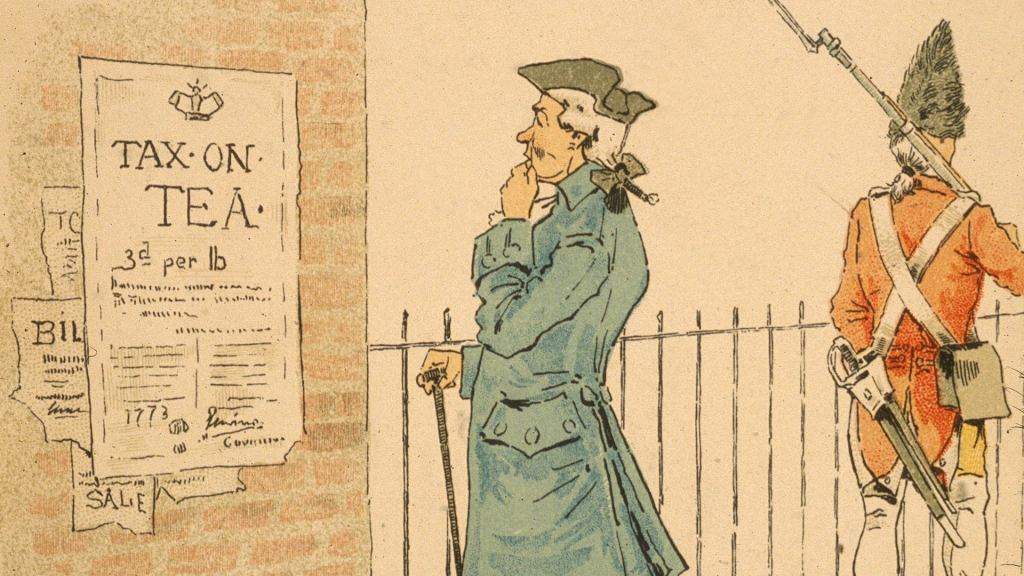
Great Britain quickly realized the colonies were pretty free, and didn’t pay a ridiculous amount of tax to Britain, meaning England wasn’t wringing as much money as it could from them. England liked money, so that was a problem. The first Act, or law, that raised a few protesters was the Navigation Act in 1651, under Oliver Cromwell’s government. It declared that any ships that traded between England and the colonies had to be an English or Colonial ship. This was frustrating to the colonies because it cut out any other ships, such as Spanish or French ships that would’ve been just as convenient and accessible in the colonies. If you disobeyed the Act, you were heavily fined, so much so few people could afford it. It was initially abolished by King Charles II, so that people would like him, but he brought it back in 1660. With the reissuing of the first Act, Charles added more, namely, that the crews of ships had to be ¾ English, and that no ships could trade with anyone other than England. Then, 1663, he added the fact that all goods had to be available in England before America, and only the leftovers could be sold in America. Obviously, this skyrocketed the prices of things and reduced their quality and quantity. Most merchants started to turn towards smuggling, the illegal sale of goods.

Then, after a lot of this, in 1733, the Molasses Act was passed. This meant that taxes were incredible for any sugar sold from anywhere other than England, which effectively gave English sugar growers a monopoly on sugar, despite their clear inferiority to the much closer Caribbean and Oceanic sugar growers. It was entirely ignored, of course, as the merchants all turned to smuggling, even the British soldiers. It was set to expire in 1763, but it was reissued in 1764 as the Sugar Act, which was half as expensive, so the soldiers started actually doing their jobs, since the tax wasn’t insane, resulting in far more money lost to taxes than the Molasses Act.

Due mostly to the Seven Years War, which was mostly caused by England, the colonists had to inflate their money to pay for this war, which angered the English merchants since they were getting less money for their goods, so the Currency Act was passed in 1751. It made it so that the colonists had to pay with gold and silver or British pounds, not American currency, again increasing American resentment. It was reissued more seriously in 1764.

Another year, another Act, 1765, one of the worst, was the Quartering Act. It declared the colonists were forced to house and feed any soldiers who might want it, with absolutely no recompense or repayment at all. Since many colonists were farmers or otherwise generally poor, this was incredibly bad, and it was inconvenient even for the well off. A more serious version was instituted in 1774 as a punishment for the Boston Tea Party.

1765, big year for taxes, also saw the Stamp Act, a bad choice for England. It taxed paper, and required all newspapers, legal documents, and trade agreements to use their taxed paper. This was a mistake because newspapers controlled the way people thought, and lawyers were the best people to legally fight England, while the merchants were continually getting more frustrated. The Press got people generally more angry with England, and the lawyers were able to get rid of the tax in the same year, though England made sure they couldn’t get rid of their next taxes, the Townshend Acts.

The Townshend Acts were made by Charles Townshend, and taxed tea, glass, lead, paper (again), and paint, as well as other items. They were not popular, of course, but Great Britain made the taxes directly pay the soldiers and government officials, making them enforce the Acts more and more, not allowing much smuggling, which had been commonplace. All these taxes finally resulted in freedom fighters, called the Sons of Liberty, who then performed the famous Boston Tea Party in 1773, throwing tea in the Boston Bay so they wouldn’t have to pay the taxes, but in 1774 they were punished with far more taxes, resulting in the beginning of the American Revolutionary War.

Bad Days

When I have a bad day it is usually because I’m tired, or have a lot of work to do, like this essay or my three days in a row of soccer. When this happens, there isn’t much I can do, since this is an assignment. But I can take any breaks that I need, and make sure everything else is going great, like making sure I sleep well, and my surroundings are clean.

I do things that I enjoy doing as much as I can on bad days, like reading or just relaxing on the couch. This normally calms me down, and my being stressed normally compounds anything bad that happens. Taking a shower is also great, since I can get myself clean and orderly.

I don’t often have a bad time sleeping, but when I do I will try my best to get myself more time to sleep, though there’s not much I can do other than that. It’s also good to not look at screens more than I need to, as I’ve found they’re rather draining and frustrate me when I’m sick or tired.

These are all things I do when I’m having a bad time of it, and I hope that your able to use some of the things I’ve written here to help yourself.