Unable to even fly until the Wright brothers came around in 1903, humans had no chance of reaching space until Nazi Germany began building jet planes near the end of World War II. The Germans invented the very first rocket that was capable of reaching space, which is defined as 100 kilometers above the earth. This first Rocket was called the V2, which could fly to 206 kilometers high. After the war, both the U.S.A. and the U.S.S.R. began capturing a taking V2 rockets and Engineers from Germany.
The first experiments done were by the Americans using V2 Rockets, examining cosmic radiation and sending up fruit flies to see their reaction to space 1946. The Russians quickly did these same experiments in their own V2s, as well as a new rocket called the R1 in 1947. It’s important to note that these rockets would go up, and then come back down, they wouldn’t stay in orbit for long enough to do serious experiments. Partly due to this, partly due to the growing intensity of the Cold War, the space race was put on hold as both countries put their German rocket scientists to work on ICBMs, also known as Inter-Continental Ballistic Missiles, which would be capable of sending nuclear bombs all over the world.
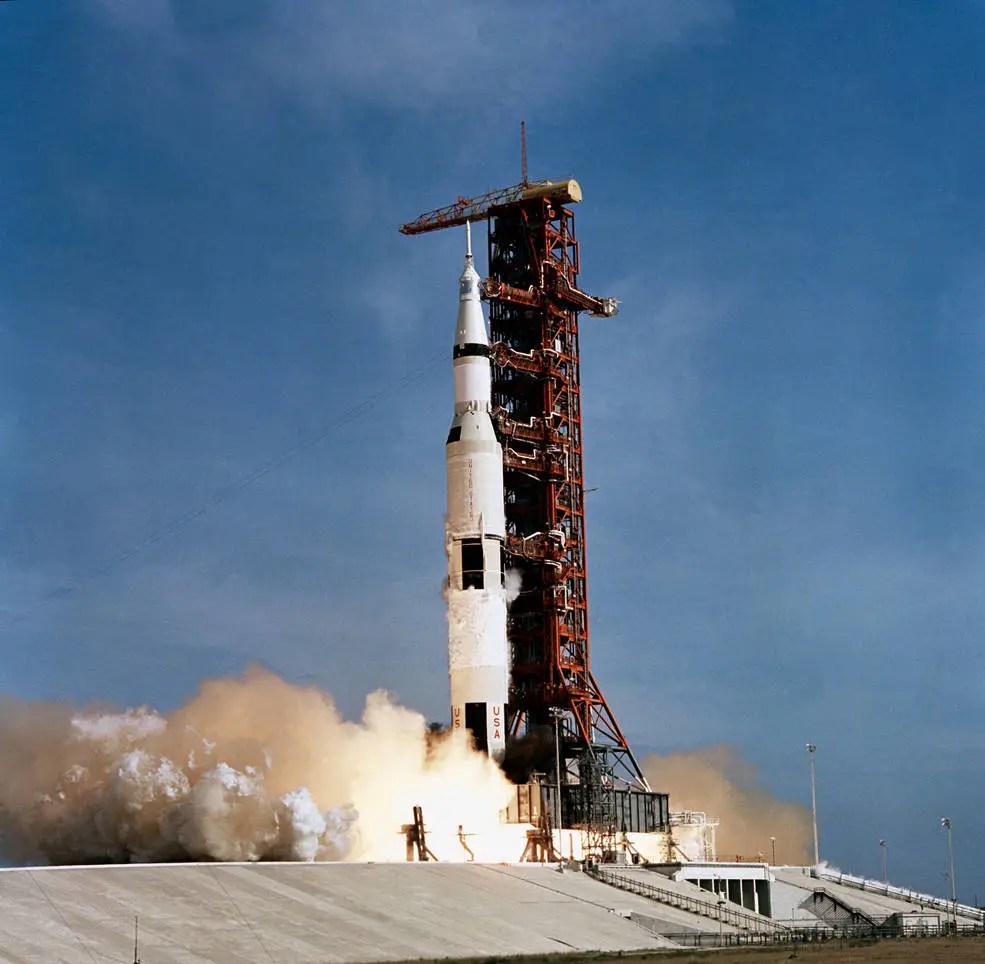
Russia decided to jump back into the space race after they realized they couldn’t get a meaningful advantage through missile manufacturing, and sent up the first satellite, Sputnik 1, in 1957. They followed up with the first living being in Space that same year, when they sent Laika the dog up in Sputnik 2. The American populace was affronted by these communist successes, and was worried that it meant the Russians were ahead of them, technologically speaking. So President Dwight Eisenhower founded the National Aeronautics and Space Administration (also known as NASA) in 1958 to compete with the Russians. The Russians then sent up the first Human in Space, Yuri Gagarin, in 1961. 23 days later in 1961, NASA sent Alan Shepard up as the first American in Space. A year later, NASA sent up the first orbital Solar Observatory,meant to study the sun. then the Russians took the first man out of his shuttle for a space walk, that man being Aleksei Leonov, in 1965. they then sent a fully automatic shuttle to the moon, with no one on it. Then in 1968 NASA sent the first manned orbit around the moon, though not touching it. President John Fitzgerald Kennedy declared in 1962 that the goal of the Space Race was to put a man on the moon and return him to earth. Both Russia and America began frantically preparing for a manned moon Landing, and America put both Neil Armstrong and Buzz Aldrin on the moon in 1969.
After the Apollo Program not much happened in America, though the Russians managed to make a Space Station in 1971. America came back to it in 1981 though, with the Columbia, Discovery, Atlantis, Challenger, and Endeavor Space shuttles. The Challenger Shuttle suffered a massive explosion in 1986, killing everyone in the shuttle. This was highly publicized, since it was popular due to having civilian astronauts aboard. The Columbia also exploded in 2003, but the other shuttles were used until 2011. the cold war had ended in 1991, and the Russians and Americans helped helped each other after this, and using the shuttles, the International Space Station (ISS) was built off of the Russians 1971 space station in 1998, and is in use and has people on it to this day.
So, just 66 years after making the first flying machine, people landed on the moon, and 29 years after that we have a humans living in space at all times. Quite a far ways to go in a short time, who knows how far we’ll go in the future?
 School Essays