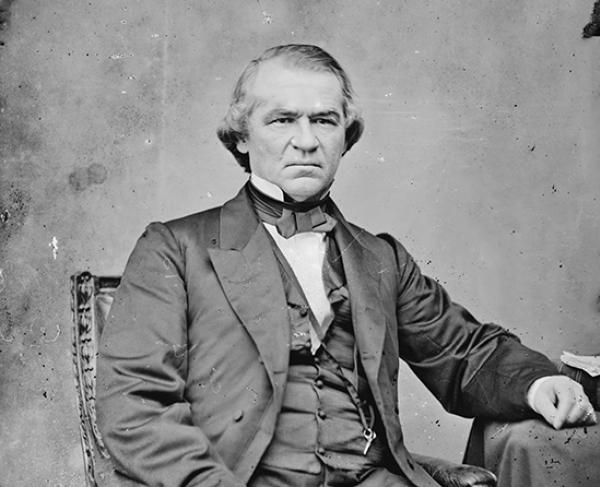
President Andrew Johnson

Andrew Johnson (1808-1875) was the 17th president of the United States of America, as well as the third vice president to become President after the death of their predecessor. He is also known for being the first president to be impeached, though it didn’t come to anything.

He was born in North Carolina, and was extremely poor. He would often bring up the fact that he had been born in a two-room shack to remind voters that he had started out as a poor man, which helped to make a lot of people relate and trust him, or at least compassionate with him. He was apprenticed to a tailor in his hometown, but ran away and worked as a tailor across North Carolina until he decided to move west to Tennessee. There, he opened a successful clothing store, and married his wife, who happened to be a cobbler. They had five children, all of whom survived until adulthood. He had incredible success in Tennessean politics, mostly because of his extreme skill and fascination with oration and speeches in general. He eventually became U.S. representative in congress, and though what party he belonged to was always somewhat unclear, he usually ran as a democrat. Since his wife stayed in Tennessee when he moved to DC (because she had tuberculosis and couldn’t stand the trip), he rarely attended social functions. Normally this would hurt his chances to gain popularity, but it actually helped him advertise himself as a defender for the poor against the arrogant rich. An extremely important bill that he tried to get passed was the Homestead Act, which, though it didn’t pass the senate, popularized him with farmers and poor people wishing to move west.

He eventually became the Governor of Tennessee, and while he didn’t have much power, he was able to publicize himself even further. He also set up several public schools and public libraries, as well as common state fairs to benefit the working class. Thanks mostly to his popularity as governor, Johnson managed to become a senator in 1857. He once again tried to get the homestead act passed, but once again failed. The democrats ended up tearing each other apart while trying to choose someone to run for president, allowing Abraham Lincoln to step in and become President. Despite being a southerner, and owning slaves himself, he did not support the southern states seceding from the U.S, saying that he had a duty to his country. Despite his feelings, Tennessee seceded, and Andrew fled northward after several assaults. After Tennessee was retaken by the Union, Lincoln appointed Johnson as the military governor of Tennessee, and Tennessee managed to stay pretty peaceful, since enough of the people likeed Andrew.

He then became Lincoln’s vice president for his second term, winning many votes from both northern and southern states thanks to Andrew’s extreme love for his southern home. Lincoln’s assassination was actually supposed to be a triple homicide, the other targets being Johnson and William Seward. William survived his wounds, and Johnson’s assassin had gotten too drunk to pull off the assassination, though some believe he was in on it, and his assassin purposefully didn’t kill him, though he did execute his would-be-assassin, so there isn’t too much logic in that. Throughout his presidency, Reconstruction, the reuniting of the states, was the most important subject in the country during his presidency, and while he tried to allow state power to the southern states and gently reassimilate them into the U.S. Congress, however, didn’t like that, and constantly called for more and more hard and tough laws to be put in place to force the southerners into the north’s lifestyle. This caused many clashes, resulting in many bills that were passed despite the presidents veto, the first time this had ever happened, and eventually an impeachment. The impeachment required 2/3 of the votes to fire the president, and exactly 1 less person than the 2/3 required, so Johnson remained president.
Mexican American War

After the Mexican-Spanish War, in which Mexico got its freedom from Spain, there was the Mexican-Texan War, in which Texas got its freedom from Mexico, which I’ve written about here. After Texas got its independence, it immediately asked to be added to the United States as a state. In 1836 the President was Martin Van Buren, but he was against adding Texas, since Mexico made it clear that this would start a war with them. He only served one term, though, and the next president, William Henry Harrison, only served for one month, making his opinion rather unimportant (though he was for the addition of Texas). John Tyler was the next President, and he was extremely supportive of the addition of Texas, so he did the work to make Texas a state, though since his run as president was up, it was the next President, James K. Polk, who officially annexed and declared Texas a state in 1845. Despite the many insinuations and threats, Mexico didn’t go to war with the U.S. over this, though Polk would Make sure that didn’t last.

Even after Texas’s war with Mexico, the border between them was still disputed, the Mexicans saying the border was the Nueces River, while the Texans (and now Americans) said the border was the Rio Grande River. After a good deal of negotiation, James Polk offered to outright buy the disputed area, called the Nueces strip. The Mexicans refused his offer, frustrating Polk. In 1846 a company of American soldiers led by Zachary Taylor went into the Nueces Strip, declaring it as theirs. The Mexicans weren’t long in coming, killing about 11 of Taylor’s men before being forced to retreat. This started the Mexican-American War. The battle above is known as “The Battle of Palo Alto” and was immediately propagandized by James, saying that the Mexicans had “invaded our territory and shed American blood upon American soil” even when that “American soil” was highly disputed, and the Americans were obviously the instigators.

Due mostly to the fact that Mexico-Texas area was inhospitable desert, there were few Mexicans living in and around the Nueces strip, so it was taken by Taylor and Winfield Scott rather easily. Seeing that their odds weren’t good, Mexico re-recruited Antonio Lopez de Santa Anna in 1847, the former president of Mexico, who had lived in exile in Cuba after losing the Mexican-Texan war. Brigadier general Stephan Kearney was also capturing northern territories, like the New Mexico and California territories, and John E. Wool joined up with Taylor after taking the Mexican city Chihuahua (yes, that’s a real city). Antonio then fought Taylor and Wool, and after battering their forces with his larger army, left with several cannons and flags, claiming a victory and showing off those prizes, despite the real reason he left being the huge number of his soldiers killed, letting Zachery also claim victory.

Winfield Scott began the end of the war when he and his company sailed into Veracruz, and marched towards Mexico City, following the same route as Hernan Cortes did when he took the Aztec capital, which was located in the same place as Mexico City. The Mexicans attempted to stop Scott at several paces, like at the “Battle of Cerro Gordo” but failed everywhere, until the end of 1847, when he took Mexico City. All the soldiers had evacuated, and fought a guerrilla campaign for a few months, but eventually gave way, and in February, 1848, the treaty of Guadalupe Hidalgo was signed. It gave up Texas totally, and sold several territories, like New Mexico and California, to the U.S.

The majority of the leaders on the U.S.’s side disapproved of the war, with one Colonel Ethan Hitchcock saying, when he went to the Nueces Strip with Taylor, “We have not one particle of right to be here. It looks as if the government sent a small force on purpose to bring on a war, so as to have a pretext for taking California and as much of this country as it chooses.” and Ulysses Grant, a minor figure in this war but a future Major General in the Civil War and future President, saying that the Mexican American war was “one of the most unjust ever waged by a stronger against a weaker nation” and Taylor himself wouldn’t put out much energy to track down or kill excessive numbers of Mexicans, since he felt a disgust with the war. Even Abraham Lincoln, who wasn’t yet president at this point, spoke out against the war, trying to get people to see that the Nueces strip wasn’t American land. Henry David Thoreau was also against the war, and refused to pay his taxes since he knew they could be used to support the war, or anything government related that he didn’t agree with. He only spent a night in jail, because his aunt paid his bail against his wishes, but he proceeded to write books, like “Civil Disobedience” and protest the war. Most Americans, however, did support the war, and eagerly moved into the land taken in the war.

Works used in making this page:

Zeidan, Adam. “Invasion and War.” Encyclopedia Britannica. Web. URL:{https://www.britannica.com/event/Mexican-American-War/Invasion-and-war}

“The Mexican American War” National Park Service. 4/August/2022. Web. URL:{https://www.nps.gov/places/the-mexican-american-war.htm}

“Mexican American War” History.com. 9/November/2009. Web. URL:{https://www.history.com/topics/19th-century/mexican-american-war}

“The Mexican American War” PBS. Web. URL:{https://www.pbs.org/wgbh/americanexperience/features/grant-mexican-american-war/}

VandaCreek, Drew. “The Mexican American War” Northern Illinois University Digital Library. Web. URL:{https://digital.lib.niu.edu/illinois/lincoln/topics/mexicanwar}

Bauer, Luke. “Texan-Mexican War” School Essays, WordPress. 28/November/2023. Web. URL:{https://lukeessays.school.blog/2023/11/28/texan-mexican-war/}

“Tippecanoe and Texas Too: February 28, 1845” Catholic Textbook Project. 26/February/2021. Web. URL:{https://www.catholictextbookproject.com/post/tippecanoe-and-texas-too-february-28-1845}

Civil War Generals

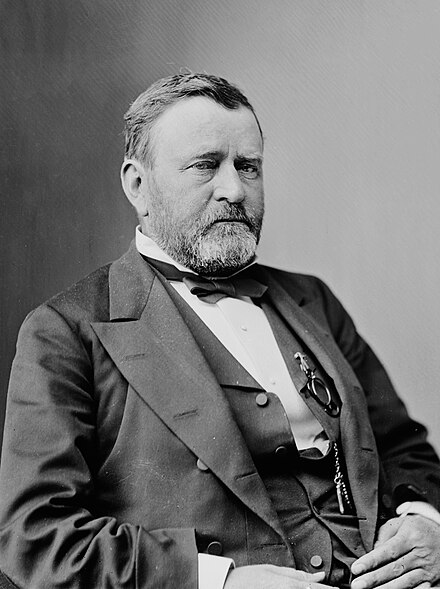
Ulysses S. Grant was the most famous and prominent general in the Union Army, being the leader of the western army during the first half of the war, and one of the few Union generals who were consistently well off during the initial half of the war, and became the head of all the Union army in 1863, and lasted the whole second half as the chief general. While he spent most of his time fighting with Lee in the Virginia area, he still effectively directed the west, organizing the Atlanta Campaign and other raids. He later became the President of the United States thanks to his popularity derived from the war, on the Confederate side as well as the Union thanks to his honor and willingness to move past his differences with the south. He also served with many other generals, Confederate and Union, during the Mexican-American war.

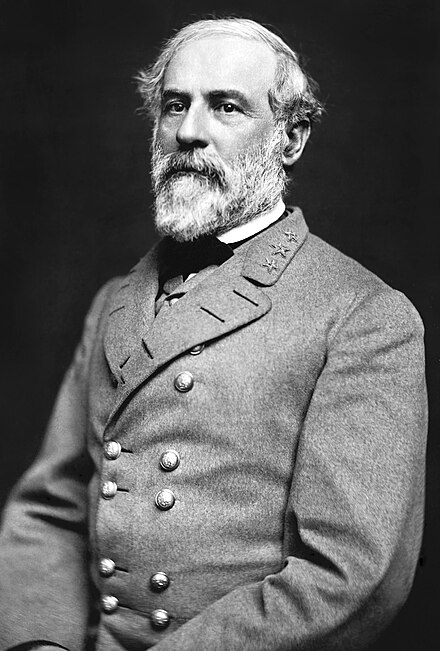
Robert E. Lee was the lead general for the Confederate Army throughout the war, and was a bit odd because even though he wanted the Union to stay together, when Virginia, his home state, seceded, he joined it in the Confederacy, eventually becoming the head general. He was a major risk taker, and it almost always worked out for him. It’s fairly agreed upon that he was the best general in the Civil war, but due to a lack of supplies, money, and men, he just couldn’t have won the war. He was extremely Christian, and his devotion to his faith made him, like Thomas Jackson, extremely popular among both sides of the war. Like many other generals, he served with all of them during the Mexican-American War.

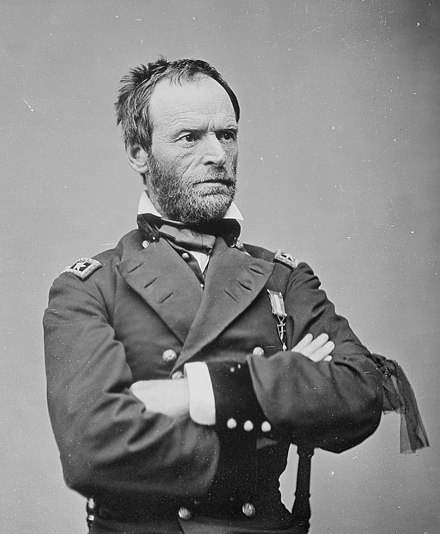
William Tecumseh Sherman was not well liked by both sides of the war, in fact, he was barely liked on the Union side, where he served with distinction, due to his tactics, considered savage by some, and ungentlemanly by others. He served under Grant in the West during the first part of the war, but was promoted to Grant’s old position when he himself got promoted. He’s most well known for his Atlanta Campaign, which went deep into Confederate territory, and humiliated them. He would tear up railroad tracks and bend them around trees so that they couldn’t be used, He “accidentally” burned down more than one town, poisoned wells, and would steal from farmers and towns to feed his army, which wasn’t new in war, but was frowned on in the New World. While he was in the Mexican-American War, he was stationed in California after it was taken, and didn’t see action.

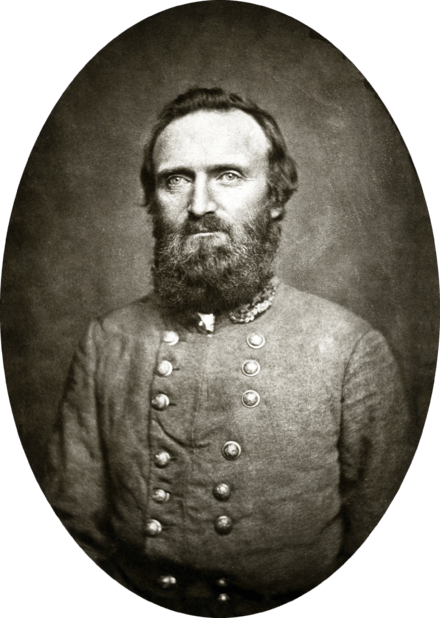
Thomas “Stonewall” Jackson was probably the most well-respected general in the war, and is probably more well known than Robert Lee, who he served under. He earned his nickname during the Battle of Bull Run, when he kept his troops from running from the Union soldiers, and led them in a counter-attack that won them the battle. He was well known for his integrity and honor, and extreme Christian morals, leading him to be loved by both sides of the war. He died from illness after being shot in the arm in 1863 at the battle of Chancellorsville. He also fought in the Mexican American War.

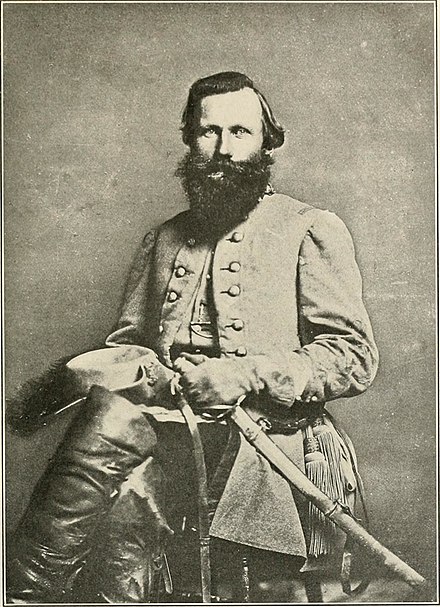
J.E.B. Stuart was a Confederate general, though he was different because he was a cavalry officer, and wasn’t really a prim and proper gentleman like Lee, or Jackson, or Grant, but he also wasn’t a brute like Sherman, instead being rather flamboyant and joking, often wearing colorful capes and ostrich feathers in his hats. He would also make many jokes with his men, and did a lot to keep the Confederacy’s spirits high. He first distinguished himself when he took command of Jackson’s forces at Chancellorsville after Stonewall got injured. He then became one of Robert’s most useful generals, due to his excellent reconnaissance abilities. Unfortunately for him, he’s most famous for his failure at the battle of Gettysburg, when he got separated from Lee’s forces and failed to warn him of the positions of Union troops at Gettysburg, where Lee was nearly captured. He died in 1864, killed by Philip Henry Sheridan’s troops, Sheridan being a Union cavalry commander, and practically a Union version of Stuart, though much less fun to be around.

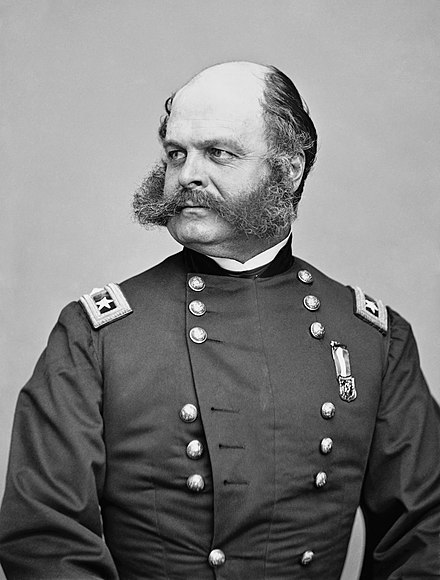
While J.E.B’s military counterpart might’ve been Sheridan, his personality counterpart was probably Ambrose Everett Burnside, a Union general most well known for his facial hair. He is well known for this mustache-sideburns look, and it was because of him that sideburns became popular, as is evidenced by the fact that “sideburns” is a derivative of his name: “Burnside.” He wasn’t as flamboyant as Stuart, but was fun to be around. He made his own gun, which carries the name “The Burnside Carbine” and he was named the first President of the National Rifle Association, also known as the NRA. The reason I didn’t immediately speak of his military history, is because it’s not all that good, with him having mixed results in battle. He also was in the Mexican-American War, but he joined after hostilities had ended, and didn’t see battle.

There were many other Generals on both sides of the war, though none of them had quite the distinction that these had, though perhaps James Longstreet and Philip Sheridan should’ve had their own entries, but all of them deserve at least a mention, so here we go. Sheridan (Union) was a vicious cavalry commander who employed the same brutal tactics as Sherman. James Longstreet (Confederate) was a brilliant commander who served as Lee’s second in command after Jackson died, and was a personal friend of Grant, so his reputation took a hit in the south. Nathan Bedford Forrest (Confederate) was a Cavalry officer who was rather under-used during the war, and went on to help found the Klu Klux Klan. Winfield Scott Hancock (Union) (not the leading general with the same name in the Mexican-American war) also known as “Hancock the Superb” he had the most impressive and dominant personality of any American general, and was the most impressive in personal combat. P.G.T. Beauregard (Confederate) was an artillery commander, and led the Confederates in the first battle of the war, the battle of Fort Sumter, as well as others. Patrick Cleburne (Confederate) was born in Ireland and emigrated to the United States, and joined the Confederacy when the Civil War broke out, and though Grant and Sherman dominated the west, Cleburne was surprisingly successful at blocking their many advances. Joshua Chamberlain (Union) was a professor before the war, and was quite polite and gentlemanly, and though he didn’t do much, he was in charge at Gettysburg, and was at the surrender of the Confederate army. Ambrose Powell Hill (Confederate) took over Thomas Stonewall’s responsibilities after he died, though he wasn’t as impressive as Jackson. There were four Georges among the generals of the Civil War, George Edward Pickett (Confederate) and George Meade, George McClellan, and George Henry Thomas (all Union). George Pickett is infamous for “Pickett’s Charge” in which he failed dismally to attack Union soldiers, and lost his whole force. McClellan was temporarily the head general of the Union army, but Lincoln didn’t like him, fired him, and used him only as a training officer. Meade was also head general for a while, but like McClellan, acted too slowly and carefully for Lincoln’s taste, and so gave way to Grant. George H. Thomas prevented the battle of Chickamauga from being a complete failure, and did quite well elsewhere, but due to not liking Grant, he’s rather unknown. Lastly, Joseph Hooker (Union) was the only general without facial hair in the war, and though he served well in the Seminole Wars, Mexican-American Wars, and the Civil War, he’s only remembered for his major loss to Lee at Chancellorsville.