The Fall of the U.S.S.R.

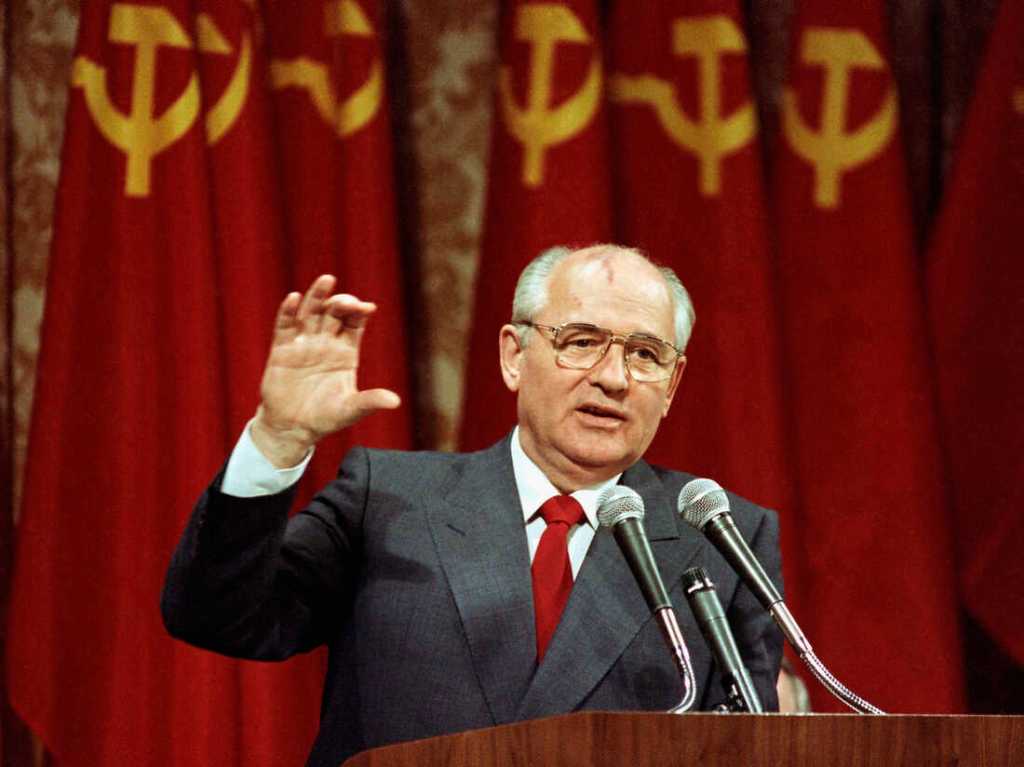
Soviet President Mikhail Gorbachev

Started in 1919 after the Bolshevik Revolution, the Soviet Union finally fell in 1991, 72 years later. Technically speaking, the U.S.S.R. wasn’t started until 1922 when Joseph Stalin united all the communist parties that had been started by Lenin’s Bolshevik Revolution in 1919. Stalin ruled the Soviet Empire with a heavy hand until his death in 1953.

Then, Nikita Khrushchev quietly moved Stalin’s successor out of the way and took over. He instituted much less controlling policies, though was clearly still a dictator. The new policies helped improve relations with the U.S.A, who had engaged in a Cold war with Stalin’s government, until the Cuban missile crisis in 1962. The crisis started when communist Cuba began installing Nuclear Missiles on their island, given to them by the Soviets. This was incredibly dangerous for the U.S.A. since Cuba is practically a next door neighbor. Frantic negotiations were carried out, that nearly resulted in nuclear annihilation. However, it instead brokered a deal that stated the Russians would remove their missiles from Cuba, if the Americans removed their missiles from Turkey, and promised not to invade Cuba. Things calmed down from there, and nothing very important happened until 1979, under the reign of Leonid Brezhnev, who took power in 1964.

In 1979 the Soviet war on Afghanistan began, and the U.S.A, who didn’t want the Russians to expand, funded the Afghans. They didn’t outright go to war with Russia because that would initiate Nuclear death, but instead funded the people Russia was already trying to fight. Eventually, in 1989, under Mikhail Gorbachev, the war was ended, since no real conclusion was to be found, and the U.S.S.R. couldn’t afford a continual drain on their resources. But then, in 1990, Iraq attempted to conquer Kuwait, an oil rich country, and was funded by the Soviets, while America and many other countries decided to keep Iraq out of Kuwait. Despite the Russians best support, Iraq fell inside of a year. This was the final blow that showed that the Soviet Union was well behind the Capitalist world.

Then, Gorbachev decided to try making the Union less dictatorial, instituting several reforms. He then held a poll in 1991 to see if the Empire wanted to break up the U.S.S.R. After finding an overwhelming majority of the population supported the idea, he decided to do it. However, the remaining Communists did not like this idea. They decided to stage a coup, and rolled in on tanks to depose Mikhail. When faced with the rest of Russia’s military, however, they backed down pretty quick, and the communist party was ended in Russia.

Gorbachev resigned on Christmas day, 1991, and the entire soviet country collapsed and disintegrated. Out of it’s remains 15 new countries were formed: Armenia, Azerbaijan, Belarus, Estonia, Georgia, Kazakhstan, Kyrgyzstan, Latvia, Lithuania, Moldova, Russia, Tajikistan, Turkmenistan, Ukraine, and Uzbekistan. America’s position with Russia and the rest of these countries has been quite strong, though friendly ties to Russia have began to deteriorate in modern days over it’s treatment of Ukraine.
The Berlin Blockade

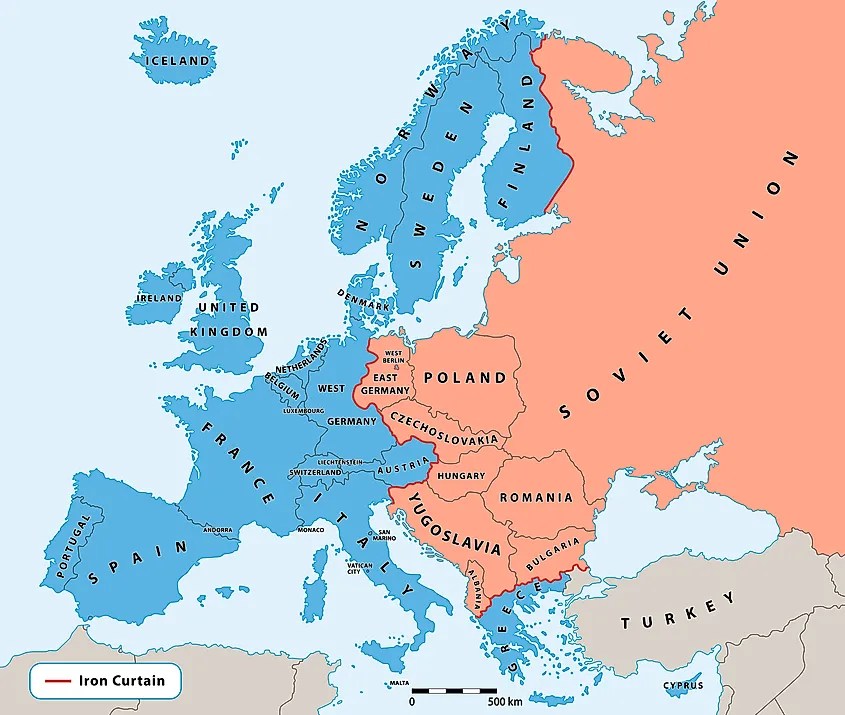
After World War II, the Allies decided to start rebuilding Europe. However, they realized that they had two very different ideas on how to rebuild Europe. The two different ideas were most obviously employed by the U.S.A and the U.S.S.R. The U.S.A approved of a capitalist goal, and gave the lands back to each of it’s native countries, while the U.S.S.R preferred communism, and absorbed the lands into itself.

When Germany was defeated, it was decided that the country would be divided in half, the west side going to the western countries like America, France, and England, while the Eastern half went to Russia. The capital of Germany itself would be divided into quarters, each to be given to one of the countries mentioned, despite the city (Berlin) being in Eastern Germany, and therefore under the control of Russia. This only lasted a few years, and in 1948 Britain, France, and the U.S.A gave their chunks of Germany back to the Germans, who formed a new state called West Germany. Russia however, did not want to relinquish their new German land, and kept it. The same happened in Berlin, so the west half was ruled by Germany and the east half was ruled by Russia.

Later that year Russia would set up the Berlin Blockade in an attempt to completely capture Berlin, by stationing tanks and military personnel at all the entrances to the city, particularly the ones that faced towards Western Germany. Supposedly this was because the Allies had instituted a new currency in West Germany, the Deutschemark, and the U.S.S.R did not like the fact that there was now a competing currency in one half of a city it had control over. When the blockade was started, they threatened to starve west Berlin if the Deutschemark was not removed, but the Allies instead flew planes over Berlin and dropped supplies down to them. This allowed the people to live, and even do well, as the airdrops were even more effective than the allies thought they would be. The Russians, assuming this wouldn’t work, tried minimally to stop the allies, which would end up being a mistake. After 15 months of this blockade, the Russians finally stopped, and allowed west Germany to have access to Berlin once again.

While no obvious consequences came from this, it raised tensions between Russia and the rest of Europe (and America) considerably, helping accentuate the cold war, a fifty year long non-violent war between America and Russia.

The Bolshevik Revolution

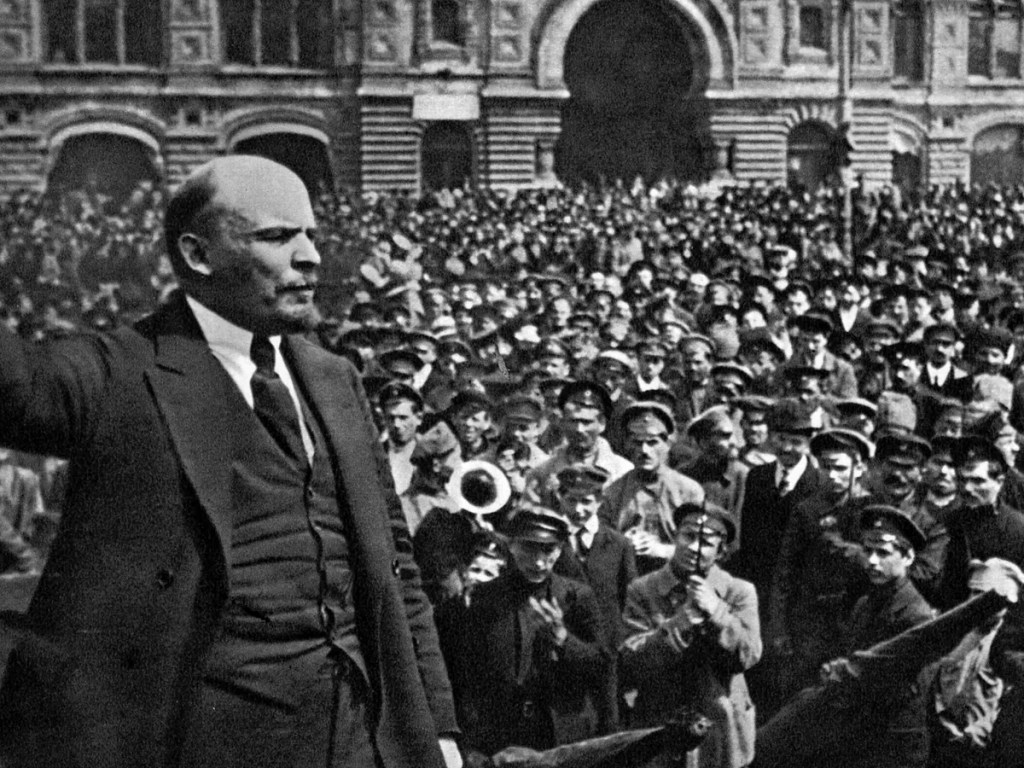
The Russian Government had been ruled by Czars, or tsars, (pronounced “Zars”) who were the kings, or emperors, of Russia from 1721 to 1917, when the Russian people overthrew Nicholas II, the last of the Czars. This was known simply as the Russian Revolution of 1917. the Russians set up a provisional government to replace the czar system. However, this new government didn’t satisfy all of the Russians, with some forming their own political parties. The most prominent of these was the Bolsheviks, a socialist party. These people, led by Vladimir Lenin and Leon Trotsky, managed to get elected into the provisional government and began spreading their message among the people, gaining a great amount of support from those who were left unsatisfied by the previous revolution.

The Bolshevik Revolution came to pass on October 25th, 1917 according to the Julian calendar, which was used by the Russians at the time, though the Gregorian calendar dates it to November 7th, 1917, which is used today. It was startlingly bloodless, partly due to the fact that the Russian Revolution just ¾ of a year earlier was one of the most bloody in history, so anyone willing to die over the government had already been killed. The Bolsheviks simply stepped in and took control of all the government buildings, and were hailed as heroes by the people for freeing them from an oppressive government, and giving them freedom through communism. They would quickly realize that communism isn’t a “freeing” sort of government.

Lenin and Trotsky were communists, and derived their philosophy from Karl Marx, who wrote the famous “Communist Manifesto.” The driving idea behind communism was that by eliminating all property rights and dividing all resources among all people evenly, they would eliminate greed, making life better for all. While I’m not going to go into all the reasons communism doesn’t work, it is worth knowing, so I recommend researching it. For now, I’ll just say that instead of communism, every country that tried using it ended up with a dictatorship, and Russia was no exception. Lenin began killing off any opponent political parties, until there were only communists and pro-communists. If anyone spoke out against Lenin or the Bolsheviks, they were not heard from again. This was known as the Red Terror, and caused a third civil war to break out from 1917-1920, as the people realized the Bolsheviks were not saviors, but new masters. This time, the Bolsheviks won again, and Lenin renamed the government the “Union of Soviet Socialist Republics” also known as the USSR.

Lenin ruled until 1924, when he died of natural causes at age 53. He was succeeded by Joseph Stalin, who would take the power of the Dictatorship even further than Lenin had, entering Russia into the darkest time in it’s history.