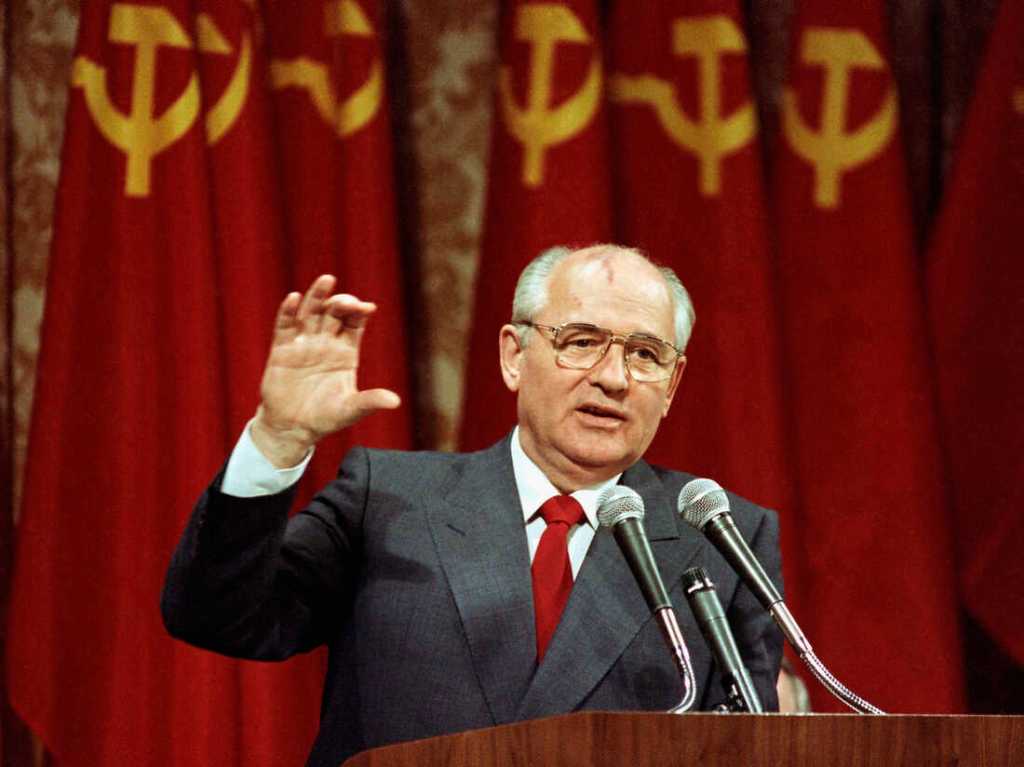
Started in 1919 after the Bolshevik Revolution, the Soviet Union finally fell in 1991, 72 years later. Technically speaking, the U.S.S.R. wasn’t started until 1922 when Joseph Stalin united all the communist parties that had been started by Lenin’s Bolshevik Revolution in 1919. Stalin ruled the Soviet Empire with a heavy hand until his death in 1953.
Then, Nikita Khrushchev quietly moved Stalin’s successor out of the way and took over. He instituted much less controlling policies, though was clearly still a dictator. The new policies helped improve relations with the U.S.A, who had engaged in a Cold war with Stalin’s government, until the Cuban missile crisis in 1962. The crisis started when communist Cuba began installing Nuclear Missiles on their island, given to them by the Soviets. This was incredibly dangerous for the U.S.A. since Cuba is practically a next door neighbor. Frantic negotiations were carried out, that nearly resulted in nuclear annihilation. However, it instead brokered a deal that stated the Russians would remove their missiles from Cuba, if the Americans removed their missiles from Turkey, and promised not to invade Cuba. Things calmed down from there, and nothing very important happened until 1979, under the reign of Leonid Brezhnev, who took power in 1964.
In 1979 the Soviet war on Afghanistan began, and the U.S.A, who didn’t want the Russians to expand, funded the Afghans. They didn’t outright go to war with Russia because that would initiate Nuclear death, but instead funded the people Russia was already trying to fight. Eventually, in 1989, under Mikhail Gorbachev, the war was ended, since no real conclusion was to be found, and the U.S.S.R. couldn’t afford a continual drain on their resources. But then, in 1990, Iraq attempted to conquer Kuwait, an oil rich country, and was funded by the Soviets, while America and many other countries decided to keep Iraq out of Kuwait. Despite the Russians best support, Iraq fell inside of a year. This was the final blow that showed that the Soviet Union was well behind the Capitalist world.
Then, Gorbachev decided to try making the Union less dictatorial, instituting several reforms. He then held a poll in 1991 to see if the Empire wanted to break up the U.S.S.R. After finding an overwhelming majority of the population supported the idea, he decided to do it. However, the remaining Communists did not like this idea. They decided to stage a coup, and rolled in on tanks to depose Mikhail. When faced with the rest of Russia’s military, however, they backed down pretty quick, and the communist party was ended in Russia.
Gorbachev resigned on Christmas day, 1991, and the entire soviet country collapsed and disintegrated. Out of it’s remains 15 new countries were formed: Armenia, Azerbaijan, Belarus, Estonia, Georgia, Kazakhstan, Kyrgyzstan, Latvia, Lithuania, Moldova, Russia, Tajikistan, Turkmenistan, Ukraine, and Uzbekistan. America’s position with Russia and the rest of these countries has been quite strong, though friendly ties to Russia have began to deteriorate in modern days over it’s treatment of Ukraine.
 School Essays