In the Ron Paul Curriculum, a homeschooling course, I take an English class, which I have recently finished the first semester of. Technically, the semester ends next week, but according to the teacher, he has such large assignments ready for next semester, so this is the end for this half of the course instead.
The first 20 lessons covered the basic writing process of brainstorming and creating a mind map, then organizing it and adding the required structure to make an outline, and finally the proofreading to finalize it into a paper. During this time I read Jules Verne’s “20,000 Leagues Under the Sea” as my reading assignment.
21-35 covered rules on how to make a quality paper with regards to symbols, fonts, noun-verb agreement, and other basic rules used to make a high quality essay, as well as having me write many short essays to practice these skills. I read both “A Tale of Two Cities” by Charles Dickens and “Out on the Pampas” by G.A. Henty.
36-40 had me write 1-2 page essays within a time limit, with the shortest time limit being 30 minutes. This helped speed up my writing and rid me of my problems with dillydallying and not paying attention to my writing. this week’s reading assignment was Baroness Orczy’s “The Scarlett Pimpernel”
The next two weeks, lessons 41-50, was spent learning about book reports. These are summaries and essays that analyze a part of a story, like the setting, or the characters, or the plot, or really any part of the book. I read “With Clive in India” by G.A. Henty during the section.
51-60 was very similar, though more extensive, on book reviews. Book reviews focus much more on my own opinions on the book, as well as the more objective material from a book report. I read the first half of “Uncle Toms Cabin” by Harriet Beecher Stowe.
61-80 was all devoted to research papers, with the first two week consisting mostly of the teacher walking me through the process of researching and writing the paper, though all the sources were provided by him. He also taught how to properly cite sources and organize a bibliography. The latter two weeks I was on my own, however, and had to research and write using only the advice from previous lessons, with minimal help from the teacher. I also read “Pride and Prejudice” by Jane Austen.
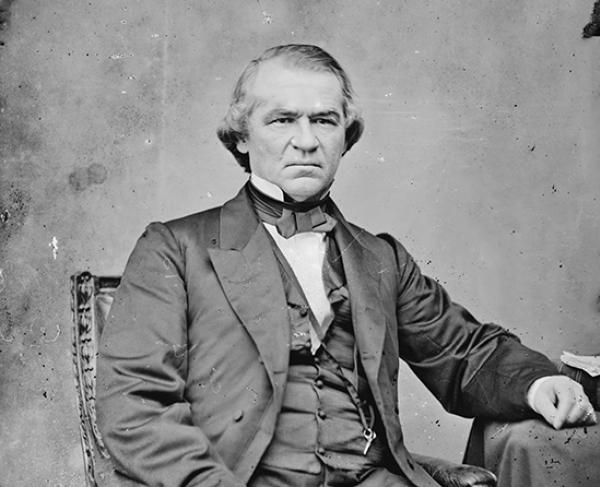
Andrew Johnson (1808-1875) was the 17th president of the United States of America, as well as the third vice president to become President after the death of their predecessor. He is also known for being the first president to be impeached, though it didn’t come to anything.
He was born in North Carolina, and was extremely poor. He would often bring up the fact that he had been born in a two-room shack to remind voters that he had started out as a poor man, which helped to make a lot of people relate and trust him, or at least compassionate with him. He was apprenticed to a tailor in his hometown, but ran away and worked as a tailor across North Carolina until he decided to move west to Tennessee. There, he opened a successful clothing store, and married his wife, who happened to be a cobbler. They had five children, all of whom survived until adulthood. He had incredible success in Tennessean politics, mostly because of his extreme skill and fascination with oration and speeches in general. He eventually became U.S. representative in congress, and though what party he belonged to was always somewhat unclear, he usually ran as a democrat. Since his wife stayed in Tennessee when he moved to DC (because she had tuberculosis and couldn’t stand the trip), he rarely attended social functions. Normally this would hurt his chances to gain popularity, but it actually helped him advertise himself as a defender for the poor against the arrogant rich. An extremely important bill that he tried to get passed was the Homestead Act, which, though it didn’t pass the senate, popularized him with farmers and poor people wishing to move west.
He eventually became the Governor of Tennessee, and while he didn’t have much power, he was able to publicize himself even further. He also set up several public schools and public libraries, as well as common state fairs to benefit the working class. Thanks mostly to his popularity as governor, Johnson managed to become a senator in 1857. He once again tried to get the homestead act passed, but once again failed. The democrats ended up tearing each other apart while trying to choose someone to run for president, allowing Abraham Lincoln to step in and become President. Despite being a southerner, and owning slaves himself, he did not support the southern states seceding from the U.S, saying that he had a duty to his country. Despite his feelings, Tennessee seceded, and Andrew fled northward after several assaults. After Tennessee was retaken by the Union, Lincoln appointed Johnson as the military governor of Tennessee, and Tennessee managed to stay pretty peaceful, since enough of the people likeed Andrew.
He then became Lincoln’s vice president for his second term, winning many votes from both northern and southern states thanks to Andrew’s extreme love for his southern home. Lincoln’s assassination was actually supposed to be a triple homicide, the other targets being Johnson and William Seward. William survived his wounds, and Johnson’s assassin had gotten too drunk to pull off the assassination, though some believe he was in on it, and his assassin purposefully didn’t kill him, though he did execute his would-be-assassin, so there isn’t too much logic in that. Throughout his presidency, Reconstruction, the reuniting of the states, was the most important subject in the country during his presidency, and while he tried to allow state power to the southern states and gently reassimilate them into the U.S. Congress, however, didn’t like that, and constantly called for more and more hard and tough laws to be put in place to force the southerners into the north’s lifestyle. This caused many clashes, resulting in many bills that were passed despite the presidents veto, the first time this had ever happened, and eventually an impeachment. The impeachment required 2/3 of the votes to fire the president, and exactly 1 less person than the 2/3 required, so Johnson remained president.
After the Mexican-Spanish War, in which Mexico got its freedom from Spain, there was the Mexican-Texan War, in which Texas got its freedom from Mexico, which I’ve written about here. After Texas got its independence, it immediately asked to be added to the United States as a state. In 1836 the President was Martin Van Buren, but he was against adding Texas, since Mexico made it clear that this would start a war with them. He only served one term, though, and the next president, William Henry Harrison, only served for one month, making his opinion rather unimportant (though he was for the addition of Texas). John Tyler was the next President, and he was extremely supportive of the addition of Texas, so he did the work to make Texas a state, though since his run as president was up, it was the next President, James K. Polk, who officially annexed and declared Texas a state in 1845. Despite the many insinuations and threats, Mexico didn’t go to war with the U.S. over this, though Polk would Make sure that didn’t last.
Even after Texas’s war with Mexico, the border between them was still disputed, the Mexicans saying the border was the Nueces River, while the Texans (and now Americans) said the border was the Rio Grande River. After a good deal of negotiation, James Polk offered to outright buy the disputed area, called the Nueces strip. The Mexicans refused his offer, frustrating Polk. In 1846 a company of American soldiers led by Zachary Taylor went into the Nueces Strip, declaring it as theirs. The Mexicans weren’t long in coming, killing about 11 of Taylor’s men before being forced to retreat. This started the Mexican-American War. The battle above is known as “The Battle of Palo Alto” and was immediately propagandized by James, saying that the Mexicans had “invaded our territory and shed American blood upon American soil” even when that “American soil” was highly disputed, and the Americans were obviously the instigators.
Due mostly to the fact that Mexico-Texas area was inhospitable desert, there were few Mexicans living in and around the Nueces strip, so it was taken by Taylor and Winfield Scott rather easily. Seeing that their odds weren’t good, Mexico re-recruited Antonio Lopez de Santa Anna in 1847, the former president of Mexico, who had lived in exile in Cuba after losing the Mexican-Texan war. Brigadier general Stephan Kearney was also capturing northern territories, like the New Mexico and California territories, and John E. Wool joined up with Taylor after taking the Mexican city Chihuahua (yes, that’s a real city). Antonio then fought Taylor and Wool, and after battering their forces with his larger army, left with several cannons and flags, claiming a victory and showing off those prizes, despite the real reason he left being the huge number of his soldiers killed, letting Zachery also claim victory.
Winfield Scott began the end of the war when he and his company sailed into Veracruz, and marched towards Mexico City, following the same route as Hernan Cortes did when he took the Aztec capital, which was located in the same place as Mexico City. The Mexicans attempted to stop Scott at several paces, like at the “Battle of Cerro Gordo” but failed everywhere, until the end of 1847, when he took Mexico City. All the soldiers had evacuated, and fought a guerrilla campaign for a few months, but eventually gave way, and in February, 1848, the treaty of Guadalupe Hidalgo was signed. It gave up Texas totally, and sold several territories, like New Mexico and California, to the U.S.
The majority of the leaders on the U.S.’s side disapproved of the war, with one Colonel Ethan Hitchcock saying, when he went to the Nueces Strip with Taylor, “We have not one particle of right to be here. It looks as if the government sent a small force on purpose to bring on a war, so as to have a pretext for taking California and as much of this country as it chooses.” and Ulysses Grant, a minor figure in this war but a future Major General in the Civil War and future President, saying that the Mexican American war was “one of the most unjust ever waged by a stronger against a weaker nation” and Taylor himself wouldn’t put out much energy to track down or kill excessive numbers of Mexicans, since he felt a disgust with the war. Even Abraham Lincoln, who wasn’t yet president at this point, spoke out against the war, trying to get people to see that the Nueces strip wasn’t American land. Henry David Thoreau was also against the war, and refused to pay his taxes since he knew they could be used to support the war, or anything government related that he didn’t agree with. He only spent a night in jail, because his aunt paid his bail against his wishes, but he proceeded to write books, like “Civil Disobedience” and protest the war. Most Americans, however, did support the war, and eagerly moved into the land taken in the war.
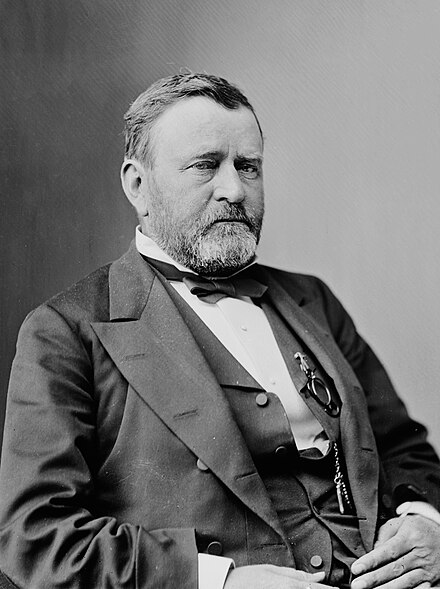
Ulysses S. Grant was the most famous and prominent general in the Union Army, being the leader of the western army during the first half of the war, and one of the few Union generals who were consistently well off during the initial half of the war, and became the head of all the Union army in 1863, and lasted the whole second half as the chief general. While he spent most of his time fighting with Lee in the Virginia area, he still effectively directed the west, organizing the Atlanta Campaign and other raids. He later became the President of the United States thanks to his popularity derived from the war, on the Confederate side as well as the Union thanks to his honor and willingness to move past his differences with the south. He also served with many other generals, Confederate and Union, during the Mexican-American war.
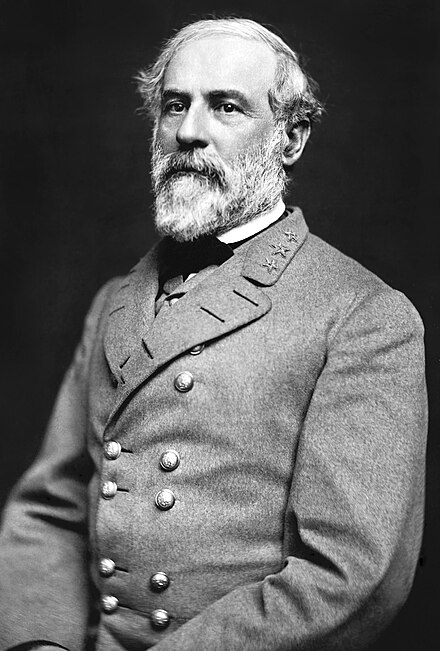
Robert E. Lee was the lead general for the Confederate Army throughout the war, and was a bit odd because even though he wanted the Union to stay together, when Virginia, his home state, seceded, he joined it in the Confederacy, eventually becoming the head general. He was a major risk taker, and it almost always worked out for him. It’s fairly agreed upon that he was the best general in the Civil war, but due to a lack of supplies, money, and men, he just couldn’t have won the war. He was extremely Christian, and his devotion to his faith made him, like Thomas Jackson, extremely popular among both sides of the war. Like many other generals, he served with all of them during the Mexican-American War.
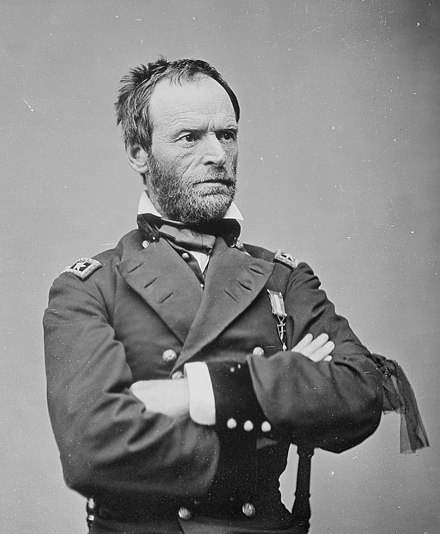
William Tecumseh Sherman was not well liked by both sides of the war, in fact, he was barely liked on the Union side, where he served with distinction, due to his tactics, considered savage by some, and ungentlemanly by others. He served under Grant in the West during the first part of the war, but was promoted to Grant’s old position when he himself got promoted. He’s most well known for his Atlanta Campaign, which went deep into Confederate territory, and humiliated them. He would tear up railroad tracks and bend them around trees so that they couldn’t be used, He “accidentally” burned down more than one town, poisoned wells, and would steal from farmers and towns to feed his army, which wasn’t new in war, but was frowned on in the New World. While he was in the Mexican-American War, he was stationed in California after it was taken, and didn’t see action.
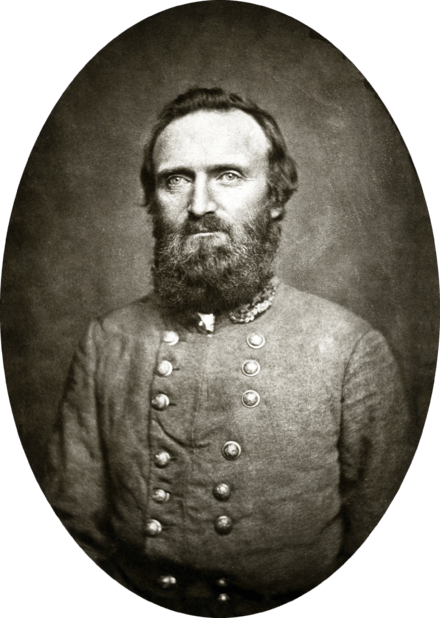
Thomas “Stonewall” Jackson was probably the most well-respected general in the war, and is probably more well known than Robert Lee, who he served under. He earned his nickname during the Battle of Bull Run, when he kept his troops from running from the Union soldiers, and led them in a counter-attack that won them the battle. He was well known for his integrity and honor, and extreme Christian morals, leading him to be loved by both sides of the war. He died from illness after being shot in the arm in 1863 at the battle of Chancellorsville. He also fought in the Mexican American War.
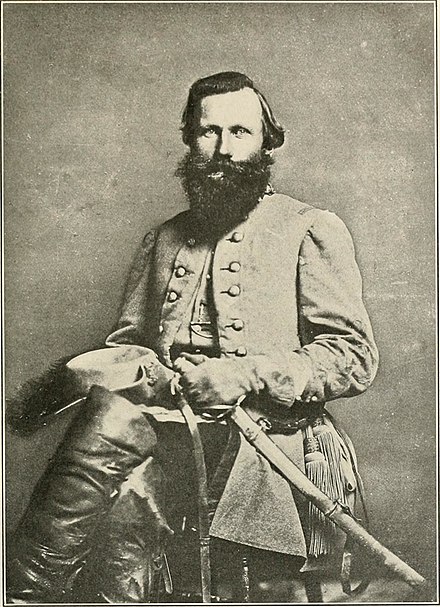
J.E.B. Stuart was a Confederate general, though he was different because he was a cavalry officer, and wasn’t really a prim and proper gentleman like Lee, or Jackson, or Grant, but he also wasn’t a brute like Sherman, instead being rather flamboyant and joking, often wearing colorful capes and ostrich feathers in his hats. He would also make many jokes with his men, and did a lot to keep the Confederacy’s spirits high. He first distinguished himself when he took command of Jackson’s forces at Chancellorsville after Stonewall got injured. He then became one of Robert’s most useful generals, due to his excellent reconnaissance abilities. Unfortunately for him, he’s most famous for his failure at the battle of Gettysburg, when he got separated from Lee’s forces and failed to warn him of the positions of Union troops at Gettysburg, where Lee was nearly captured. He died in 1864, killed by Philip Henry Sheridan’s troops, Sheridan being a Union cavalry commander, and practically a Union version of Stuart, though much less fun to be around.
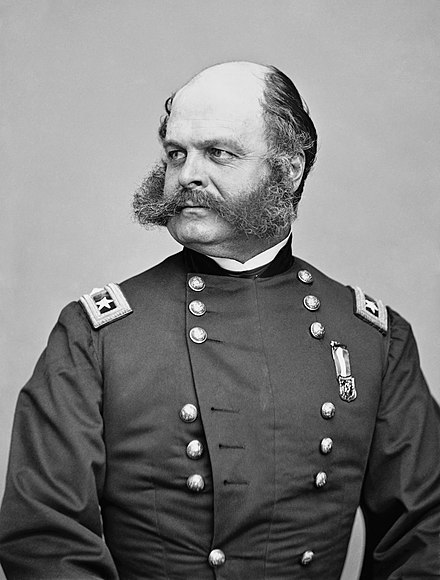
While J.E.B’s military counterpart might’ve been Sheridan, his personality counterpart was probably Ambrose Everett Burnside, a Union general most well known for his facial hair. He is well known for this mustache-sideburns look, and it was because of him that sideburns became popular, as is evidenced by the fact that “sideburns” is a derivative of his name: “Burnside.” He wasn’t as flamboyant as Stuart, but was fun to be around. He made his own gun, which carries the name “The Burnside Carbine” and he was named the first President of the National Rifle Association, also known as the NRA. The reason I didn’t immediately speak of his military history, is because it’s not all that good, with him having mixed results in battle. He also was in the Mexican-American War, but he joined after hostilities had ended, and didn’t see battle.
There were many other Generals on both sides of the war, though none of them had quite the distinction that these had, though perhaps James Longstreet and Philip Sheridan should’ve had their own entries, but all of them deserve at least a mention, so here we go. Sheridan (Union) was a vicious cavalry commander who employed the same brutal tactics as Sherman. James Longstreet (Confederate) was a brilliant commander who served as Lee’s second in command after Jackson died, and was a personal friend of Grant, so his reputation took a hit in the south. Nathan Bedford Forrest (Confederate) was a Cavalry officer who was rather under-used during the war, and went on to help found the Klu Klux Klan. Winfield Scott Hancock (Union) (not the leading general with the same name in the Mexican-American war) also known as “Hancock the Superb” he had the most impressive and dominant personality of any American general, and was the most impressive in personal combat. P.G.T. Beauregard (Confederate) was an artillery commander, and led the Confederates in the first battle of the war, the battle of Fort Sumter, as well as others. Patrick Cleburne (Confederate) was born in Ireland and emigrated to the United States, and joined the Confederacy when the Civil War broke out, and though Grant and Sherman dominated the west, Cleburne was surprisingly successful at blocking their many advances. Joshua Chamberlain (Union) was a professor before the war, and was quite polite and gentlemanly, and though he didn’t do much, he was in charge at Gettysburg, and was at the surrender of the Confederate army. Ambrose Powell Hill (Confederate) took over Thomas Stonewall’s responsibilities after he died, though he wasn’t as impressive as Jackson. There were four Georges among the generals of the Civil War, George Edward Pickett (Confederate) and George Meade, George McClellan, and George Henry Thomas (all Union). George Pickett is infamous for “Pickett’s Charge” in which he failed dismally to attack Union soldiers, and lost his whole force. McClellan was temporarily the head general of the Union army, but Lincoln didn’t like him, fired him, and used him only as a training officer. Meade was also head general for a while, but like McClellan, acted too slowly and carefully for Lincoln’s taste, and so gave way to Grant. George H. Thomas prevented the battle of Chickamauga from being a complete failure, and did quite well elsewhere, but due to not liking Grant, he’s rather unknown. Lastly, Joseph Hooker (Union) was the only general without facial hair in the war, and though he served well in the Seminole Wars, Mexican-American Wars, and the Civil War, he’s only remembered for his major loss to Lee at Chancellorsville.
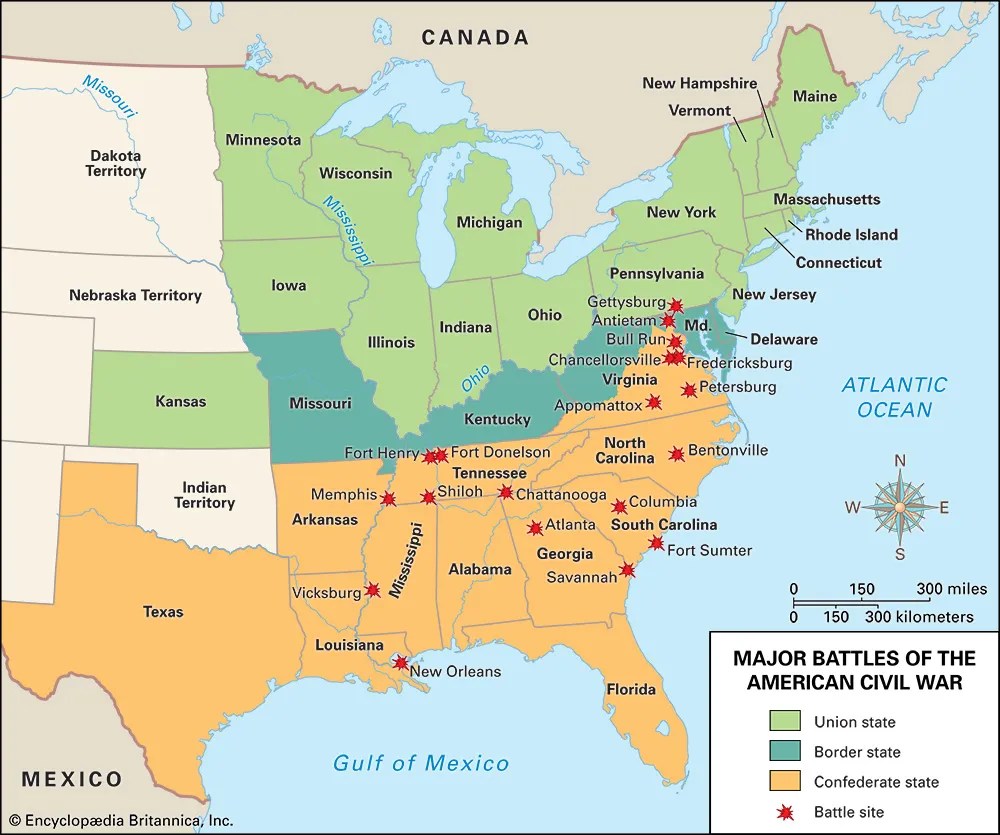
The American Civil War was a war fought between the northern United States of America, and the southern Confederate States of America, the latter of which seceded from the older union to form their own group, the confederacy. The original States to secede and form the confederacy were Texas, Louisiana, Mississippi, Alabama, Georgia, Florida, and South Carolina. These seven states were joined by four more, however, after the first battle of the war. Those four were: Arkansas, Tennessee, North Carolina, and Virginia. West Virginia, however, left Virginia halfway through the war to become a border state, meaning it didn’t immediately join up with the union. The only other states to do this were Delaware, Missouri, Kentucky, and Maryland. These states didn’t support Abraham Lincoln, the leader of the union states, but didn’t secede because of him either. They suffered quite a bit of internal dissension, however, as their population fought itself and individuals moved to join other state’s militias. The United States consisted of Maine, New Hampshire, Vermont, Massachusetts, Rhode Island, Connecticut, New Jersey, New York, Pennsylvania, Ohio, Michigan, Indiana, Illinois, Wisconsin, Minnesota, Iowa, and Kansas. These states all stayed in the union and supported Abraham Lincoln, while the confederates were led by a man named Jefferson Davis.
The popular reason given for the secession of the Confederate States from the Union is the matter of slavery, which they allowed, while the north did not. This was not the only reason, however, as is clear to anyone looking at history. After all, Britain and other European countries were able to abolish slavery without wars, and the States had been at peace on the issue for quite a while, though they were admittedly uneasy in their peace. The war was caused not so much by slavery, as by the secession of the lower states. Now, you may say that they seceded because the north was trying to abolish their slavery, but I don’t think that’s the whole picture, especially since slavery wasn’t totally abolished until 1863, after two years of war. There was a much deeper cultural chasm between the North and South than I think is normally touched on, and that the confederacy was a little more understandable, and inevitable, than is popularly imagined.
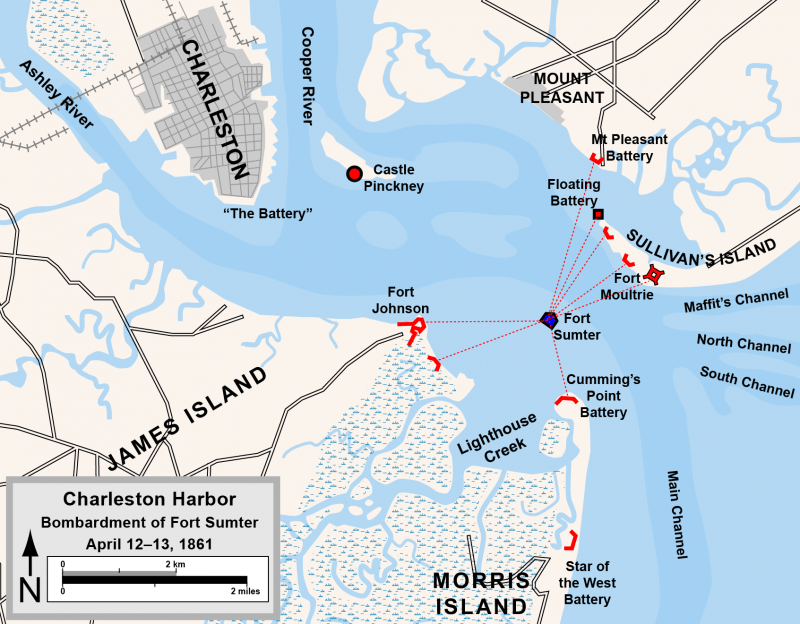
The first battle of the war was in 1861, and was the battle of Fort Sumter. Union soldiers quietly sneaked into Fort Sumter, a fort in the middle of Charleston Harbor, confederate territory. The Confederate leaders called for them to evacuate the fort, and asked Lincoln to order his men out of the fort several times, but Lincoln instead ordered supply ships to reinforce the fort. When these ships were seen by Brigadier General P.G.T. Beauregard, he began a 34-hour artillery barrage on the fort, from forts in sight of Sumter. The image above shows just how many forts were firing on Sumter. After 34-hours the men agreed to surrender and leave the fort. There were no deaths during this battle, except for one during the procession out of the fort, when a union soldier accidentally killed himself firing a cannon in salute of his fellows. After this siege, Abraham called for volunteers to help take the war to the confederates. This estranged the four states already mentioned, and they then joined the Confederacy.
There were many more battles in the war as it stretched from 1861 to 1865, with close to 20 major battles, and many, many more minor skirmishes between militias. Since it was a war between Americans, all lives lost in the battles were American lives, making this the war with the most American lives lost. Not only this, but with some 620,000 Americans dead, it’s almost the same as every other war and battle that America has been involved in before or since, with a total of 684,253, or close to that number. Part of the reason the Union won is because they had a much larger group of soldiers, since they recruited from the free black men as well as white, at least from 1863 onwards, as well as the fact that the south looked on the north as countrymen more so than the north looked on the south. After winning the war, the union re-assimilated the confederate states back into the union rather peacefully, and without executing the southern leaders, an uncommon event for a civil war. The north grew richer and more popular, while the south’s culture got decimated, and it still hasn’t fully recovered from the loss. All the slaves in the south were freed, of course, and have been ever since.
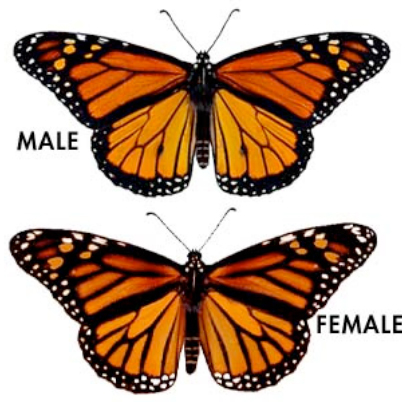
Monarch Butterflies are beautiful butterflies with four orange wings, with a black vein pattern on all four, as well as white spots around the edges of all the wings. but how do they come to be butterflies? Well, they start as eggs.
Their egg is a round ball shape, with white ridges running up and down it. They’re always laid singly on a milkweed plant. The milkweed plant is it’s best option because it’s actually poisonous to most creatures, allowing the caterpillar eggs to be safe from predators and passive herbivores. While all eggs will be laid on milkweed plants, and the mother monarch will lay many eggs, from 300 to 1000 over her life, no eggs will be laid on the same plant. This is to ensure that each caterpillar has enough food to get it past its baby stage, and should they be laid together, they would probably starve each other.
Once the caterpillar hatches from it’s egg, it will immediately begin eating the plant. The plant doesn’t normally survive this, because having small insect eating you isn’t conducive for the health, even for plants, and the caterpillar will move on, and eat from other plants. They don’t have to worry about going to the same area like the mother had to when she was laying the eggs, because so few caterpillars survive the first part of their lives, and there’s food enough for everyone after the first deaths. The caterpillars will also become poisonous to their predators due to how much milkweed it eats.
After eating as much as it can, normally some 200 times its weight in leaves, which can take a varying amount of time to find, the caterpillar will spin itself into a cocoon on the underside of a sturdy object, which can be anything from a tree branch to a rocky overhang. The monarch will sit in this cocoon, called a chrysalis, and turn into caterpillar soup, which will then reform and turn into a full butterfly after 10-14 days.
Once it hatches from the chrysalis, the butterfly will wait for its wings, wet from the whole being-soup thing, to dry out. Once they are dry, it can fly, and it will go out looking for more food. The adult butterflies can’t eat the leaves like they used to, though. Now, they’re restricted to nectar from flowers, though they are still poisonous from the milkweed they ate before transforming. The male butterflies have black spots on the bottom of their wings, while the females have thicker veins, and those are pretty much the only visible differences. Male butterflies will release a pheromone scent from the black spots on its bottom wings, and should a female wish to mate, they will undergo the mating process, which can take anywhere between a few seconds and a few hours, depending on how ready the female is. The mating often occurs whenever they migrate, so about twice a year, when they reach Canada in the summer and Mexico in the winter, though they can easily mate more than that. Since some won’t be able to migrate simply due to when they were born, monarchs can live 5-10 weeks if they stay, or 8-9 months if they migrate.
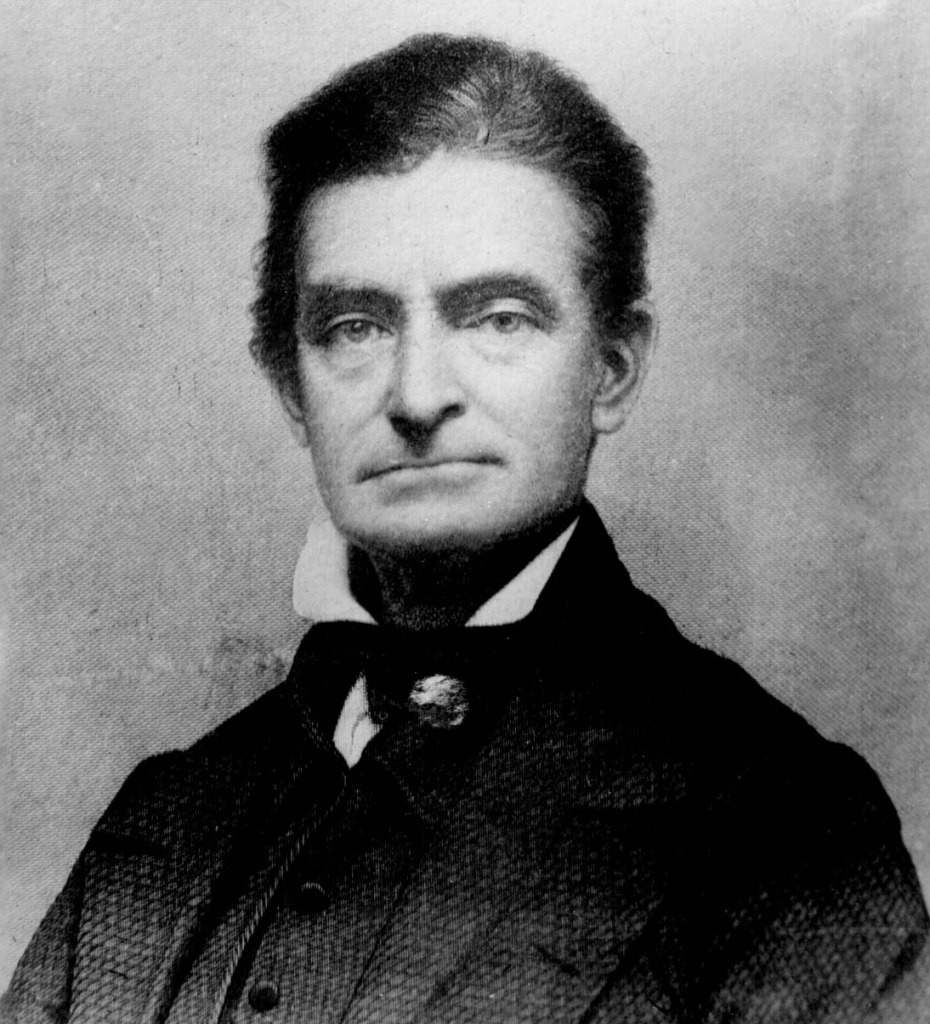
John Brown was an anti-slavery terrorist in the 1800s. He was born in 1800, in Connecticut, and his family moved around a bit, though not as much as he would once he started his own family. He was a Puritan, and an abolitionist, like his father, who would often have black people for dinner, uncommon even among abolitionists. Once he did have his own family, he move around a lot, the longest he ever stayed anywhere being 10 years in Pennsylvania, where his farm was an essential stop in the underground Railroad, a system to help slaves go to Canada to be free. Brown also had a total of 20 children with two wives, 9 of whom died in childhood. While moving around brown started up schools and churches for the freed blacks, and publicly declared that he would spend his life destroying slavery.
Kansas was a new State at this time, and it was decided that the people would vote on whether or not Kansas would be a slave state or free state. Because of this many people moved into Kansas from the neighboring states to rig the election and muscle people out of the state if they weren’t gonna vote their way. At first, the violence was mostly on the pro-slavery side, with them burning anti-slavery people’s farms and driving off cattle. 5 of Brown’s sons had moved to Kansas, and after receiving threats and witnessing threats being carried out, they called for their dad. When he got there he formed a militia of anti-slavery men to go out and seek retribution for the crimes, killing some 5 men for their parts in the attacks so far. This kickstarted the bloodiest part of the conflict in Kansas, and made John famous.
He eventually left Kansas, and decided that the people didn’t care enough about the anti slavery movement, and decided to wake the people up. He though he could do this by staging a massive slave revolt, though it didn’t quite go to plan. His plan was to take the federal armory in Harper’s Ferry, a West Virginia town, which allowed slaves during this time. Brown only managed to recruit 21 men for his attack, the majority of whom were white, and several of whom were his own sons. They took the armory during the night, but lookouts of theirs had been seen by a train running past, and assuming they were bandits, put on the alarm. After the accidental murder of a baggage handler, (a free black man) the train conductor was told that they weren’t bandits, they were just going to stage a major revolt. The train left, and continued to spread the alarm, as invading a federal armory was a capital crime. The people of Harpers Ferry woke up, and Brown and his men became trapped. The slave revolt never happened, because the messenger who was going to tell the slaves on the nearby plantations was confined to bed with a sickness. So Brown and his men got trapped until the government soldiers arrived, and were all killed or, like Brown himself, hung on a noose.
He became a symbol of the anti slavery movement, although people at the time thought him far too extreme, possibly because he tried to raid a federal armory. But the north started to look at him as a hero, while the south abhorred him. It was Brown who further widened the rift in America, and helped ensure the Civil War.
The Texas-Mexican War was a civil war between the Mexican government and Texas, which they owned at the time of the war, which started in 1835 and ended in 1836, only 6 months later. Both regions, Mexico and Texas, had been conquered by the Spanish, and both regions had recently become independent in 1821, after the war for Mexican Independence. The Texas part of Mexico was very lightly populated, with only a few Mexicans, a few Americans, and a few Indians. This makes sense, as Texas is a dessert, and desserts aren’t really made for people. Despite this, Americans decided to colonize it and live off of the dry, hot land. The Mexican government figured why not, and so started letting Americans come in. But by 1830 their was some 7,800 Mexican Texans, and 30,000 American Texans. The Mexican Government had tried to stymie the flow of Americans in 1830, but the local government took offense to this control that the Mexican leader was taking and using. In 1832 the Texan governors started meeting and talking quietly about seceding from Mexico, and the leader of Mexico, Antonio Lopez de Santa Anna, started gathering control under himself. In 1835 Antonio sent General Cos to try and quiet down the rumblings of revolution, but didn’t quite do that.
A Texan town, Gonzalez, had borrowed a cannon from a neighboring Mexican fort to defend from Indians, and when the Mexicans asked for it back, due to the fact that they could soon be at war, the Texans kept it, due to the fact that they could soon be at war. The fort sent a company of 100 dragoons to take back the cannon. The battle ended with a total of 3 casualties on both sides, but they kept the cannon, so it was declared a victory, and Texas decided to be declare it’s independence.
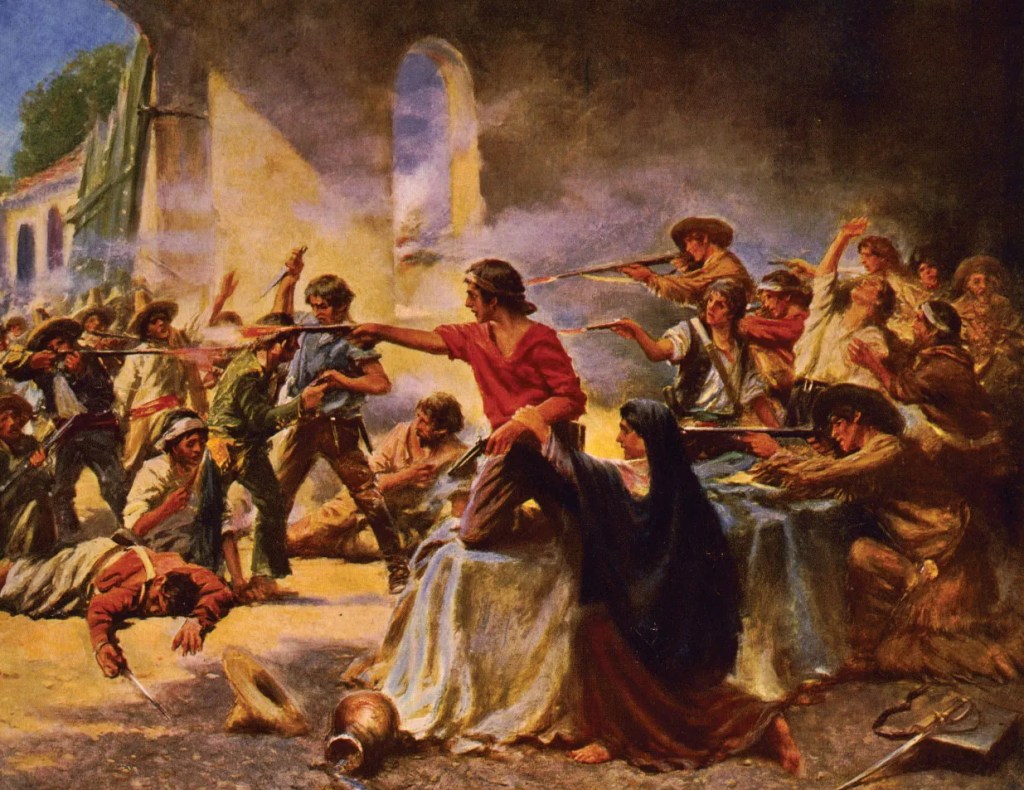
After this there wasn’t really any conflicts until the battle of the Alamo in 1836. The Alamo was a small fort near the former capital of Texas, San Antonio, and was only very lightly defended by the Texans, as they had already cleared the area of Mexico supporters. Antonio arrived in the area to take the fort, however, and had some total 2,500 Mexican troops, while the fort had some 200 Texan defenders. The siege lasted 13 days, during which there was not a thought of surrender, before the Mexicans broke in, and killed all the defenders. They weren’t to be dismissed, however, and they took 400-600 Mexican soldiers with them. There were also major frontiersmen at the fort and died there, like Davy Crockett, Sam Bowie, and William Travis. This battle was a victory for the Mexicans, but it became a symbol for the Texans.
The last battle was the battle of San Jacinto, named after a river that Antonio set up camp at to await reinforcements. The Texans decided to fight him before the reinforcements arrived. They didn’t make it, and Antonio’s reinforcements arrived. The Texans decided to attack anyway, as they thought it would be a surprise attack, because it was possibly the dumbest thing they could’ve done. It worked. It did surprise Antonio, because it was the dumbest thing they could’ve done. Santa Anna was captured, and gave the Texans got their Independence, and Antonio got his.
Texas remained independent until 1845, when they joined The United States of America, and fought a second war against Mexico to gain more land for Texas and the U.S. Overall, it was an impressive feat for the Texans to have achieved, and though they flocked to the U.S, it was still a respectable accomplishment.
The author of the Scarlet Pimpernel was Baroness Orczy (lived 1865-1947), a Hungarian noble who spent her life in Britain, and was, as can be expected from her book, a firm royalist. The Scarlett Pimpernel was her first big hit, it being immensely popular, so much so it helped set the stage for modern super hero stories. It takes place during the French Revolution, specifically looking at the English nobility and how they saw the revolution. Obviously, they didn’t like the idea of nobles being killed. The first part of the book centers around rumors of a hero who was rescuing French royalty from the guillotine, and bringing them to England. This hero is known only as the Scarlet Pimpernel, the name of a common English flower. The villain, a French dignitary, tries to find out who the Pimpernel is, but due to his (the hero’s) clever disguises and acting, he (the villain) doesn’t manage it. He does still set a trap for the Pimpernel though, and feeling remorse for her helping the villain, the hero’s wife, (and the story’s narrator) goes to help him escape the trap. With this help, the Scarlet Pimpernel rescues more french nobles and cleverly evades the villain.
A Tale of Two Cities is a book by Charles Dickens (lived 1812-1870), a very famous English author who has written many books, including a Christmas Carol. A Tale of Two Cities is set during the French Revolution. The story started with a woman in England learning that her father wasn’t dead and had actually been in prison for the duration of her life. He had been released and they left for England to live happily ever-after. On the boat to England they met Charles Darnay, a french noble who left his wealth because it sickened him to tread on the poor people. Him and the daughter end up together, causing a bit of heartache to Charles’ English lookalike, Sydney Carton, an unsuccessful drunkard, who continually finds more reasons to be depressed. The French Revolution takes place while Darnay is away, and he goes back out of an extremely inapropriate sense of patriotism, abandoning his wife and child. Despite the best efforts of his wife and father-in-law, he is slated for the executioners block, and is only saved by the sacrifice of his good friend Carton.
Both of these books were good, and I do recommend them, but if you really like one, you’ll probably not be exited about the other, as they’re so different in writing styles. The Scarlet Pimpernel is extremely straight-forward and basic, with simple words used and uncomplicated descriptions of people and things, and direct explanations given for anything that could be seen as confusing. A Tale, however, was extremely complex and convoluted, with strange and unrelated descriptions of people and things, and I think Dickens decided that, if you needed an explanation for something, you shouldn’t be reading the book. They both had the same take on the French, though, as both authors were British (at least in mindset) and thought them horrible, and while Orczy made the nobles look innocent, at least Charles acknowledged their guilt, he just thought the revolutionaries were over-enthusiastic. Both books were good, but if you prefer a more simple book, then you should read The Scarlet Pimpernel, and if you like more complex books, you should read A Tale of Two Cities.
After winning its independence and establishing itself as a considerable force to be reckoned with, America began looking at how the country would expand. This wasn’t a major pursuit until 1803, however, as there were a lot of Indians all around them, and besides, to the north was Canada, owned by the powerful British, to the east is sea, to the south is Mexico, owned by the powerful Spanish, and to the west was the Louisiana Territory, owned by the powerful French, so if Americans wanted to expand in any direction they would have to fight a powerful country or start a colony on the sea, neither of which they wanted to do. But in 1803 Napoleon Bonaparte, ruler of France, had run himself into debt by financing wars across all Europe, and his most profitable colony in the Caribbean had rebelled against France, turning all of France’s lands into a net loss. Then came Thomas Jefferson, wanting to buy a tiny corner of Napoleon’s land to get a better trade deal in New Orleans, and so Napoleon offered, and sold, all of the Louisiana Territory to him, and proceeded to spend all the money on more war in Europe.
Jefferson, however, gained a lot of land to the west that he was pretty sure he could get people to colonize, increasing the size and power of the U.S. He didn’t even know what the land looked like, however, and famously sent Lewis and Clark to investigate, as well as make peace with Native Americans. They came back in 1806 with the general layout of the western country, and thus started the major part of western expansion.
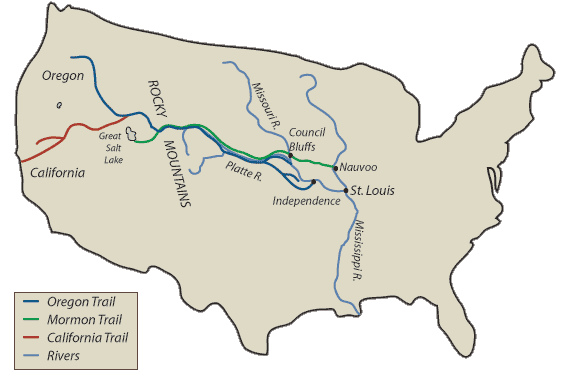
No matter where you were going back then, almost all settlers started their westward journey in Independence, Missouri as it was the biggest/westernest town in the states, and having a common starting point allowed people to join up and make the long, over 2,000 mile journey westwards together. Being together was a major benefit, as the area was extremely dangerous with all kinds of wildlife, particularly bison, which could destroy a wagon train in a stampede or feed it for days, and while most Indians were friendly, most does not mean all. The most famous trail, of course, and the longest, was the Oregon Trail. The Oregon Trail was 2,170 miles, going from Missouri to the west coast, and was initially made as more of a track than a trail, used by trappers and hunters to get plentiful western game. It didn’t become a major trail until covered wagons started using it in 1836.
Other trails include the California Trail, the Mormon Trail, and the Santa Fe Trail. The California Trail started in 1843, and followed along with the Oregon Trail until just north the the great salt lake, and winded down into California instead of Oregon. The Mormon Trail started in 1847, and started farther east than the Oregon Trail, as that had been where the Mormons lived, since they had been around longer than the rest of the western states, like Missouri. They were eventually all pushed out of their home, however, and so went westward, and joined with the people going to Oregon for the same reason that multiple people going to Oregon joined together: security in numbers. The Mormons stopped at the Great Salt Lake, and remain there to this day. The Santa Fe Trail isn’t on the map, but it started in 1821, making it the oldest of the American trails. It also started in Missouri, but didn’t follow Oregon’s lead. Instead it went south, to Santa Fe, New Mexico. It also met up with an old Spanish Trail in Santa Fe, made in the 1500s when the Spaniards were exploring from the western seaside. This trail was widened and provided a good connection to the west coast, specifically the site of Los Angeles.
The trails remained in use until 1869, when the Transcontinental Railroad was completed, allowing people to quickly and safely travel west. So while extremely useful during the time that they were used, the trails quickly lost popularity to the train system. But the trails still are the foundation of the towns and people in the west, particularly the west coast.
 School Essays