With Clive in India is a book written by G. A. Henty, a prolific author with many historical fiction novels under his belt, of which this is one. It follows a normal G. A Henty story, with the main character being a very compassionate person, as well as extremely skilled. Like most of Henty’s characters, Charlie, this books main character, is one of few soldiers to learn his enemies language, lead and train a group of soldiers after his own fighting style, and was a prominent but not important person in the grand scheme of things. Of course, if the main character had been an important person, the claim of “historical fiction” would have become questionable, and the book would’ve been dull if he wasn’t prominent.
The book starts in England, with a small family, the Marryats. They are quite poor, the father of the household died long ago, and the head of the family, the mother, writes to her uncle asking for help. The uncle immediately sends for them, is quite well off, and helps them into an honorable lifestyle. Part of this is having his nephew earn his way, so he enlists him to help the English in India. Charlie goes to India and on his way there is captured by pirates. He sabotages their fort from the inside and helps his rescuers succeed, granting him a bit of fame. He is then sent to help with an Indian ally train his troops, and becomes somewhat known among the natives. He staves off a couple assassination attempts in such a way as to make the failed assassins join him. He then joins Clive, a military leader in India for the English forces, and helps him in several battles, which Henty describes to an extreme extent . Eventually, Charlie returns to his home and lives a great life with his family, as well as keeping ties with his friends from the war
This was a good book, and if you enjoy any other G. A. Henty stories then I’m sure you’ll like this one. But personally I thought it was rather dull, as nearly half the book is spent detailing battles and transactions between Indian nations and the English to the point that the novel feels more like a textbook. It probably doesn’t help that I’ve read so many G. A. Henty books as well, as the stories are all very similar. Overall, however, I think that it’s still a good book, and do recommend it to people interested in the mid 18th century India, or just want to read a story.
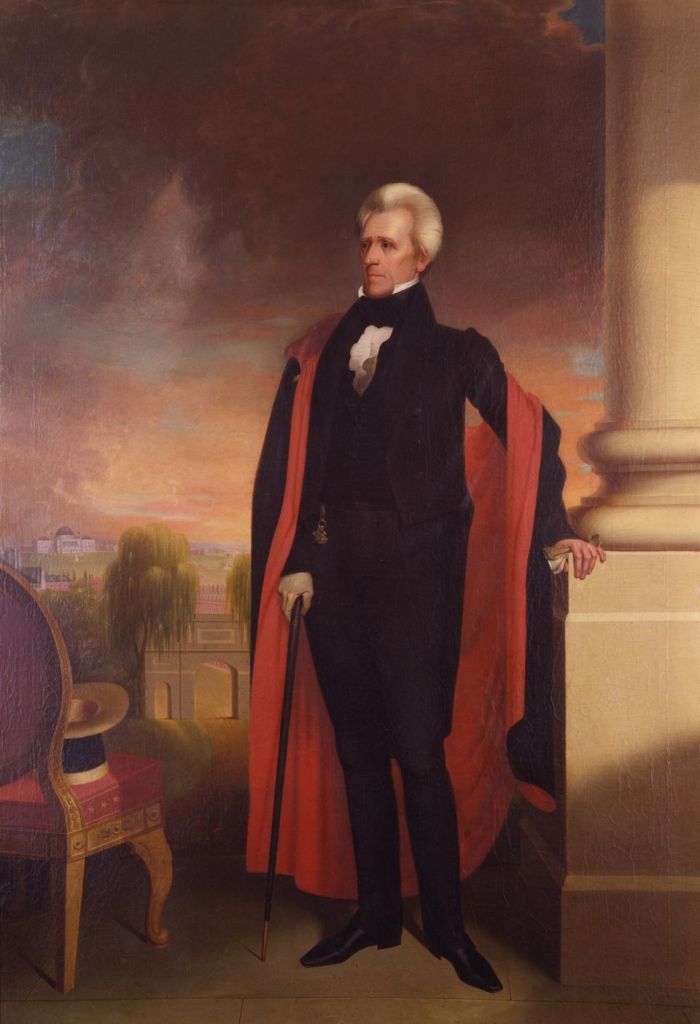
President Andrew Jackson was the 7th president of the United States, and has his face printed on the twenty dollar bill, which is why you might’ve thought you recognized the picture above. He was born in 1767 and is the only president to have served in both the Revolutionary War and the War of 1812. He was only 13 years old during the Revolutionary War, and so served only as a courier for the local militia, which both of his brothers served in. In 1779 his brother Hugh died in the battle of Stono Ferry, and in 1781 both Andrew and Robert where captured by British soldiers. After refusing to shine a British officer’s boots, the officer slashed Andrew with his sword, scarring him for life, though he only beat Robert for the same offense. A few months later they were released in a prisoner exchange, though Robert died a few days later. Andrew’s mother then became a nurse for other militia men who contracted diseases, and died herself soon afterwards, leaving Andrew an orphan at 14 years old. He hated the British, for obvious reasons, but didn’t rejoin the war effort, instead working to become a lawyer and start a life for himself, as his family’s small farm wasn’t for him.
He then traveled to Tennessee where he met his wife-to-be, Rachel Jackson, as well as started his own plantation, and quickly became a dominant politician in Tennessee as an anti-federalist. He was also against Native Americans, and did his best to acquire rights for people to hunt and fight them. In 1806 he got into a duel with Charles Dickinson, who had insulted his wife after an argument about a horse race. Jackson allowed Charles to shoot first, and his bullet lodged into his (Andrew’s) chest, next to his heart, and remained there for the rest of his life. Andrew, unfazed, then shot Charles, also in the chest, but this time it was a killing shot.
In the War of 1812 Jackson offered to recruit and lead men immediately, but the government waited until 1813 to take him up on it. Andrew immediately recruited some 2,000 men and marched to help New Orleans. General Wilkinson (who Andrew Jackson had accused of treason earlier), was in charge of New Orleans, and said that Andrew should go home, and that he wasn’t needed, but Jackson said he was needed, and marched to a group of Native Americans who had been helping the British in the war. This unbending personality earned him the nickname of “Old Hickory” among his troops, as well as the fact that he would beat lazy soldiers with his hickory wood cane. Later, after receiving word that the British would try to take New Orleans, he marched there, and defended the city so well that the British lost over 2,000 soldiers, their general among them, while Jackson lost almost 60. He then took control of New Orleans and enacted strict martial law, executing 6 deserters, banning french people after they tried to leave due to their nationality, and arresting his critics in the city. He then left extremely peacefully after receiving word of a treaty with Britain, which was made before the Battle of New Orleans.
He returned to his plantation, and lived peaceful-ish, until he ran for president in 1824. He wasn’t thought to be a real candidate, just a body to draw Tennessee votes away from another candidate, but due to his battle prowess in the War of 1812, he, John Quincy Adams, and Henry Clay made a three-way tie. Henry then backed out, and supported John, granting him the presidency. Jackson claimed they had made a corrupt deal, and he was probably right, as Adams made Henry his Secretary of State.
Andrew did win the next election, and actually invited the public to a party at the White House to celebrate, which worked out just as you might think it would. He was the first president to use the veto power a lot, dismissing all laws he disliked. He also hated the official bank, and didn’t renew it’s charter when the time came. Thanks to this, he was able to, with much difficulty, get rid of all federal debt in the United States of America in 1835, while 1836, his last year as president, was also the last debt-free year in American history. In 1833, he also became the first president to suffer an assassination attempt. The assassin had two guns, both decided to be in perfect condition after the attack, and both misfired, giving Jackson enough time to run up to him and beat him unconscious with his hickory wood cane, until his bodyguards pulled him off the failed assassin.
Andrew Jackson left office in 1837, and lived in his old plantation until 1845, when he died, surrounded by his children and loved ones and he was buried with his loving wife. When asked if he had any regrets after his presidency, he said he had only two: “I regret I was unable to shoot Henry Clay (his previous political rival and federalist) or to hang John Calhoun (an extremely similar man)”
Out on the Pampas is a book written by G.A. Henty, an author from the 19th century who wrote many historical fiction books. Historical fiction is the genre where a story takes place in a true historical time, such as the french revolution, or, like in this book, the colonial period, but the story itself is entirely fictional. This book, Out on the Pampas is the first children’s novel that he wrote, first writing it for his own children, so much so that the children in the book have the same names as his own kids.
The book starts in London, with the Hardy family, a family that was pretty well off, but worried for their children not having much opportunity with life in London. this worry came from the city having a lot of people, and chances for a good job and family for all their children were rather slim. So, they decided to go out to the New World and see if they couldn’t provide a good future for their family.
The majority of the book takes place once they reach the new world, specifically Argentina, as Mr. and Mrs. Hardy decided that they would get the most land for cheapest there. The eastern Argentina wild lands are called the Pampas, giving rise to the title of the book. They make friends with other settlers in the area, and start up their farm. There was some risk concerning the natives who lived in the area, as they had settled on the extreme limits of civilization. This risk was soon proved as they lost some livestock to an Indian raid after a couple months of farming there, but Mr. Hardy and his sons went after them to reclaim what they could, and though it wasn’t much, they sent a message that the Indians didn’t forget.
The climax of the story happened after a little more than a year afterwards, and was caused by an Indian attack on a neighbors property. These neighbors were extremely good friends with the Hardy family, and one of Mr. Hardy’s daughters had been at their farm during the attack. Due to their belief that she had been taken prisoner (as they couldn’t find her body at the scene of the crime) and the outrage caused by the burning of this neighbor’s farm, all the settlers in the area formed a posse to go after the Indians, mirroring the prior attack by Indians. A good bit of the book was devoted to the tracking of these Indians, as it was unknown where their home was. Some of the Indians, the ones that had previously met the Hardy’s, recognized the daughter, and when the posse finally caught up to the Indian village they told all the others about the rather traumatic hunt that had happened previously in the book. This, paired with the fireworks and guns the settlers had with them, convinced the rest of the Indians to give back the daughter and most of the livestock, as well as write up a simple treaty with them.
The book then sped through the years, summarizing the peace with the Indians and the continued settling of the Pampas. Since they held onto their extensive land which they bought in the past, the Hardys then sold it for a considerable profit. The children all went their ways, some going to England again as wealthy people, while others intermittently went to the new fringes of civilization and started new farms, repeating what they had done before in this book.
Many people believe that to do something well one must care deeply about it, and that not caring about a task or subject will result in a severe lack of quality, and possibly even a failure, of the task or objective. However, an overabundance of passion for something also results in a lack of quality, as judgement will often be clouded by your opinions for something. The people who recognize this will often decide that it’s best to have an emotional disconnect, and judge objectively so that one may complete or accomplish a task most satisfactorily.
I believe in the first opinion, as, from my own experience, if I don’t care about a subject or task (such as writing an essay about passion vs. detachment) then I have extreme difficulty in writing such an essay, or completing some other task, and I often end up procrastinating until I manage to work up the energy needed to do the task. When I do have an interest, though, then I can quickly belt out a nice and clean completion of a task, and I often enjoy doing it as well. Sometimes I even incite interest for myself by having a timer on my task, since completing a task within a certain time is of interest to me, and it can help center my attention on the task.
I do see the other point of view, however, particularly when viewing other peoples work that is noticeably over-passionate, to the point that the people end up making nonsensical decisions that only make sense from their own point of view. Therefore, while I believe passion is necessary to satisfactorily accomplish a task (especially in a timely manner) a certain level of objective detachment is also required.
The easiest way, I think, to be appropriately detached is to make a list of pros and cons, good and bad points, for every action and decision regarding the completion of the task. Obviously, this is somewhat cumbersome, but over time I believe it grows easier to imagine and automatically log different actions as pros and cons. While this can be manipulated by an overly passionate person, but normally it’s exceptionally obvious when they smudge a con into a pro, or vice versa.
The War of 1812, which lasted from 1812 (surprise!) to 1815. Why was it named that instead of, say, the 3 Years War, or maybe something creative? Why are creative names for wars so rare? Anyway, it was a short war between the brand-new United States of America and Great Britain, caused primarily by Britain not really caring about the Revolutionary War, and thinking it could keep using America as a colony. Some of the things Britain did were fairly standard among opposing countries, like funding and supplying the natives against America, but Britain would also “press” or kidnap American sailors and merchants to serve in the British military. So yeah, the British were not really nice to the new country. During Thomas Jefferson’s run as president the British even tried to control who America traded with, since England didn’t want Americans to fund Napoleon in France, directly or indirectly. Thomas then proceeded to stop all trade with everyone in 1807, which was supposed to show Britain that they had no control over America, but it just made the American people grumpy and mad at Jefferson.
The Democrat-Republican party formed what are known as the War Hawks, advocates for war, promoting it for a variety of reasons, officially because of the offenses already listed here, but unofficially because Britain owned Canada, and if there was a war conquering their neighbor could be rather profitable. Eventually, despite the best efforts of the fourth president, James Madison, war was declared in 1812, and nearly nothing happened for two years. Of course there were battles, and quite a few of them, and large amounts of territory changed around the Great Lakes, but it did so frequently enough to mean practically nothing, despite the lives lost during naval battles and sieges. Finally, in 1814 the Americans captured Plattsburgh, giving them control of Lake Chaplain, which they kept throughout the war.
Later on in 1814, the British finally defeated Napoleon for the last time, and directed all their army towards America, and it showed. They captured and fought their way all the way to the capital of the US, Washington DC. They then proceeded to burn down as much as they could, even setting fire to the White House. After this the bricks were painted white to disguise the black burn marks, and it’s been known as the White House ever since. Due to a lack of support and supplies they had to retreat, but the damage was done and congress had to meet elsewhere, creating quite a bit of difficulty.
The British were stopped at Fort McHenry, which protected Baltimore and the most important ship-builders in America. It wasn’t supposed to be difficult, as the Americans were helpless and could only stand still in the fort, and 20 British ships fired continually at the fort, trying to destroy, and did so for a full 25 hours, but still the fort stood, and still the American flag waved. There was a song made commemorating this battle, and it was later incorporated into the national anthem. At this point both sides were tired of this war, and nothing much was happening, so they decided on a treaty and declared “Status Quo Antebellum” or, in other words, nothing changed. Literally, nothing. All of the territory, forts, borders, all of it, the same. The only differences were the loss of life, and the fact that Britain no longer pushed America around as much.
However, in 1815, the final battle, the Battle of New Orleans, took place, since information and letters traveled so slowly that no one in Orleans knew about the treaty, and Andrew Jackson led the Americans into an incredible victory while defending New Orleans. He lost approximately 300 men, and killed approximately 2,500 British soldiers, forcing the British forces to leave Louisiana completely, without them knowing there was a treaty. This battle also has a song, “The Battle of New Orleans” creatively enough, though this was in 1959 by Johnny Horton.
In 20,000 Leagues Under the Sea, a famous novel written by Jules Verne, there are only a handful of named characters, but they are all well designed and written with their own personalities, as well as being main characters. The only real exception to this is Captain Farragut, the captain of the whaling ship sent to find and kill or capture the Nautilus at the beginning of the book.
Professor Aronnax was the main character of this book, as well as the narrator, the whole of the story being his record of what happened. He is a french marine biologist, and seems to be famous and skilled, as he was asked by the news for his opinion on the sea creature before anyone knew much about it, and captain Nemo compliments the professor’s book on marine life. He loves the sea, but forever thinks of his home as on land, and never ceases to defend people’s goodness whenever Nemo makes a disparaging comment about humans in general. A part of this is shown when he asks Nemo who he performs his work for, saying that he (Aronnax) does it for mankind.
Conseil was the Professor’s assistant and apprentice, always being very calm and efficient about things and problems that happened on their journey. He was very humorous, particularly whenever something happened to Aronnax, telling him that he had jumped over the side of their sinking ship because he saw his master get thrown overboard. He was much more of a side character, and would do any thing for the professor and think nothing of it. He was also quite skilled at classifying fish, though he could barely identify them.
Ned Land was a skilled harpooner, taken onto the hunting expedition specifically to capture the Nautilus, had it turned out to be an animal. Throughout the book he’s angry and homesick, missing dry land, other Canadians, and most of all, meat. He does love the sea, but only from a bit of necessity, since his job is to go sailing and hunting whales, and he’s good at it. He was good friends with Conseil, and was also a bit of a side character.
It’s doubtful that Captain Nemo’s name is really Nemo, as it’s Latin for no one, and he purposefully keeps his past a mystery, apart from the fact that his family was killed by some government or other, and he has turned bitter against the world. He does accept Aronnax into his ship because of his expertise in marine life, and perhaps a bit of guilt about capturing them. He was okay with going to Antarctica, since no one lived there, proving that the reason he left the land isn’t due to the land itself, just the people in it. He primarily does his work for himself, believing people would use it nefariously, though he does say that when he believes his death is close, he would give all his knowledge to people, allowing them to do what they will after his death.
Cooperation is when people work together to achieve a common goal. Most often, cooperation leads to better results than any singular person could’ve achieved, though I believe that this has limits. When people cooperate, they combine their skills, working to cover any gaps in their knowledge with the other peoples knowledge. For example, you may have a group of people writing a comic book, and this team would normally include a writer, an artist, an editor, and normally many more. If any one of these people, perhaps the writer, tried to make a comic on his own, then the art would probably be horrid, or barely passable, while if the artist tried, the art would probably be wonderful, but the story sorely lacking. Combined, however, they manage to create a wonderful story to be enjoyed, as well as images to accompany it.
Though, it is important to note that gathering a large number of people just for them to share their skills won’t often work out well. This is because they’ll all want to do everything their way. Let’s take the the artist from the previous paragraph. With one artist, drawing up images based on what the writer wrote, you’ll get a consistent look and feel to the art. The writer, though, isn’t completely devoid from the writing process, as he’ll edit what the artist is drawing to make it more accurate to what he imagines the things he wrote. The artist as well is not completely left out of the writing process, and if he disagrees with the writer, and neither of them budge on what they think is right, then they’ll go their separate ways and the comic book won’t be made. More often, they’ll cooperate and fine-tune the writing or art to be the best they can make it. Now, imagine you have 50 or so artists and 50 writers, all of whom are trying to adjust the comic book to be the way they imagine it. It would be pandemonium, and at least a couple of these writers and artists will disagree with each other, and even if they sort it out, another is bound to have his own image of what it should be. Cooperation is therefore limited to a rather small number, to ensure the best result without pandering to the whims and wants of every singe average Joe off the street.
I believe three is a good number for a group, as specializations in a wide array of necessities can be well divided among them, such as writing, drawing, and whatever it is that editors do. Three also allows for quick decisions without mass voting on every topic, and even quick tie-breakers when there is a split vote.
he French Revolution was an incredible uprising against their monarchy, the government ruling the French people. It was incredible because of the sheer number of executions that the French people managed to perform in the rather short period of time that the revolution lasted. It officially started in 1789, but the people of France had been worried about their country for far longer than that, and there had always been grumblers and dissenters for as long as the monarchy had lasted (which was an extremely impressive 872 years) but they had all been disorganized, and didn’t do much other than occasionally speak out in their home towns. As 1789 grew closer, though, more and more people were growing dissatisfied with the king, as he drove them deeper and deeper into debt. Ironically, one of the major money drainers, and reasons for tax, was the American Revolution, which had the duel effect of angering the French peasants, and showing them that revolution was a practical.
Just to put things in some perspective with regards to the money of France and how large the peasantry was, I’ll give you some numbers. The currency of France was divided into three parts, the First, Second, and Third Estates. The First Estate contained only about 1% of France’s population, and consisted of the clergy, or churchmen, of the Roman Catholic Church, and they possessed about 10% of France’s land. The Second Estate was slightly bigger, being made up of the nobility, anyone related to, or close to, the king. They possessed close to 20% of the land and wealth in France, while the Third Estate, some 97% of the entire population of France, possessed barely 70% of the wealth in France. So while 3% of France contained 10 times their number in wealth, 97% got 0.7 times their number in wealth, which was practically unlivable for most people.
In a rather late attempt to console the people, the king of the time called an Estates-General, a meeting between representatives of each Estate, where they would hopefully find a way to pacify the people. This seriously failed. A major reason being the fact that the meeting took place in Versailles, a golden palace built by a previous king that embodied the wealth and laxity the peasants were trying to fight. After leaving Versailles, the Third Estate formed the National Assembly, a group of pretty much everyone with the goal of ending the monarchy. They started rioting in the streets, and actually raided the Bastille, a huge government prison, and released anyone and everyone who had been wronged by the state, as well as others who were sympathetic to their cause. Throughout the revolution those rescued from the Bastille had a special status as heroes, for undergoing the horrors of the nobility personally. This also officially stared the revolution, which would last another 10 years.
For a while the national assembly didn’t do much, just attempted to abolish certain taxes and cruel laws, but then “The Great Fear” swept through France, rumors that the nobility were going to kill them all for their part in the rioting, and so they decided to kill the nobles first. It’s important to note that unlike the American Revolution, where all the people were united in a common goal, the French Revolution had many groups that thought different things had to happen after abolishing the monarchy. The leading group at this time, the Jacobins, led France during the reign of terror, which started with the execution of the king in 1793, and made many guillotines, execution devices like the one in the picture, that separated a head from its owner very quickly and efficiently. Nobles were led to the guillotine in massive lines, and it wasn’t uncommon for 50-75 noblemen to die everyday from 1793 to 1794. These executions, and France, were headed by one Robespierre, a Jacobin that loved executing rich people, but eventually the other Jacobins started to worry about such blood lust, and the other Jacobins executed Robespierre to stop him from such excessive executions (I admit, I did laugh when I realized they used a guillotine).
After that the Jacobins left the spot-light and a different group rose to power, called the Directory. They weren’t as murder-y as the Jacobins, but they were also much less well liked, probably because they were less murder-y. They lasted until 1799, when Napoleon Bonaparte heard about the Directory’s lack of power, and decided to take it for himself. This wasn’t hard, as no one like the Directory and everyone liked Napoleon. After that, Napoleon named himself emperor and ruled France until 1815.
When we want something, as people, we tend to whine, or complain when we don’t have it, to get it. This is annoying, by necessity, because if complaining wasn’t annoying it wouldn’t work at all. By being loud and annoying someone who is in a position to give you what you want, they will want to shut you up, and the easiest way to do that, for them, is to give you whatever you want. There’s a saying that encapsulates this extremely well: The squeaky wheel gets the grease. The squeaky wheel, or noisy complainer, gets the grease, or whatever will quiet them down. But does this mean that people should complain to get what they want?
I don’t think so. I think that when people are able to get what they want, they should be the ones to get it, as to do otherwise would be to leach off the generosity of other people, and it would be dishonorable in the extreme, as well as being annoying, which is unpleasant. There’s also a reason it doesn’t work indefinitely, though. A squeaky wheal is, by definition, annoying, and people will rid themselves of annoying things, which is how whining achieves its goals. But if expensive grease is needed, if whatever the whiner is attempting to get, is more difficult to procure than it is to tell the whiner to shut up, then people will simply tell the whiner to shut up. Also, if the grease does not work, or in other words, people whine for thing after thing after the previous thing is given to them, then people will resort to replacing the wheel to get rid of the whining. And as soon as that wheel doesn’t have someone to grease it, it’ll have to A) stop whining and get what they need on their own, or B) stop turning altogether, unable to make ends meet.
Of course, sometimes there isn’t any way to get what you want just by your own means, so do you have to whine? No! People can ask politely, asking for something in a more dignified way, and that’s not only more dignified and honorable, but also more useful, as it’s rare for people to get rid of a wheel that politely asks for grease (the incredible analogy finally failed me) as requests are not annoying, or at least not designed to be and not generally considered to be. And one should never underestimate what you can be capable of doing, as a genuine attempt is far more impressive than it’s typically thought of.
Independence is a wonderful thing, as it allows one to do what one wants to, and needs to. I think that independence means that one is allowed to do whatever one wants with their own things. Obviously, nobody is allowed to take or abuse another persons stuff or they would be infringing on another one’s freedom, and forfeit their own right to independence. Some people, though, think that it means a lack of any interaction with anyone else, as they see it as the only way to be totally free and “independent” of anyone else, which I think is the definition of isolation.
This is practically unattainable, of course, as trade is essential, or very nearly essential, to live, and certainly necessary to live a comfortable life. This form of isolation, while impressive if it can be managed, is not very smart. Cutting yourself off from other people is not smart, as it requires you to specialize in everything that might come up in your life, every problem and want has to be dealt with by you, and you alone. Due to time management, you probably won’t be able to get very good at any one skill, however, while in a society you could specialize and get incredibly good at solving any problem or satisfying any want, possibly even a skill you like or want, and then provide your service in exchange for other people’s services. For example, if you’re a plumber you can fix peoples piping, but you may not be that good at cooking. You can then fix a cooks piping, and the cook would provide a meal for you in exchange. Money allows people, say, our plumber, to fix anyone’s plumbing, get money, and then spend it to get a meal from the cook, and the cook can do the same thing for his services, so that you don’t need to directly exchange services.
This inter-trading society will quickly become better than any fully “independent” person (read: hermit), who has both poorly fixed pipes and poorly made meals. I’m not saying that people shouldn’t do multiple things, or that they need to call someone else at every little inconvenience, but that we, as humans, are designed to work in a group, a society, and that hermits are aberrations, not goals. I do still think that my definition of freedom, which basically boils down to complete property rights, is a goal, and necessary for a good society, but that total isolation is not really freedom.


 School Essays