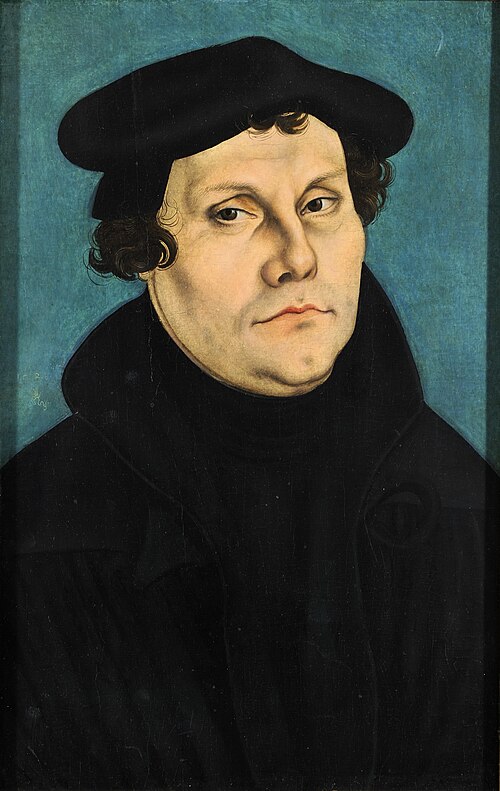
Martin Luther wrote his 95 Theses on October 31st 1517, and mailed them to the Archbishop Albrecht. He wrote them in response to the indulgences being sold, particularly the ones being sold by Johann Tetzel to build St. Peters Basilica. Originally in Latin, the language of the Church and unintelligible to the common man, the theses appear to have been a genuine call for debate, and that he really believed that indulgences were not only false, but that the pope himself would be aghast at the sale of them. He calls several times not only to the idea that the pope would not sell indulgences, but that no one, not even the pope, has the power to sell indulgences. In the next few years he would find out the pope very much did know about the sales.
A popular story is that he posted his theses to the door of the Wittenburg Church, and that it became famous from there. But Luther never makes mention of posting his paper in such a manner. It seems that the story comes from Peter Melanchthon, a friend of Luther’s. He wrote a biography of Luther in 1546, after Luther’s death, and in it is the first written account of the nailing, from a man who wasn’t even in Wittenburg.
So how did his paper become so famous? Because the common man read it. How? It was in Latin, and handwritten. Someone translated all 95 theses into german, and then gave it to the printing presses. Who? No one knows. If Luther really did want a debate on indulgences, he wouldn’t have done this, there would have been no reason to. But throughout the theses, Luther makes snide comments, such as thesis #52; “The assurance of salvation by letters is vain even though the commissary, nay, even though the pope himself, were to stake his soul upon it.” So despite his ostensible faith in the Catholic Church, he not only undermines the pope and his church, he outright damns the indulgences, which the pope was then forced to defend from this no one of a priest from a middle of nowhere town. The church then made their case worse by never publicly defending the indulgences, but still selling them. I believe Luther did in fact publish his theses to the people, and did so very cleverly, never outright splitting from the church in the theses, but forcing the Church to reform, or force a split.
By 1521, only 4 years later, Luther made his real split with the Church, and he took many people with him, partially, I believe, due to the rabble-rousing techniques Luther follows in his theses. Thesis #92: “Away, then, with all those prophets who say to the people of Christ, “Peace, peace,” and there is no peace!” What could this possibly be used for except to incite people to care about this public refutation of the Catholic Church? The theses were ostensibly supposed to be bullet points, each of which were to be debated, or used in a debate, in person between Luther and another priest. Some of the early theses were theological in nature, but as they go on they get more emotional, more angry. Also, if he did not know that the archbishop and the pope approved of the indulgences, why send them a letter? After all, He wasn’t going to debate the archbishop if they agreed. I believe he would’ve sent his letter to Tetzel if he wanted a debate, and not a revolution.


